Blog
How to Start a Custom Card Business with Print on Demand in 2027
Plan a custom card business for 2027 around one defined product, an approved sample, clear costs and a print on demand workflow that sends each order to production.
TCGPrintery4 min read
To start a custom card business with print on demand, settle three things before your first sale: a card product you can describe exactly, a printed sample you have approved and an order process you understand. Print on demand means each order is printed when it arrives, so you do not need to begin with a large stock of finished cards. The product decisions and file preparation still come first.
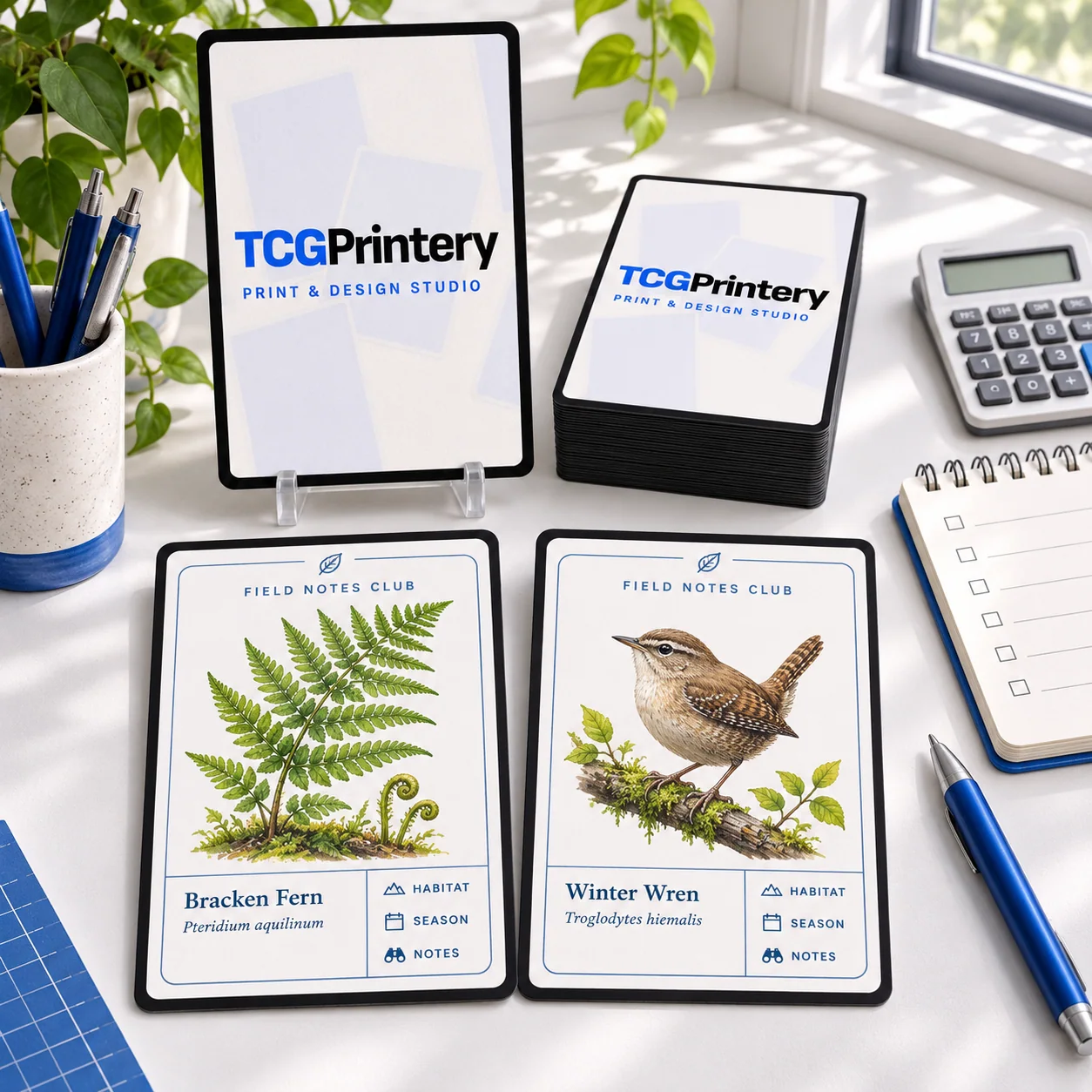
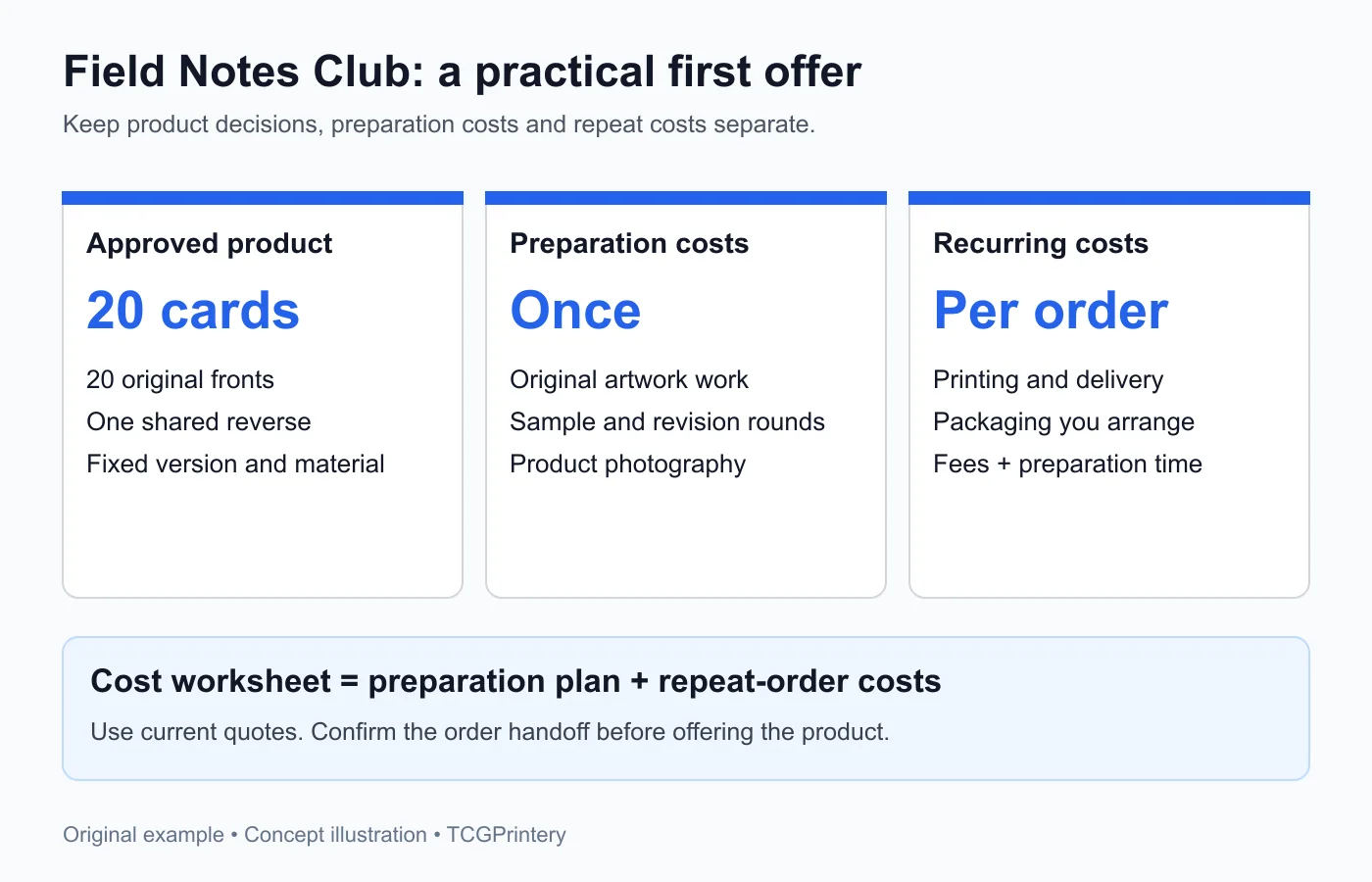
Use Field Notes Club, an original fictional creator project, as a planning example. Its first product is a twenty-card illustrated nature collection with short observation prompts. The aim is to establish one manageable product and a clear production handoff before introducing extra languages or personalised editions.
Define one card product you can reproduce
Write down the exact contents, physical size, material, language and version. Field Notes Club begins with twenty unique fronts, one shared reverse and a fixed contents list. Each customer order refers to the same approved collection.
Describe any packaging or extras separately and confirm how they will be provided. Product photographs and the listing should match that final specification. A decorative box in a mockup does not establish that the box is included in production. Decide what the buyer receives before calculating your offer.
Make the sample answer the difficult questions
Choose a representative card with fine illustration detail and the longest prompt. Use the card templates and file guidance to prepare it, then review a physical sample on the intended material.
Check the text at actual size, the illustration crop and the reverse. Record any changes in the source file and approve a new export version. Once the design is stable, review the entire twenty-card collection so a successful sample does not hide a missing card or inconsistent title elsewhere.
Build a complete cost worksheet
Use current quotes for printing and delivery, then add the costs you actually arrange: artwork preparation, packaging, payment or marketplace charges, and the time needed to process an order. Keep taxes and currencies explicit where they apply. The worksheet is a planning tool, not a promise of profit.
For Field Notes Club, separate a one-time illustration cost from costs that recur with every order. Also record sample and revision spending. This makes it easier to understand what changes when the collection sells once, ten times or through a different channel, without pretending that every cost grows in the same way.
Set up the print on demand handoff
TCGPrintery's printing partnership starts with discussing the store and shaping a production plan together. The setup includes agreement about how orders reach production and which steps can be automated. It should be based on your actual products and workflow.
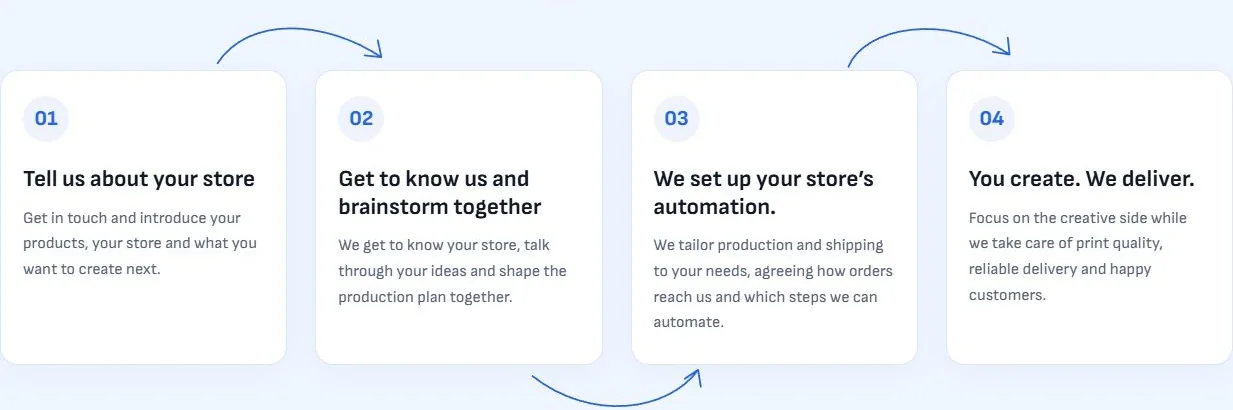
Prepare a sample order record with the product identifier, approved file version, quantity and required delivery information. Agree who approves changes, who resolves unclear requests and when an order is ready to print. A store platform name alone does not define those responsibilities or prove that a connector is already active.
If you sell through a shop platform, see how custom cards are prepared for an Etsy store or a Shopify store.
Test a complete order before expanding
Walk one test order through the agreed process, from the selected product to the final delivered item. Check that the intended version and quantity survive each handoff. Record what the customer is told about production, shipping and any personalised approval step.
If you later introduce another language, create a distinct approved file set and product identifier. If you add personalisation, define which fields change and how the buyer's wording is approved. Expand only after the initial product can be prepared consistently without relying on memory.
Treat 2027 as a plan to refresh
This preparation guide uses service information available in November 2026. Recheck prices, materials, shipping terms and the agreed production setup before launching in 2027. Build those checks into your launch preparation rather than treating today's figures as a future quotation.
A practical first release has a narrow product range, approved files, an understood cost structure and a tested handoff. Bring that information to the production discussion and use it to turn a broad business idea into a card product you can actually deliver.