Blog
Print Custom Cards for Your Shopify Store
Connect each Shopify card-product choice to a clear print specification, SKU and artwork version, then agree how orders reach production.
TCGPrintery4 min read
Printing custom cards for your Shopify store starts with a precise connection between what a buyer chooses and what should be printed. The product name, finish, card count and artwork version all need to describe the same item.
This guide uses an imaginary 12-card botanical collection to show how to organise that information. It is an editorial example, not a live shop or a claim that a Shopify connection has already been configured.
Define each product choice
Write down exactly what one sale includes: the number of cards, finished size, back design, material and any agreed packaging. Shopify supports product variants for different options. Use them for choices that you can consistently produce and explain.
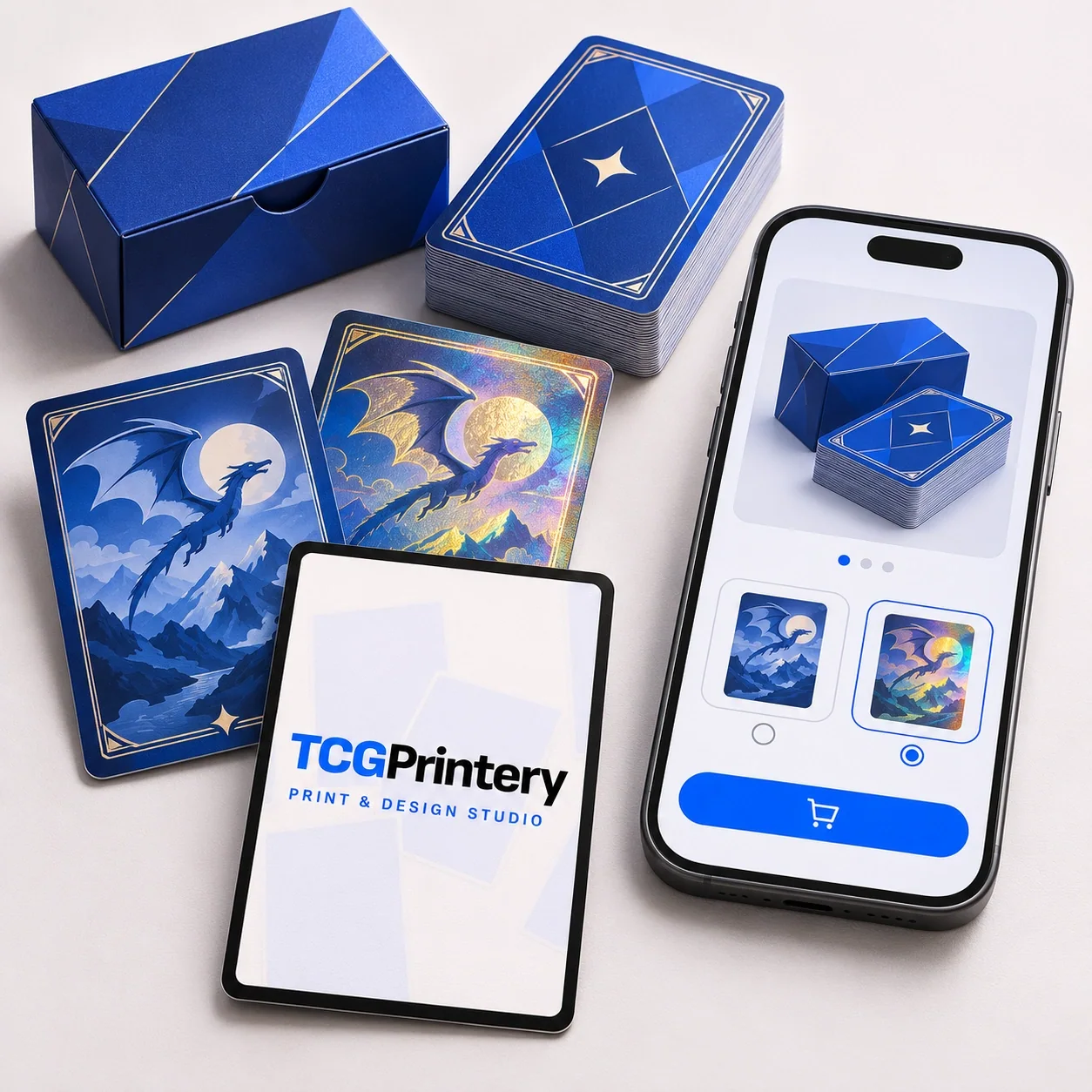
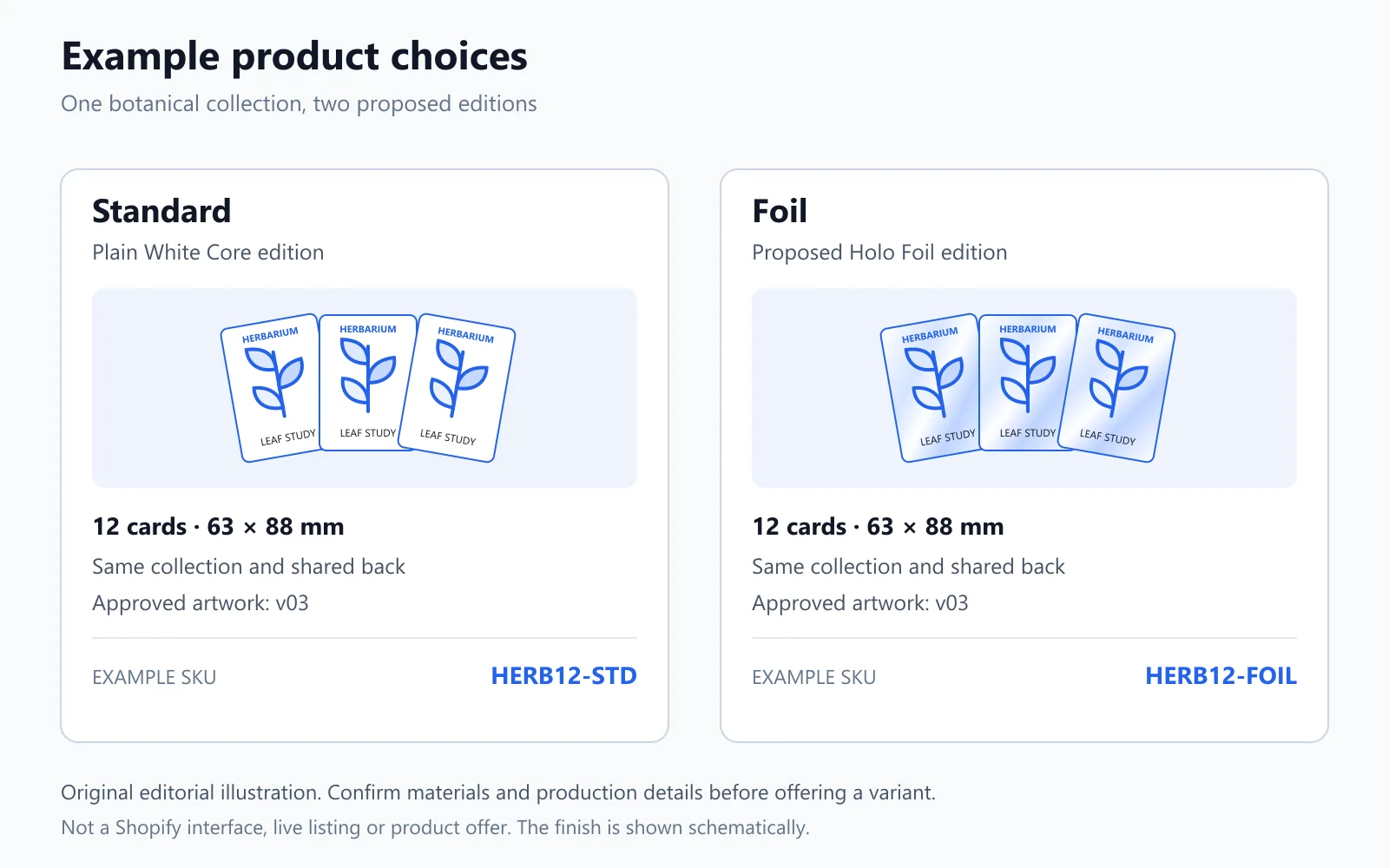
Our example has two proposed editions: Standard and Foil. Both contain the same 12 designs at 63 × 88 mm. “Standard” is the example's plain White Core edition; the second proposes Holo Foil. The physical card format stays the same. Confirm the material combination and production details before offering either choice to buyers.
Give every choice a clear identifier
A stock keeping unit, or SKU, is an internal product code. Shopify's SKU guidance recommends consistent, distinct identifiers for products and variants. For the example, HERB12-STD and HERB12-FOIL make the two editions easy to distinguish.
Keep a small production reference alongside those codes. Record the exact card list, quantities, format, finish, back and approved artwork version. The example points to version v03. A filename like HERB12-v03-front-01.png gives someone a useful clue about which collection and revision it belongs to.
When artwork changes, record which version future orders should use. Keep the previous approved files available until you know whether any open orders still depend on them.
Make the product page match the print specification
Describe the card count and finished dimensions in plain language. Show what is included in the set and whether packaging is part of the offer. Make differences between editions visible without relying on a finish name alone.
Use photographs of your approved physical sample when available. Label concept artwork or mockups clearly. A bright simulated foil effect cannot establish how the real material will look, so compare the printed material samples and review your own design before choosing the final presentation.
Agree how an order reaches production
The essential handoff connects an order's SKU and quantity to the right files and production instructions. Decide who checks the details, what information the printer receives and how corrections are handled before printing begins.
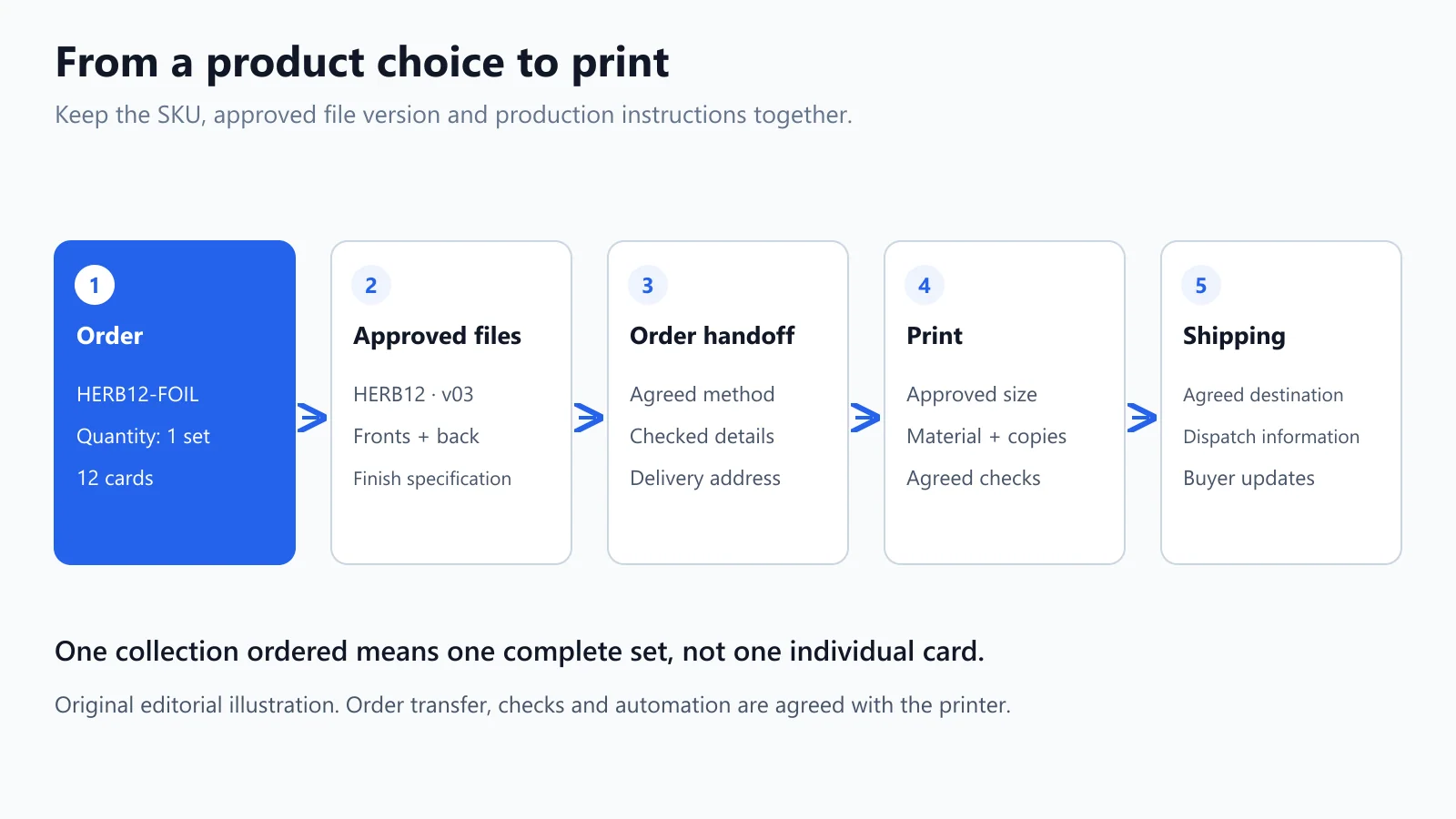
TCGPrintery's printing partnerships are tailored around the store. The production and shipping arrangement, order handoff and steps that can be automated are discussed together. A Shopify store alone does not establish an automatic connection to TCGPrintery.
Bring your platform details, product codes and example specifications to that conversation. Clarify who supplies the delivery details, who communicates with the buyer and how dispatch information returns to your store.
Walk through one example before launching
Take a fictional order for one Foil collection and follow it through your proposed process. Can the person preparing production identify the 12 correct designs, shared back, finish and file version without asking what the buyer meant?
Then consider a quantity of two. The intended result is two complete sets, not two individual cards. Check how a changed address or revised file would be communicated, and agree when an order becomes too far along to change.
This review can begin with a written example. Any later production test should use an explicitly approved test arrangement, with its costs and delivery destination understood.
Prepare a focused partnership brief
Send the collection's card list, representative artwork, preferred format, proposed variants and expected order pattern. Explain whether you plan to hold stock yourself or want to discuss fulfilment for individual orders. Packaging, fees and responsibilities belong in that discussion too.
You can prepare a card sample while organising those details. Once the product is clear, tell us about your Shopify store and agree a printing process that matches what you promise your customers.