Blog
Print Cards in Yu-Gi-Oh! Size on Demand
Check Japanese and Standard dimensions before printing original cards, then adapt the source layout without stretching artwork or crowding text.
TCGPrintery3 min read
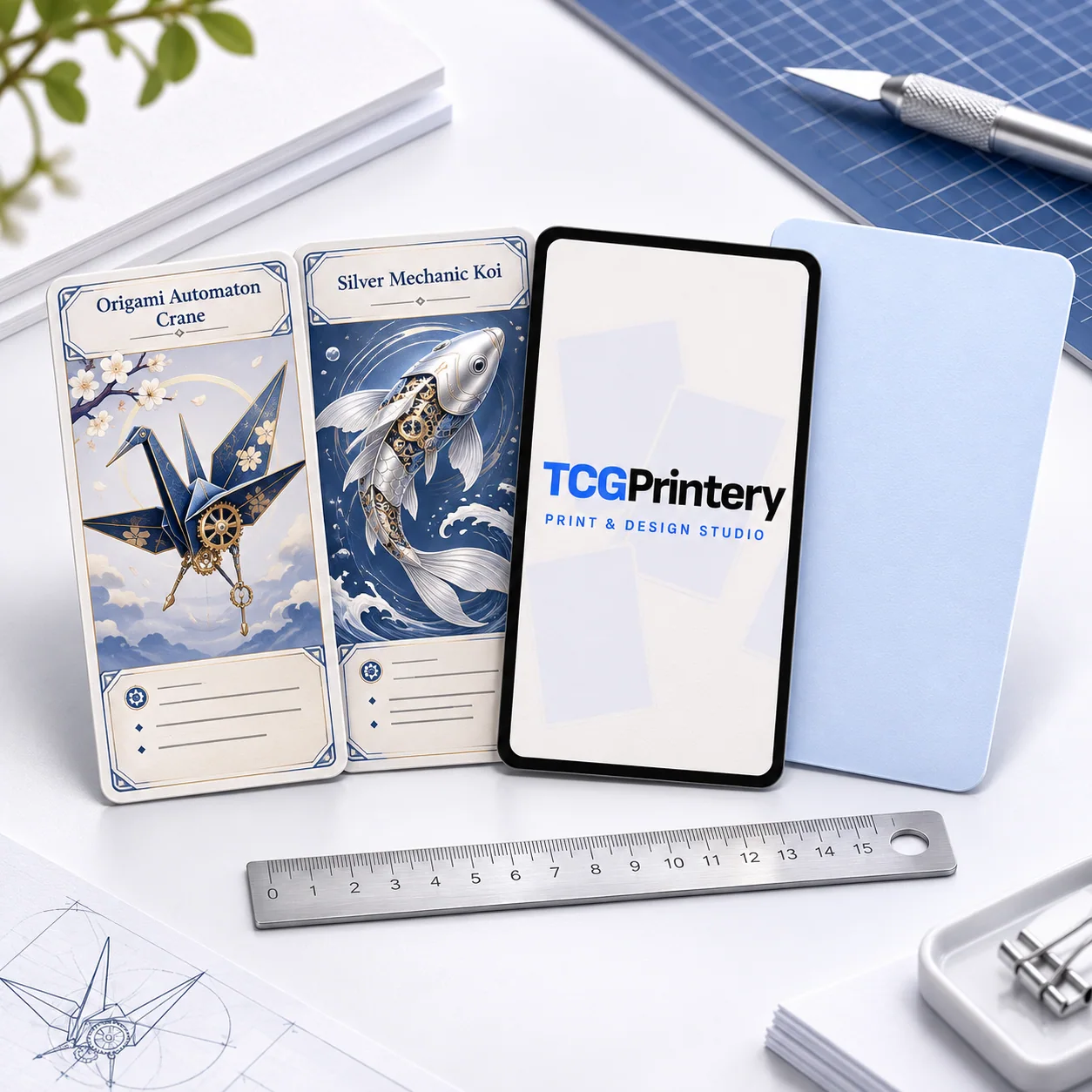
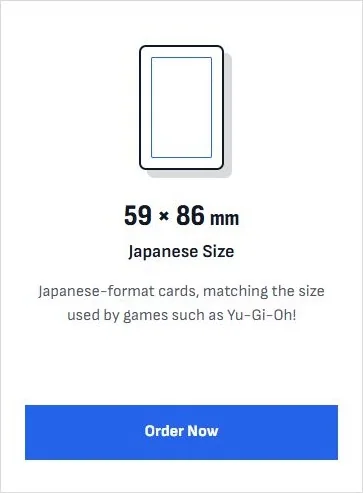
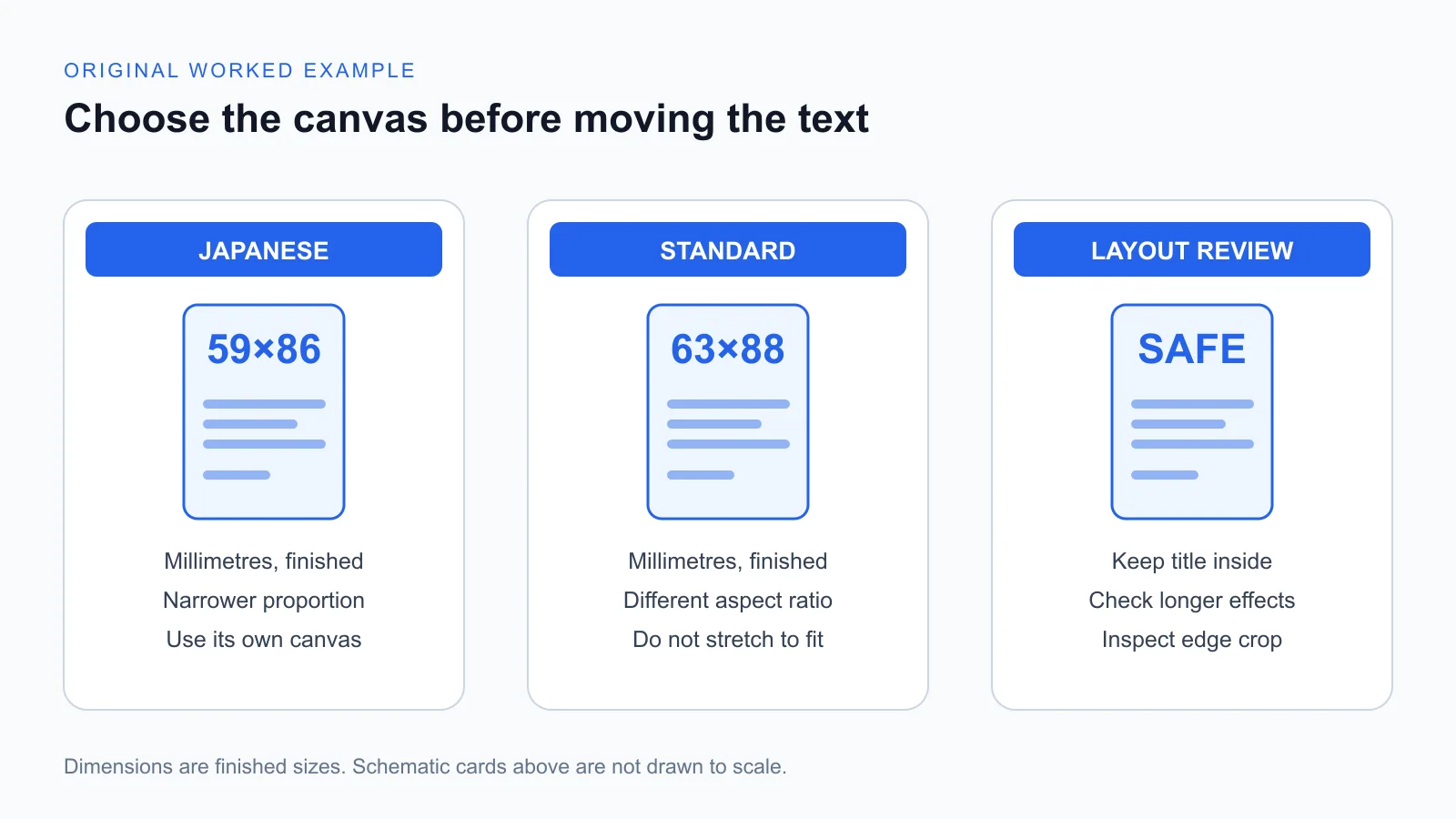
Cards described as Yu-Gi-Oh! size belong to a different physical format from Standard cards. TCGPrintery's Japanese option measures 59 × 86 mm, while Standard measures 63 × 88 mm. For an original personal card project, that difference affects more than the outside edge. It changes the available width for names, the image crop and the way longer instructions fit.
Start with the actual target dimensions
Use the exact offered dimensions when creating the source canvas. Do not treat Japanese as a smaller export percentage of a finished Standard design. The two rectangles have different proportions, so a uniform reduction does not make both edges match. Our fictional example uses an origami crane automaton and a mechanical koi, drawn in an original frame. The title references a familiar size category only. The artwork, symbols and backs do not imitate an official game release or suggest that the cards are official products.
Check what the existing file contains
Before adapting artwork, determine whether its outer edge represents the finished card or includes extra bleed. Measure the canvas and compare its ratio with the selected format. A file prepared for a different printer may include an unfamiliar border or crop marks. Keep the original safely stored and work from a duplicate. If the source is a flattened image, some layout changes may require returning to the editable artwork. Stretching the whole image until it fills the target can distort faces, circles and lettering, even when the preview initially appears acceptable.
Reflow the title and rules area
The narrower width makes long text a useful stress test. Put Origami Automaton Crane into the title field and compare it with the shorter Mechanical Koi. Choose a consistent title treatment that both can use. Keep the rules area at a comfortable reading size and rewrite a long effect before shrinking it excessively. Reserve space for values rather than allowing them to drift around the illustration. The goal is a repeatable layout whose information remains predictable when the cards are held together, not a collection of individually rescued compositions.
Inspect crop and safe placement separately
Background artwork should reach the intended edge, while important text and details need room inside the cut. These are separate checks. TCGPrintery's file guide explains how the designer treats finished-size artwork and existing bleed. Review the actual preview instead of assuming that the filename proves the dimensions are correct. For the crane card, inspect the wing tips and the long title. For the koi, check the curve of the tail and any small value near a corner. An attractive centre does not reveal what happens at every edge.
Review the back and the physical use
Prepare the back for the same selected format as the fronts. Check that its border, logo or repeated pattern remains balanced after cropping. If you intend to use sleeves or a storage box, compare their stated dimensions with the actual finished card rather than relying only on a game name. Review a sample for handling and legibility before producing a complete personal set. A picture on a screen cannot prove how a narrow rules box feels to read during play, particularly under ordinary room lighting or when several cards overlap in the hand.
Keep the corrected source for later cards
Save the accepted Japanese master separately from any Standard version. Name the files so the format is visible, and record the back revision and material alongside the fronts. This prevents a later addition from accidentally using the wider canvas. Review every exported face, including cards that seemed easy to fit, because different artwork can hide alignment mistakes. When the files are ready, choose the Japanese format and compare the uploaded set with your source list. A format-specific master makes the next original card much easier to prepare consistently.