Blog
Print on Demand Playing Cards: Launch Your Own Deck Business
Launch a print on demand playing card business with one original deck, an approved sample, accurate product photographs and a clear production handoff.
TCGPrintery4 min read
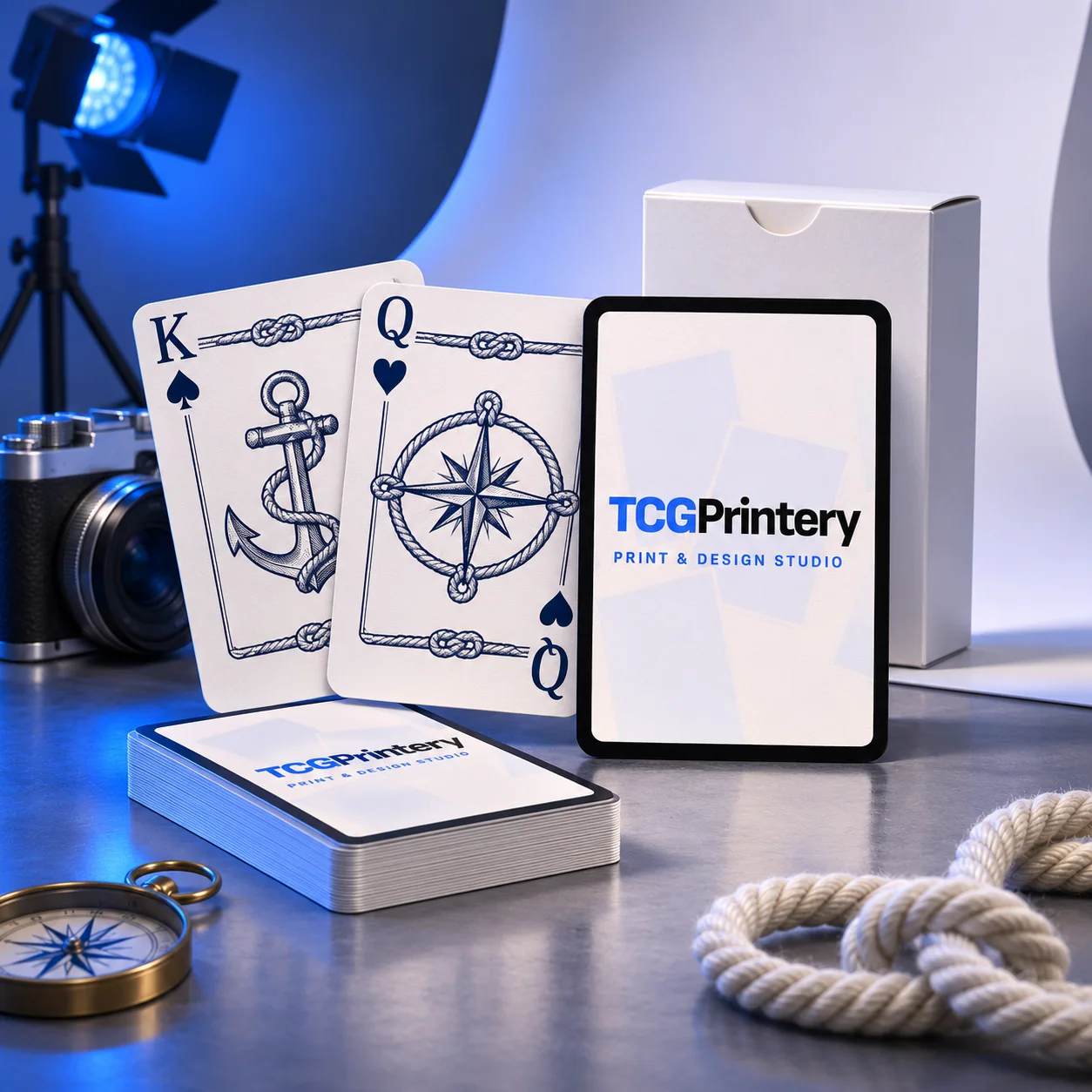
Print on demand playing cards let you sell an original deck without printing stock in advance: each order is produced when it comes in. Launching that business is easier to evaluate when the first offer is one clearly defined deck. A broad catalogue can wait. Begin with a complete original product, confirm what the buyer receives and establish how an order becomes a production request. Our fictional Harbour Lines deck shows the decisions that need to be settled before the first listing goes live.
Freeze the first product specification
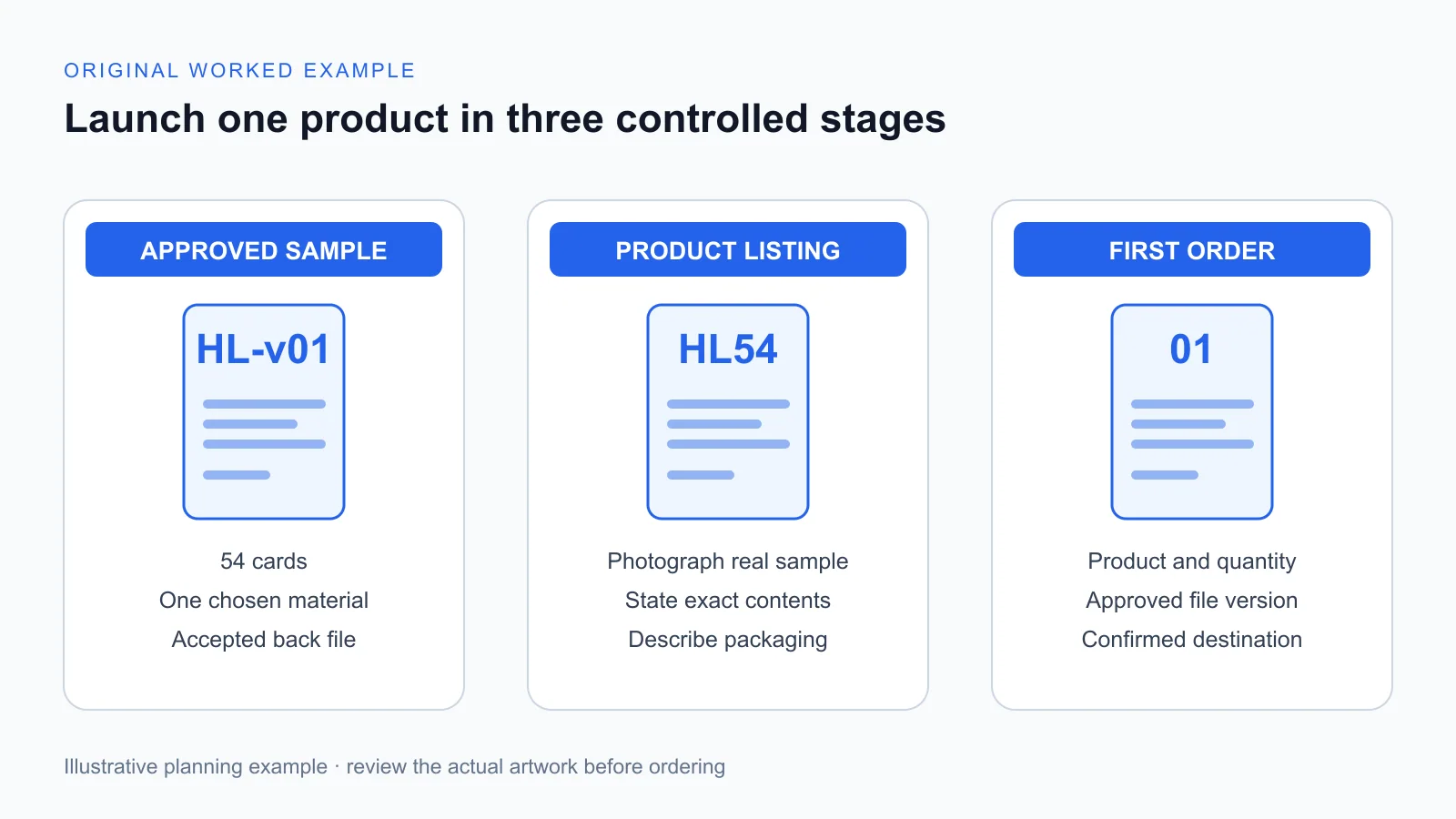
Harbour Lines is a fifty-four-card deck: fifty-two playing cards and two jokers, with original nautical line illustrations. Choose one format and one material for the first offer; the custom playing cards guide lists the sizes and papers. Record the accepted front files, the shared back and the card count as a single product specification. Do not launch several finishes merely because they sound attractive. Each variation adds a sample decision, a product description and another way to send the wrong production instructions. A narrow first product makes the initial orders easier to inspect and explain.
Approve the object before describing it
Review a physical sample of the exact combination you plan to sell. Inspect every rank and suit, not only the illustrated court cards. Shuffle, deal and hold the cards in a fan to check the corner indices. Record any correction and order the appropriate revised sample before treating its appearance as final. Keep the accepted files together under a clear version such as HL-v01. Your listing should describe the product you have reviewed. A source file that looks finished on a monitor is not the same evidence as a physical deck.
Create product photographs that answer questions
Photograph the actual approved sample under consistent light. Show a complete stack, several different faces and the shared back. Include a close view of the corner indices so a buyer can understand the design during play. If a box or another accessory appears, make clear whether it is included, separately supplied or only a styling prop. Do not use an AI illustration as proof of a printed finish. An illustration can introduce the concept, but product photography should show the object the customer is being offered.
Calculate the delivered product cost
List the costs that belong to your business: artwork, samples, card printing, any separately arranged packaging, selling fees, payment fees and customer support. Account for shipping according to the actual sales arrangement. Use current quotations and checkout totals rather than an assumed universal cost per deck. Leave room to understand corrections or replacement orders instead of treating every sale as automatically profitable. This calculation determines whether the product is viable at your proposed selling price. Print on demand changes the production model; it does not remove the need for a workable margin.
Agree how print on demand orders reach production
TCGPrintery's partnership page describes a tailored setup, including agreement on order handoff and possible automation. Bring a sample order record containing product code HL54, quantity, approved version and destination. Clarify how a cancellation or address correction is handled and when a production request becomes fixed. Do not assume a particular shop platform has an instant connector. Keep the initial process understandable enough that you can trace one customer order through every agreed step, even if some of those steps are manual at first. If you sell on Etsy or Shopify, those guides show how product choices map to print files.
Use the first orders to improve the process
After launching, compare each early order with the approved specification and the information shown to the customer. Note repeated questions about contents, material or delivery so the listing can answer them more clearly. Keep artwork changes out of active orders unless the change is explicitly coordinated. Review operational problems before adding a second deck or finish. When your original deck is ready, prepare a sample, then discuss the production partnership. One well-defined product gives you a practical foundation for deciding what the business should offer next.