Blog
Where to Print Custom Cards for Denmark?
Prepare a focused card-game prototype for a Danish play group with defined test questions, exact copy counts and a realistic review schedule.
TCGPrintery3 min read
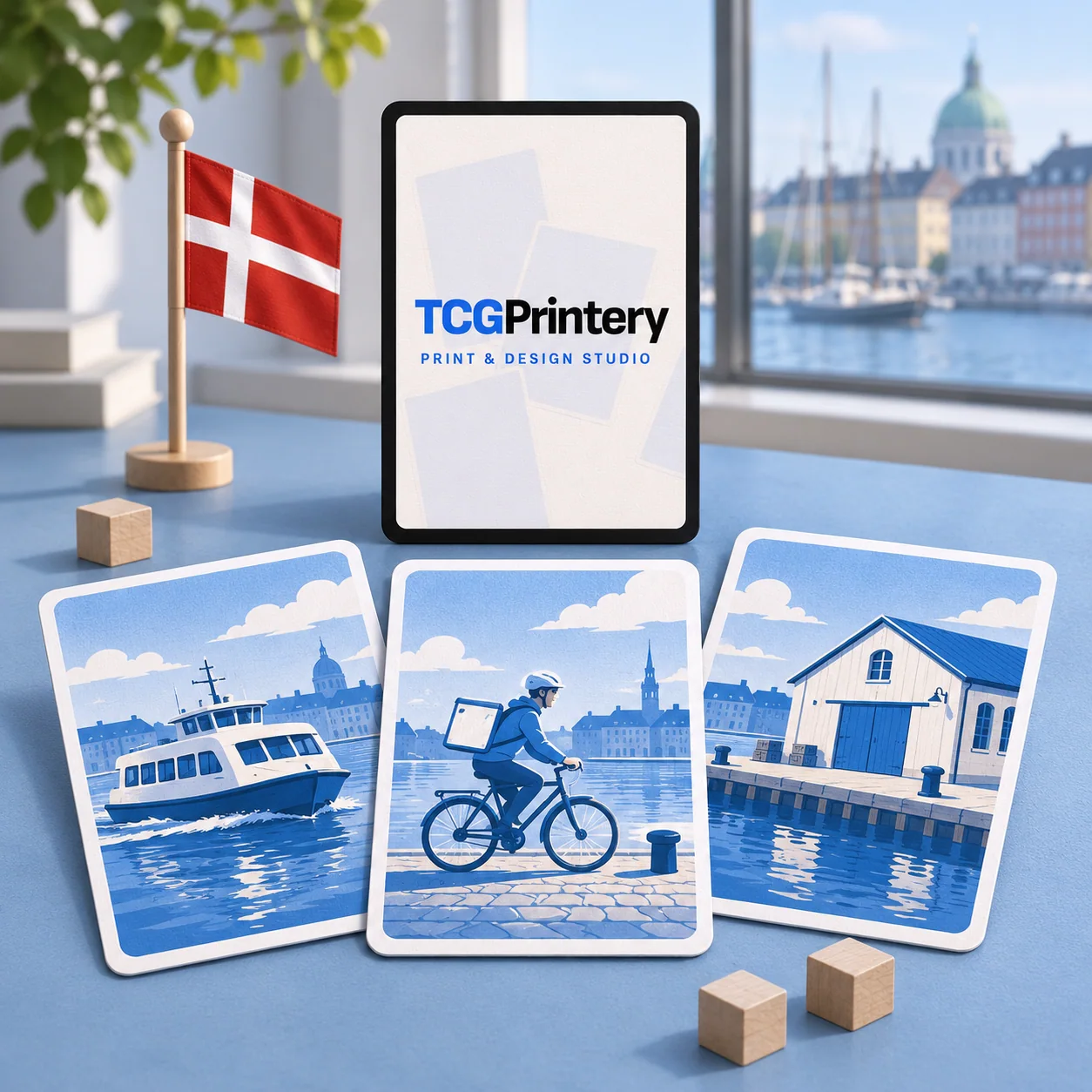
A Danish game night is a good reason to print a focused prototype, but it does not require a finished commercial release. The most useful first deck answers a few specific questions. For a fictional harbour delivery game, we can limit the art, count the copies carefully and leave enough time to review the physical cards before arranging the next play session.
Choose the question before the card count
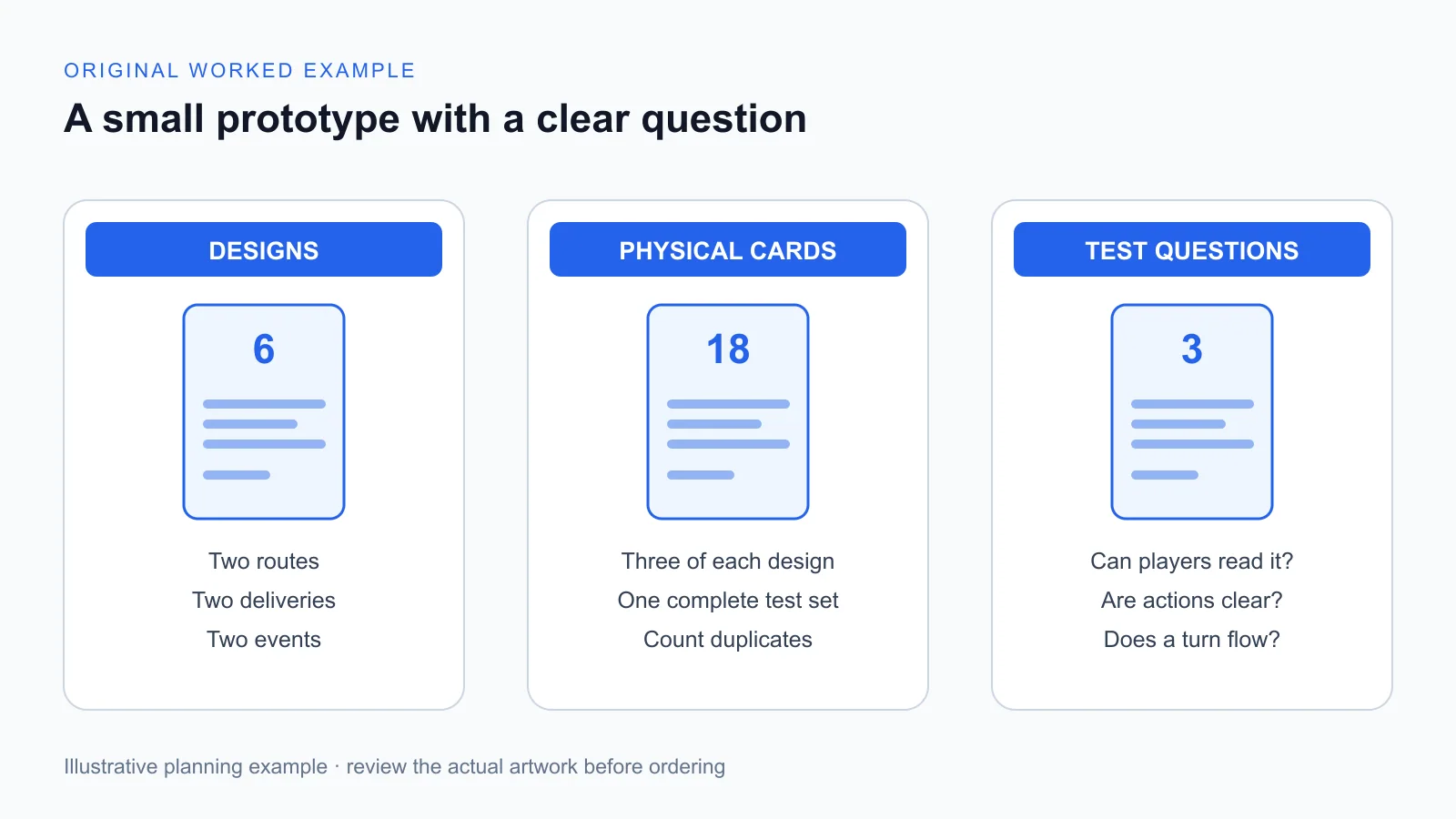
Our example, Harbour Run, asks whether players can choose a route and complete a delivery without repeatedly consulting the rules. The first prototype contains two route designs, two delivery designs and two event designs. It deliberately leaves advanced scoring and expansion ideas outside the test. Write the learning goal at the top of the project notes. That goal helps you decide which cards are necessary and which are distractions. A small deck is useful when its contents are chosen deliberately, not simply because the artwork is unfinished.
Count copies as part of the rules
Each of the six designs appears three times, so the prototype contains eighteen cards. The repeated copies matter: players need enough route and delivery options for the intended turn sequence. Keep a table with one row per design and a separate copy column. If you prepare two complete test sets for two groups, the total becomes thirty-six cards. Check that arithmetic before ordering. Avoid replacing repeated cards with handwritten substitutes during a physical review unless that change is recorded, because it can alter the way players recognise and handle the deck.
Make the first layout deliberately readable
Use one shared frame and keep the route name, action and any value in predictable positions. A ferry card and a bicycle delivery card can have distinct illustrations while still sharing the same information structure. Test any Danish wording with a fluent reader, especially short instructions whose meaning depends on a single verb. Use simple language while the rules are still changing. Detailed flavour text can wait. Compare the offered card formats with the amount of information instead of squeezing the design into a size chosen only from habit.
Run a repeatable physical review
Before the social play session, inspect the whole prototype yourself. Check the intended fronts and backs, the copy counts and the revision printed on the files. Then ask the group three questions: can you read the cards from your normal seat, do you understand the action without explanation, and does the turn move smoothly? Record observations rather than defending the design. If several people pause at the same symbol, that is useful evidence. Keep cosmetic preferences separate from problems that prevent the game from being understood or played.
Plan the session around the complete process
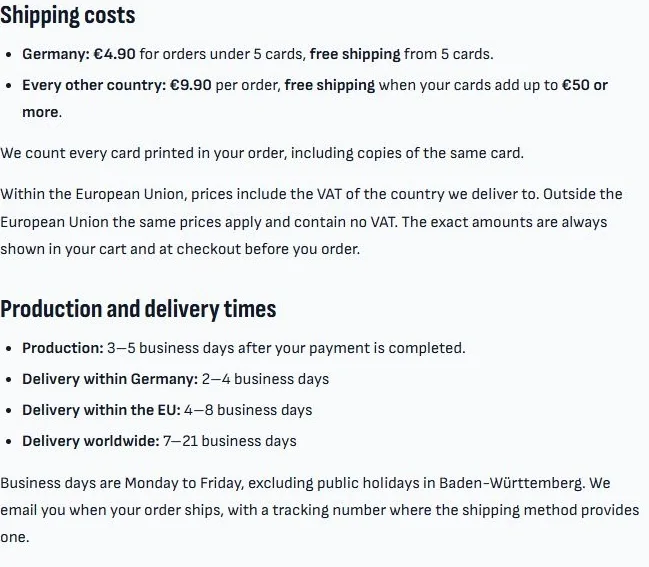
TCGPrintery sends orders from Germany to Denmark. Its shipping page distinguishes production from EU delivery, so allow for both after the files are ready. Add your own time for reviewing the sample and correcting a card. Do not schedule an irreplaceable event around the fastest possible estimate. Confirm the full delivery address and the person receiving the parcel at checkout. If the group meets regularly, treat the first available session after review as the target rather than promising a precise date before the prototype has arrived.
Revise one question at a time
After the session, choose the most important issue and make a controlled revision. If the route icons caused confusion, change those icons without simultaneously replacing the scoring system and every illustration. Keep a short change log so the next group can test whether the specific problem improved. Archive the first version rather than overwriting it. When your six designs and eighteen-card list are ready, prepare the prototype and review the uploaded set. A well-scoped test gives you clearer feedback and a better reason for whatever you choose to print next.