Blog
Make Your Own Game Cards and Personalized Playing Cards
Make your own game cards, a personalised playing deck or a one-card gift: three original examples show which size, layout and front-and-back checks each one needs.
TCGPrintery4 min read
You can make your own game cards, a personalised playing deck or a single gift card from your own artwork, and printing starts from one card. Each project begins with a different question. A game component needs to communicate a rule. A playing deck needs a consistent rank and suit system. A personal gift needs to make its subject and message feel intentional. The layout should serve that purpose.
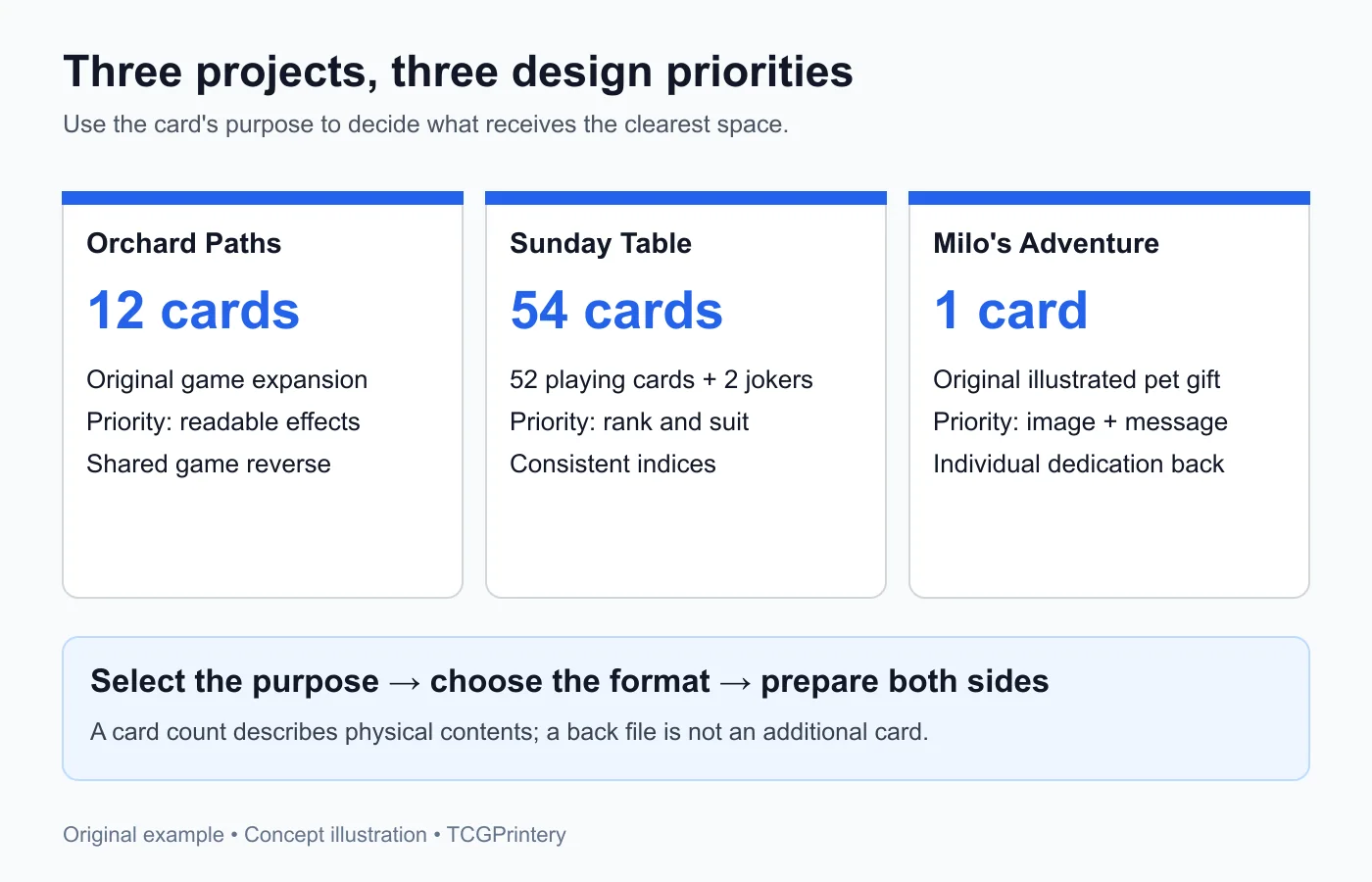
Here are three original planning examples: a small board-game expansion, a family-themed playing deck and a single illustrated gift card. They show how the same printing choices can support different kinds of project without treating every card as the same design problem.
Your own game cards need usable information
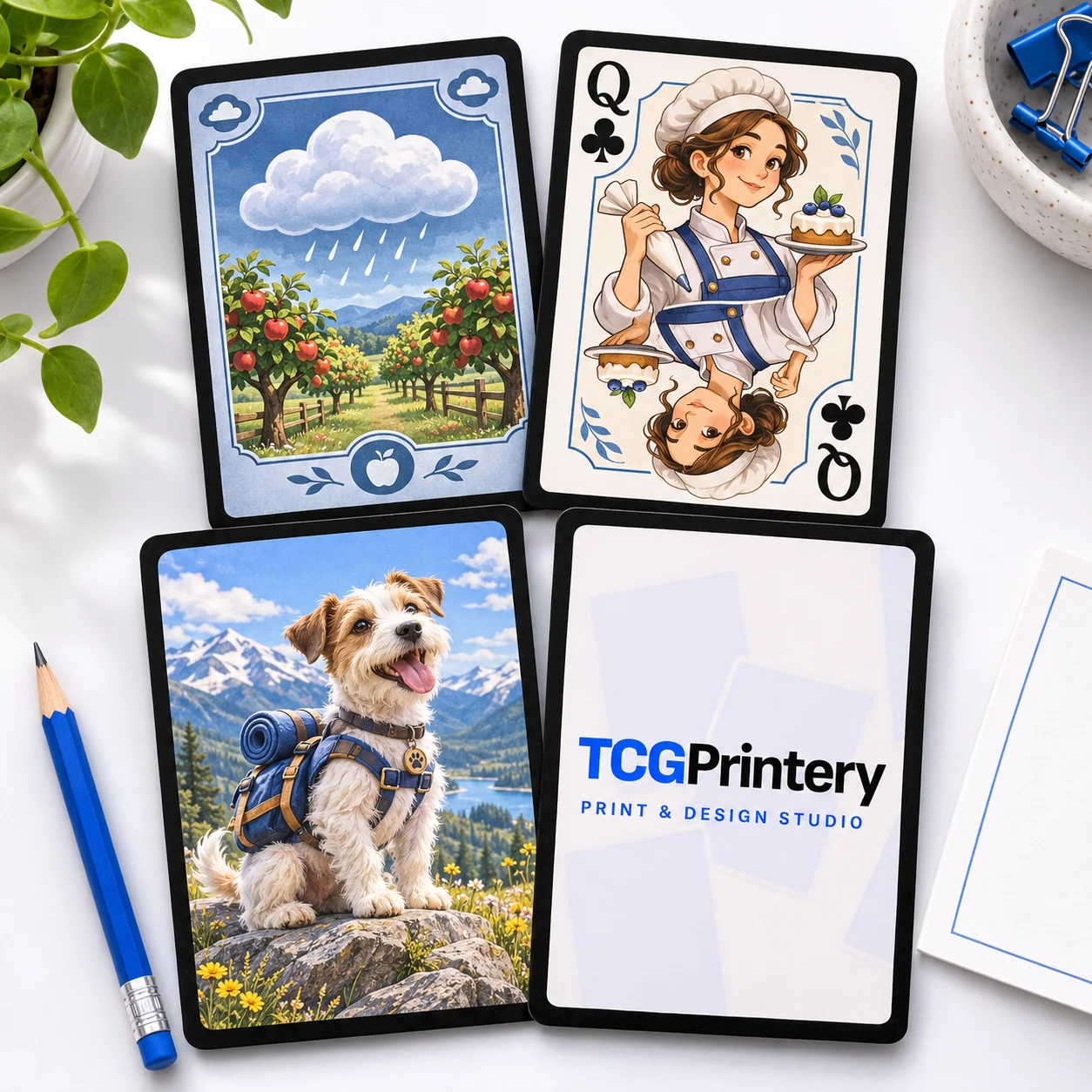
Orchard Paths is a fictional board game with a twelve-card weather expansion. Each card has a title, a clear weather symbol and one short instruction. A shared reverse identifies the expansion while keeping individual cards hidden during play.
The most important check is whether players can find the instruction quickly. Give the symbol and effect a predictable location. Keep flavour text separate from rules, and record the expansion version in the working files. Twelve distinct fronts printed twice would make twenty-four cards, so decide whether you want two full sets or duplicate cards inside one set. If the game is still changing, see how to print cards for playtesting.
A family deck still needs readable playing indices
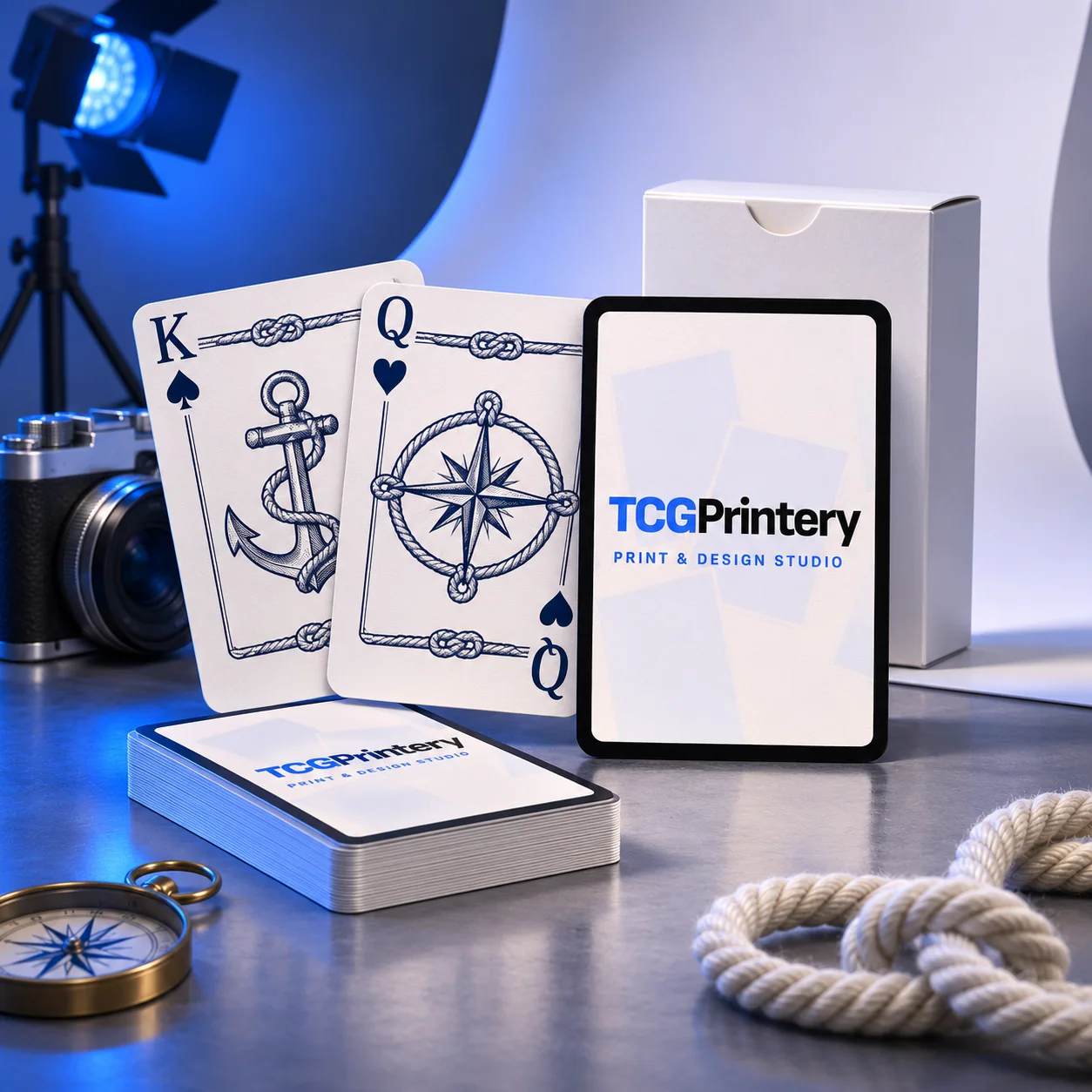
Sunday Table uses original family-themed illustrations for a conventional playing deck. Court cards show imagined hobbies such as baking, gardening and cycling. Number cards keep clear suit arrangements so the pictures do not interfere with recognising the value.
Keep the corner rank and suit positions consistent across every card. Test a fan of paper mockups at the intended physical size to see what remains visible. If the deck includes fifty-two standard cards and two jokers, the contents list should explicitly contain all fifty-four fronts before final export. The custom playing cards guide covers decks, backs and papers in more detail.
A single gift can give the image more space
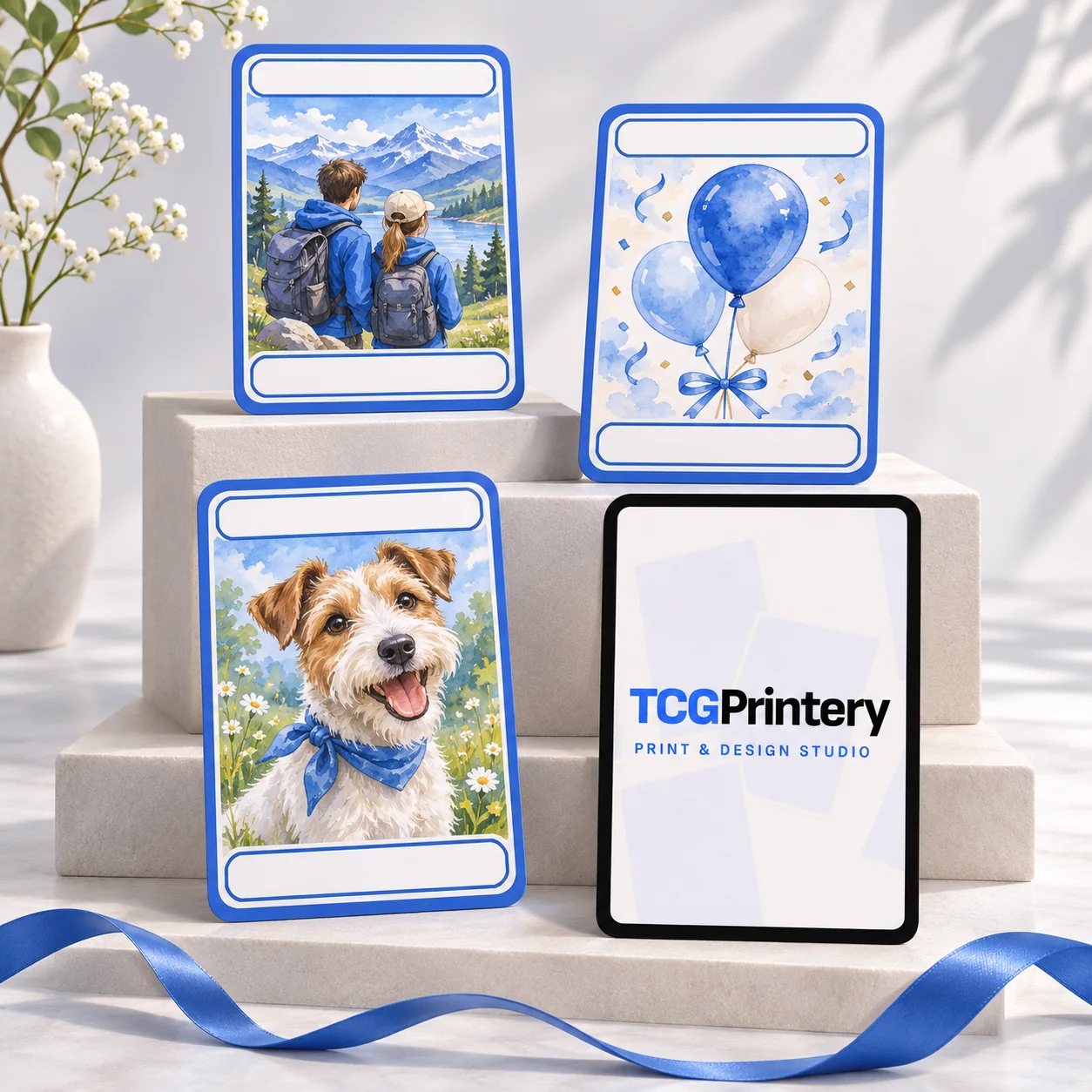
Milo's Adventure is an original pet-inspired gift concept: a friendly illustrated dog on the front and a short dedication on the reverse. It does not need a complete rules system or a full set of ranks. The subject and personal wording can lead the composition.
Use a source image with enough detail for the chosen crop, and check the exact name and message. Keep the dedication short enough to read comfortably. Printing is available from one card, which suits a focused gift or a first layout sample before making a larger collection.
Choose dimensions before adapting the artwork
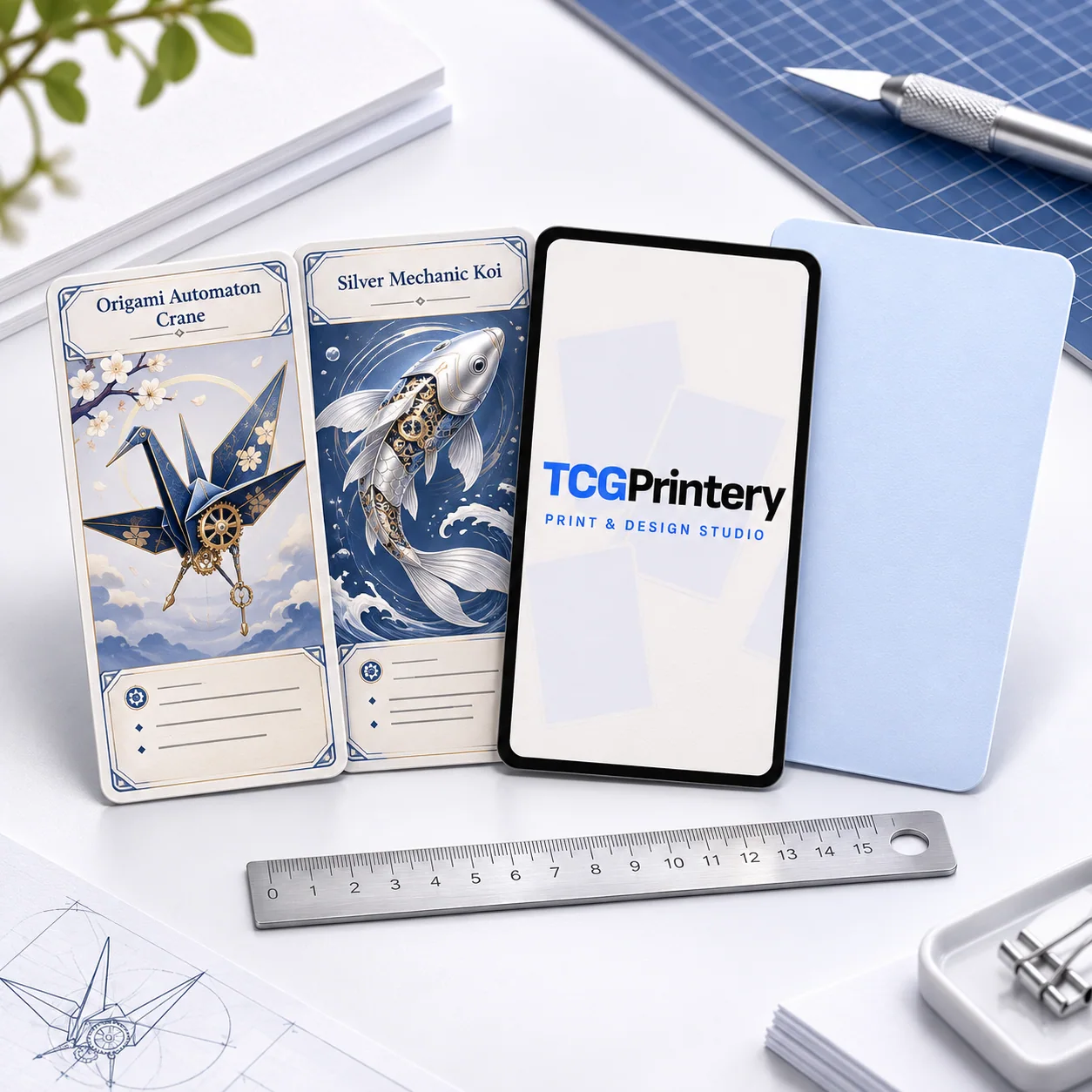
TCGPrintery's public format selection offers Standard at 63 × 88 mm, Japanese at 59 × 86 mm and Tarot at 70 × 120 mm. Select the finished size for the project, then prepare the artwork to match it.
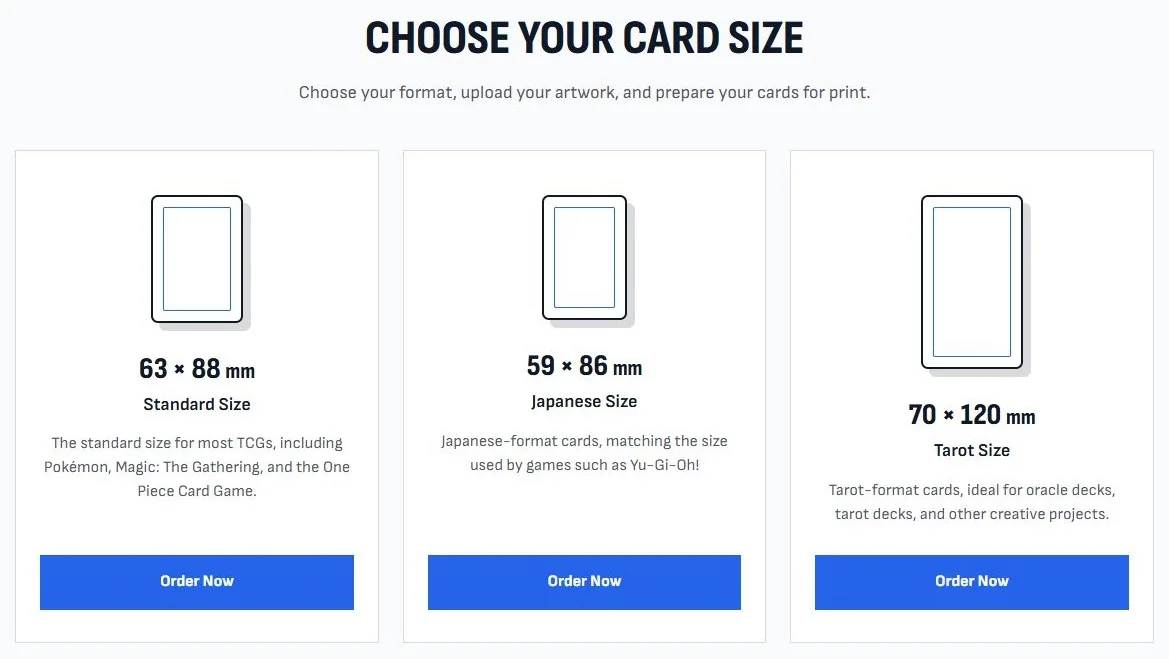
Standard provides a compact starting point for the example playing deck. A taller Tarot card could give the pet illustration more vertical space if that suits the gift. Do not simply stretch one layout into another size. Reconsider the image crop, text panel and margins using the matching template.
Keep fronts, backs and copies connected
Create a contents list with each front filename, its intended reverse and the required copies. A shared back is convenient for a deck, while an individual reverse can carry a dedication or an explanation attached to one specific card.
After import, compare the project against that list. Check that every front has the correct reverse and that physical quantities match the intended set. For the family deck, a missing joker is a contents error; for the gift, an old dedication on the reverse is an equally important error.
Finish with the project's real priority
Compare the stocks and foil choices on the quality page. Select a representative sample that lets you judge the feature that matters most: rule readability, playing-card indices or the personal illustration and message.
Review the finished file using the print preparation guide, then confirm the order configuration. A clear purpose, deliberate layout and checked front-and-back pairing give each of these different projects a useful path from idea to printed card.