Blog
How to Print a Card Game Prototype for Playtesting
Print a small card game prototype with exact card counts, clear version labels and an observation plan for the next design iteration.
TCGPrintery4 min read
To print a card game prototype for playtesting, decide what you want to learn, count exactly the cards needed to observe it and label the version before you order. A printed playtest deck should help you answer a game-design question. A small, clearly versioned deck can be more useful than printing every idea in your notebook at once.
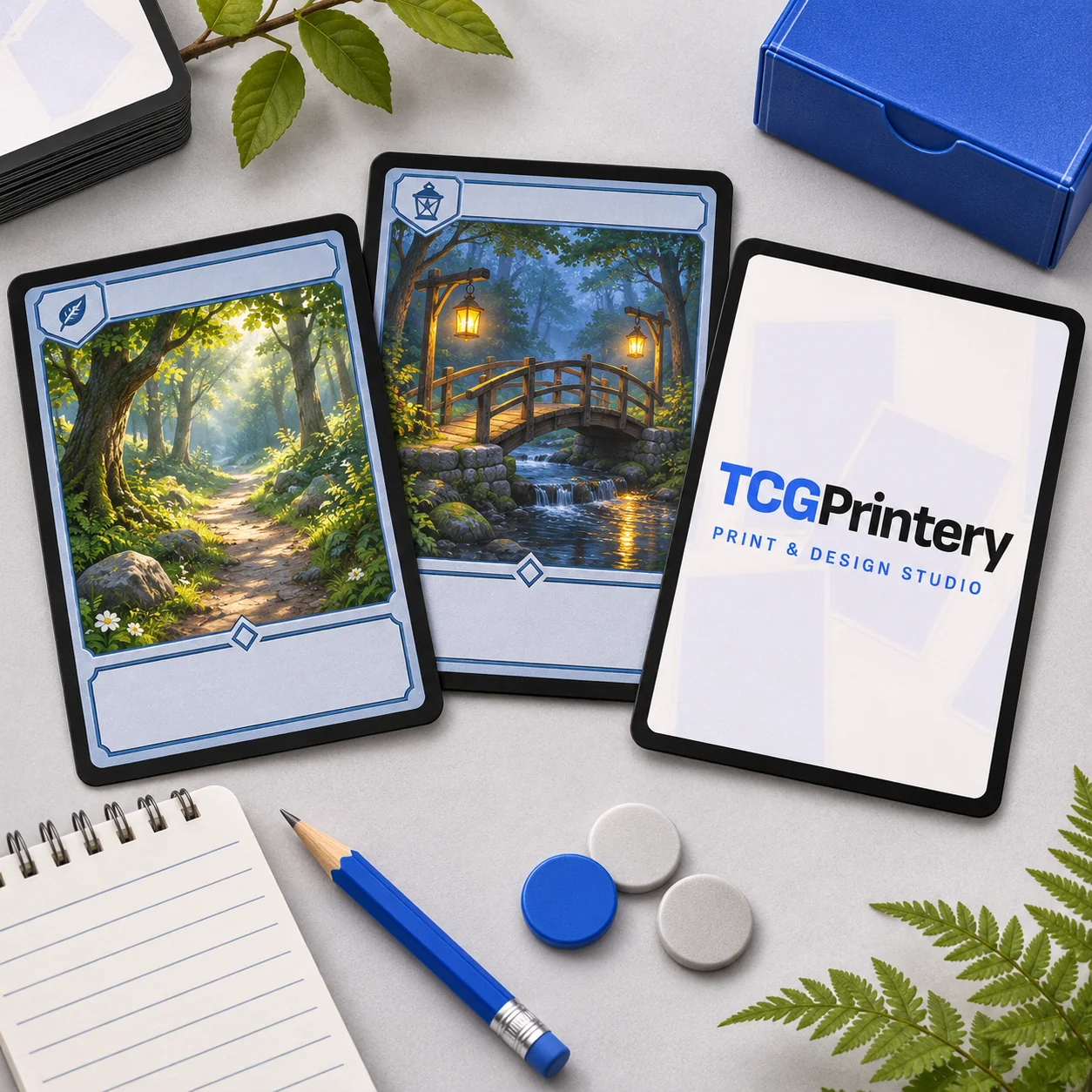
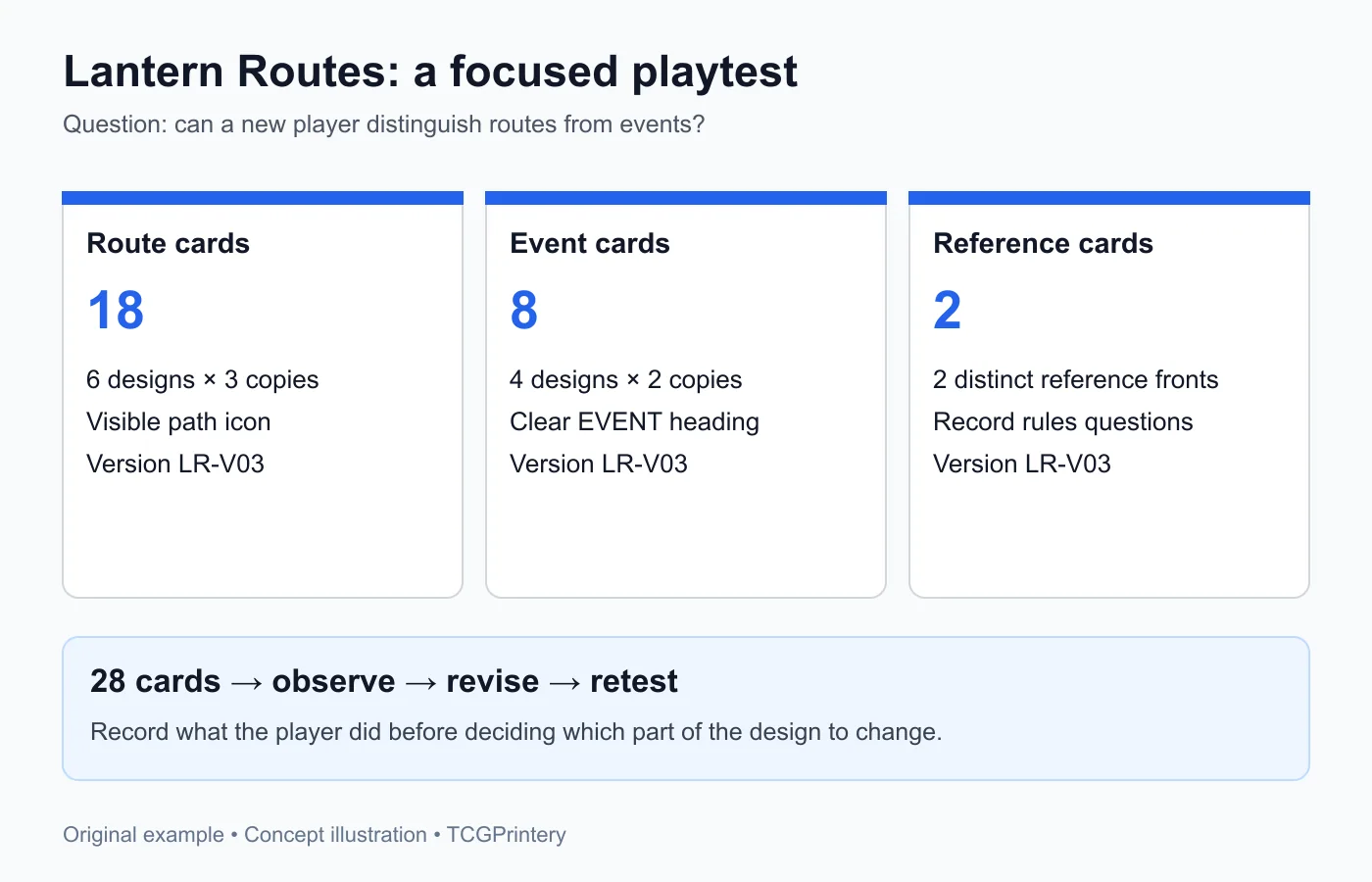
Our original example, Lantern Routes, is a fictional two-player game about connecting woodland paths. The first test asks whether players understand the difference between a route card and an event card without repeated explanations. The plan below describes a proposed test, not results from a session that has already happened.
Choose one question for this version
Write a question that can be observed at the table. “Is the game good?” is too broad to guide a small revision. “Can a new player identify the card type before reading the effect?” suggests what to watch and which parts of the layout may need work.
For Lantern Routes, route cards have a path icon and event cards have a clearly labelled event heading. Their artwork differs, but colour alone does not carry the distinction. This version tests the information hierarchy while leaving the core rules unchanged.
Count the playable deck precisely
The sample deck has six route designs with three copies each, making eighteen route cards. Four event designs with two copies each add eight cards. Two reference cards bring the total to twenty-eight printed cards. Twelve front files are needed if the two references are different.
Record both unique designs and physical copies. A folder of twelve images does not by itself describe a twenty-eight-card deck. Keep the copy-count table beside the exports and compare it with the imported project before ordering. Missing duplicates can change the test as much as a rewritten rule.
Keep the physical specification consistent
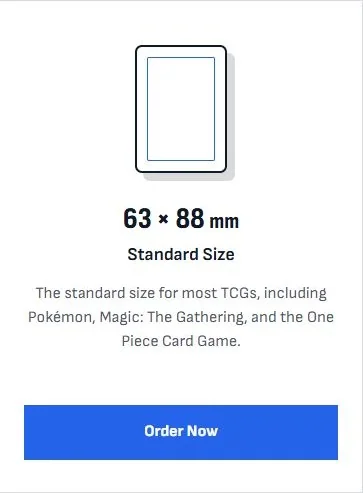
Choose a finished size from the format selector. Standard is 63 × 88 mm, Japanese is 59 × 86 mm and Tarot is 70 × 120 mm. Lantern Routes uses Standard, with one shared reverse for cards that must be indistinguishable when face down.
Use the intended stock consistently within the test deck. If one card type has a different reverse, thickness or reflective effect, players may recognise it before revealing its face. Decide whether that is intended by the rules. Compare available materials on the quality page.
Put the version where you can find it
Name the working release LR-V03 and use that identifier in the export folder and test notes. A small version mark can also sit in a consistent safe location on the card face. Keep it away from the essential playing information.
Maintain a short change log: for example, “event heading enlarged” and “route icon moved above the effect”. Do not combine unrelated rules changes with the layout experiment unless they are necessary. If several things change at once, it becomes harder to connect player observations to a particular decision.
Record what happens before deciding why
Prepare a simple observation sheet with the card identifier, moment in the game and what the player did or asked. “Player searched the rules for the event symbol” is a useful observation. “Player dislikes the art” is a different kind of feedback and should not replace it.
After the session, separate layout confusion from rules confusion. If a heading is missed, adjust its hierarchy. If the heading is understood but the effect is ambiguous, rewrite the effect. Keep the original notes so the next version can answer whether the change helped.
Print the next prototype deliberately
Prepare files using the current print guide, then review fronts, backs and copies together. Printing can begin from one card, but a meaningful game test still requires all the cards needed for its rules and chosen scenario.
Save the approved deck list with the order specification. When you revise the project, give it a new version and repeat the same focused observation. The value of a printed playtest deck is the decision it helps you make next. For the wider design process, see how to make your own trading card game, and for a finished run, card game printing.