Blog
Where to Print Custom Cards for Spain?
Plan custom cards for Spain around an original creator event, with a shared layout, complete-set quantities and time for approval and delivery.
TCGPrintery4 min read
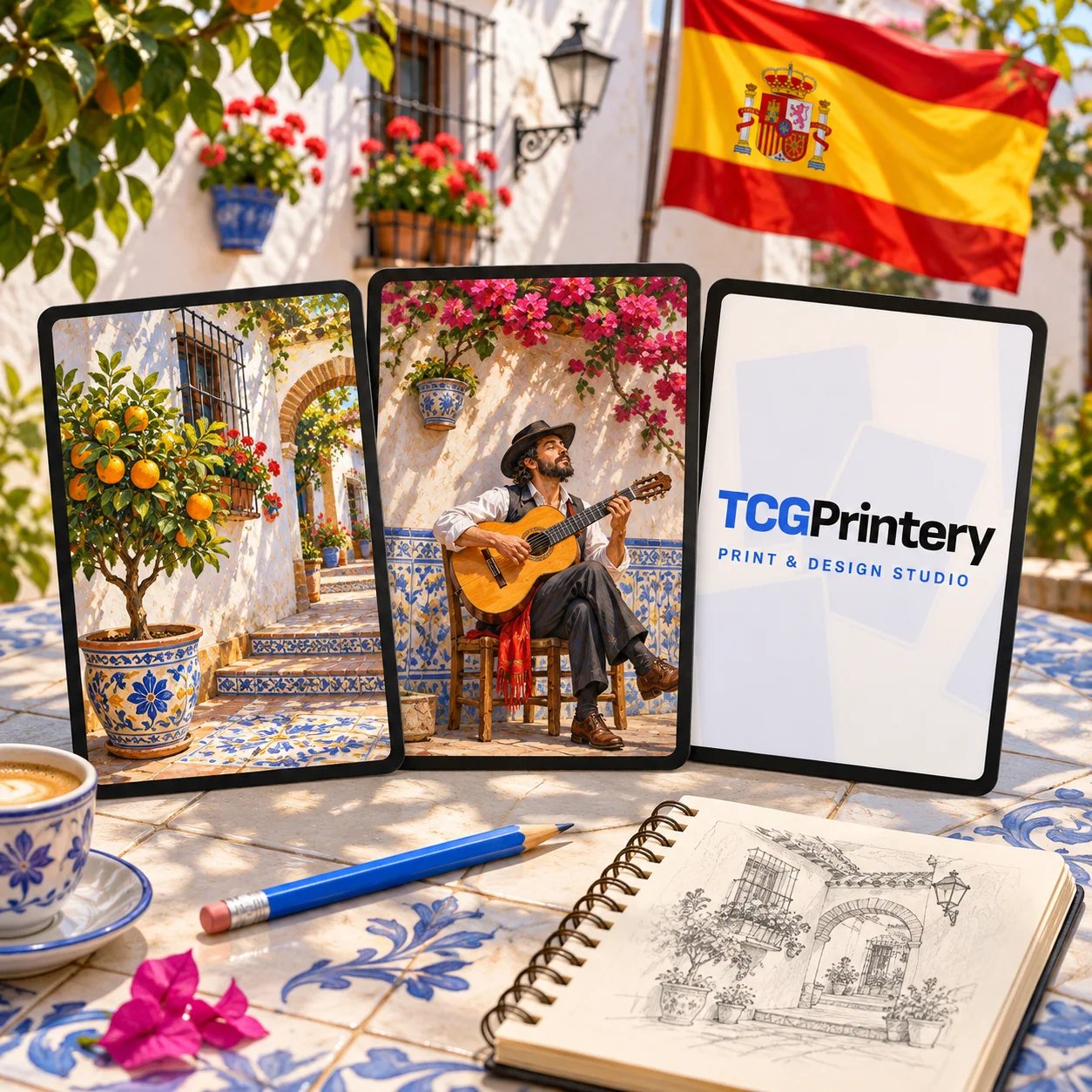
Custom cards for a Spanish creator event can combine artwork, a small collectible and a reason for visitors to explore the whole programme. TCGPrintery prints original card designs in Germany and offers delivery to Spain. To prepare an event collection, connect the artwork plan to a clear card count and a realistic approval date.
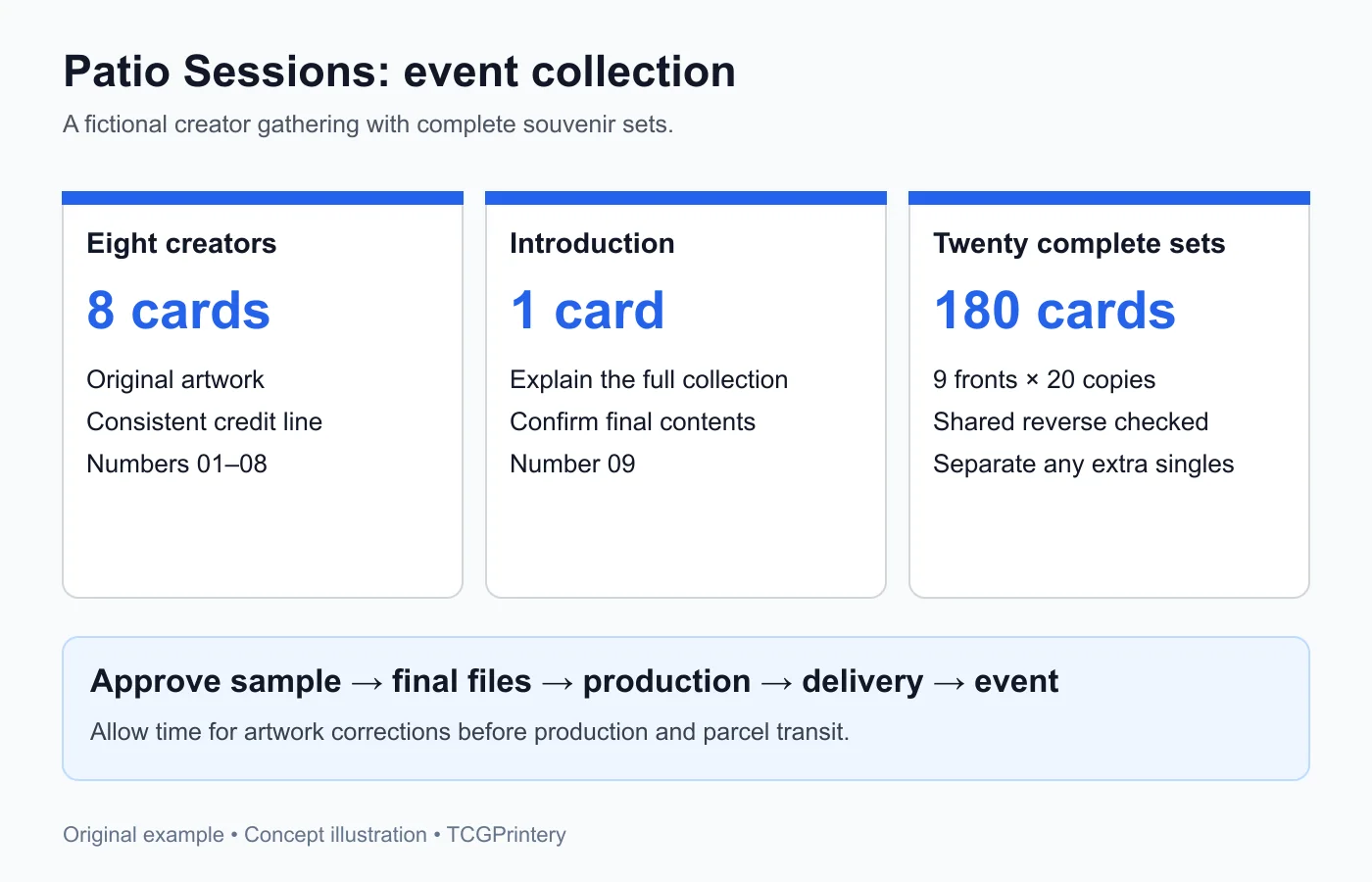
Our original example, Patio Sessions, is a fictional weekend illustration gathering. Eight participating creators contribute one card each. A ninth card introduces the collection. The aim is a coherent nine-card souvenir set, with all artwork approved before the event order is submitted.
Make the visitor's experience concrete
Decide how visitors receive the cards. Are they given a complete set, choosing one illustration or collecting individual cards from different tables? These approaches need different quantities and a different explanation on the introduction card.
Patio Sessions uses complete sets for a small group of participants. Twenty sets need 180 physical cards: nine fronts with twenty copies of each. If you want additional individual cards for display or giveaways, list those separately so the complete-set quantities remain easy to check.
Build a shared frame for different creators
Give each contributor an artwork window, a title field and a credit line. A consistent number such as 01/09 helps the collection feel intentional and makes missing cards easier to spot. Agree on how names and punctuation will appear before the final export.
The example uses original drawings of a tiled courtyard, a street musician and small architectural details. These are creative directions rather than images of an actual commissioned event. Allow each artist's style to remain visible while keeping title, credit and numbering positions consistent.
Choose a physical format for the content
TCGPrintery's format selection offers Standard 63 × 88 mm, Japanese 59 × 86 mm and Tarot 70 × 120 mm. Standard suits the compact souvenir concept in this example. A taller Tarot layout may suit a different project with more illustration space.
Use the matching template before contributors finish their artwork. Keep important details away from the trim area and review the longest title at actual size. If the cards contain two languages, allocate space from the start instead of reducing the font at the last minute.
Approve the difficult card first
Choose the image with the most delicate line work and the card with the longest credit for your initial layout review. These expose problems that a simple, bold illustration can hide. Check the shared reverse as carefully as the fronts.
Compare materials on the quality page and prepare a representative physical sample when the schedule permits. Keep stock and finish choices attached to the approved version. A sample on one material does not show how the design will look on a different foil finish.
Allow time for production and delivery to Spain
The current shipping terms list €9.90 outside Germany, with free shipping from €50 in card value. The listed production period is three to five business days after payment; estimated EU delivery then takes four to eight business days.
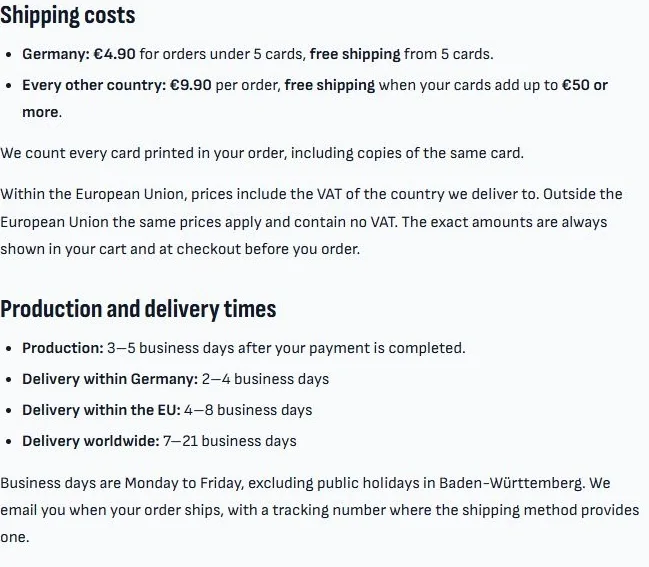
Confirm the actual destination and final terms during checkout. For an address with special delivery requirements, check those details before committing to an event promise. Leave space for sample review, corrections and receiving the finished cards rather than scheduling the event at the edge of the stated estimates.
Freeze one release for the event
Use a dated folder for the approved nine fronts and shared back. Check every title, artist credit and card number against the contents list. Once the event version is submitted, keep later creative changes in a separate folder for a future edition.
A clear event collection is easier to print, assemble and explain. Work backwards from the event date, approve a representative sample early and keep the exact set contents connected to the final files.