Blog
Where to Print Custom Cards for Italy?
Create custom cards for Italy with a coherent art collection, complete-set quantities, a representative sample and delivery planning.
TCGPrintery4 min read
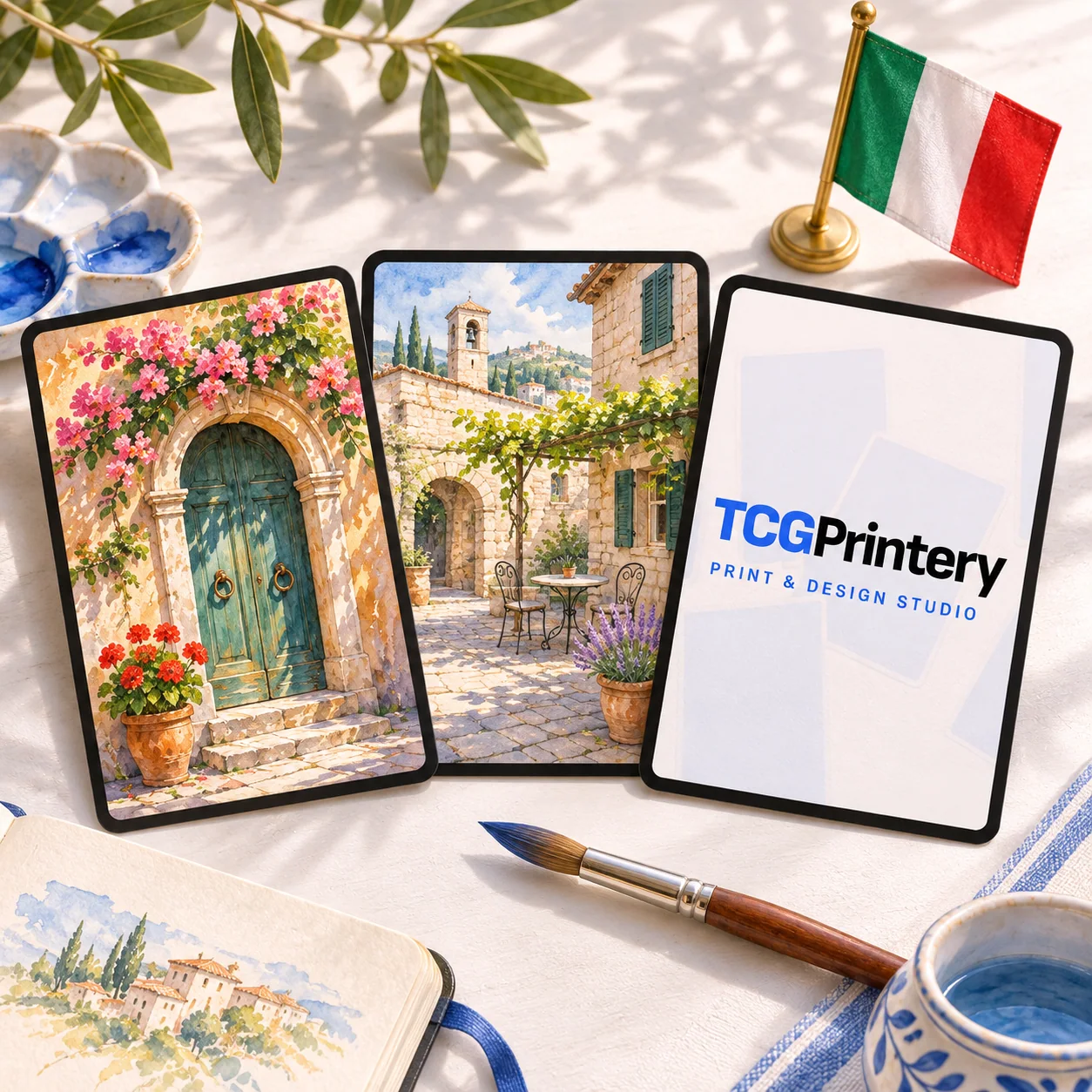
An illustrated card collection can give an Italian art group, club or small creative project a format people can hold, collect and discuss. TCGPrintery prints custom cards in Germany and offers delivery to Italy. The useful starting point is a complete collection plan: which pictures belong together, how much text each needs and how many finished sets you want.
Consider Streets in Watercolour, an original example for an imaginary illustration club. Twelve artists each contribute one drawing of a doorway, courtyard or street detail. A thirteenth card introduces the project. This is a planning example, not a previously produced customer collection.
Give the collection one consistent structure
Agree what each contributor supplies before assembling the cards. For Streets in Watercolour, every card has an illustration, its title, the artist's name and a two-line note. Ask for the same information in the same order so missing credits do not appear only during the final export.
A shared layout can unite different drawing styles without making the artwork look identical. Keep title position, credit size and numbering consistent. Leave the illustration area flexible enough for both a tall doorway and a broad courtyard. Check the longest name and title early.
Choose a format around the artwork
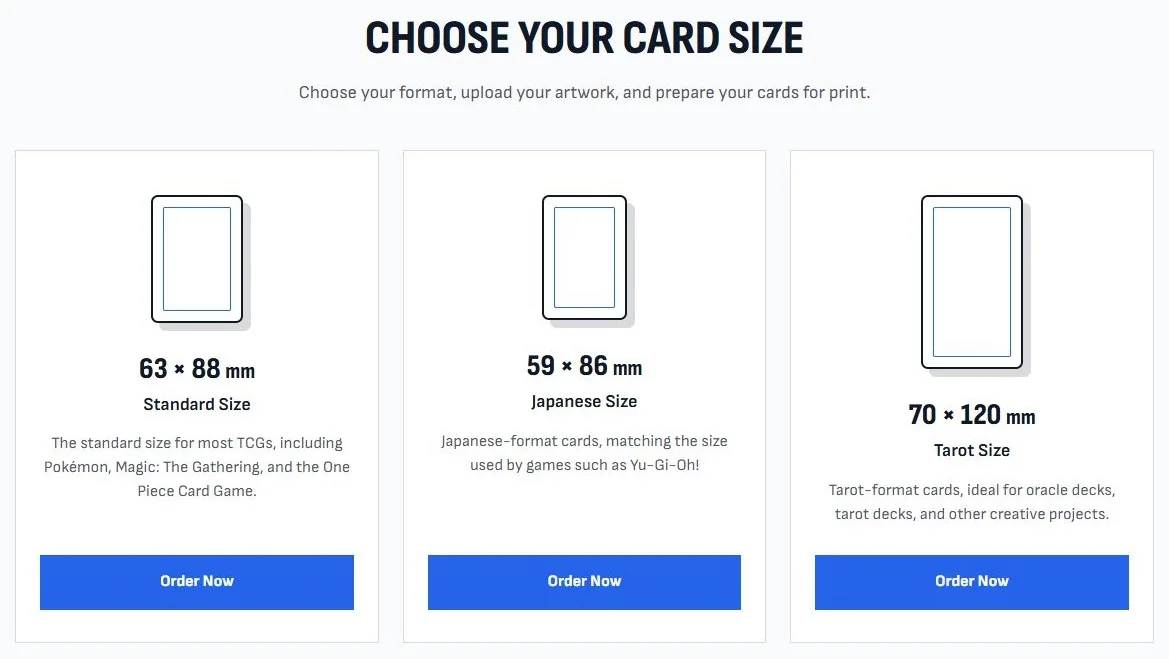
TCGPrintery's three card formats are Standard at 63 × 88 mm, Japanese at 59 × 86 mm and Tarot at 70 × 120 mm. Standard offers a compact collection; Tarot gives a taller composition for artwork with a short accompanying note.
The example uses Standard so the cards remain compact enough to arrange together on a table. Prepare one tall illustration and one wide illustration in the chosen template before adapting all twelve. Crop intentionally or create a consistent artwork window instead of stretching the images to fill the card.
Count full sets rather than artwork files
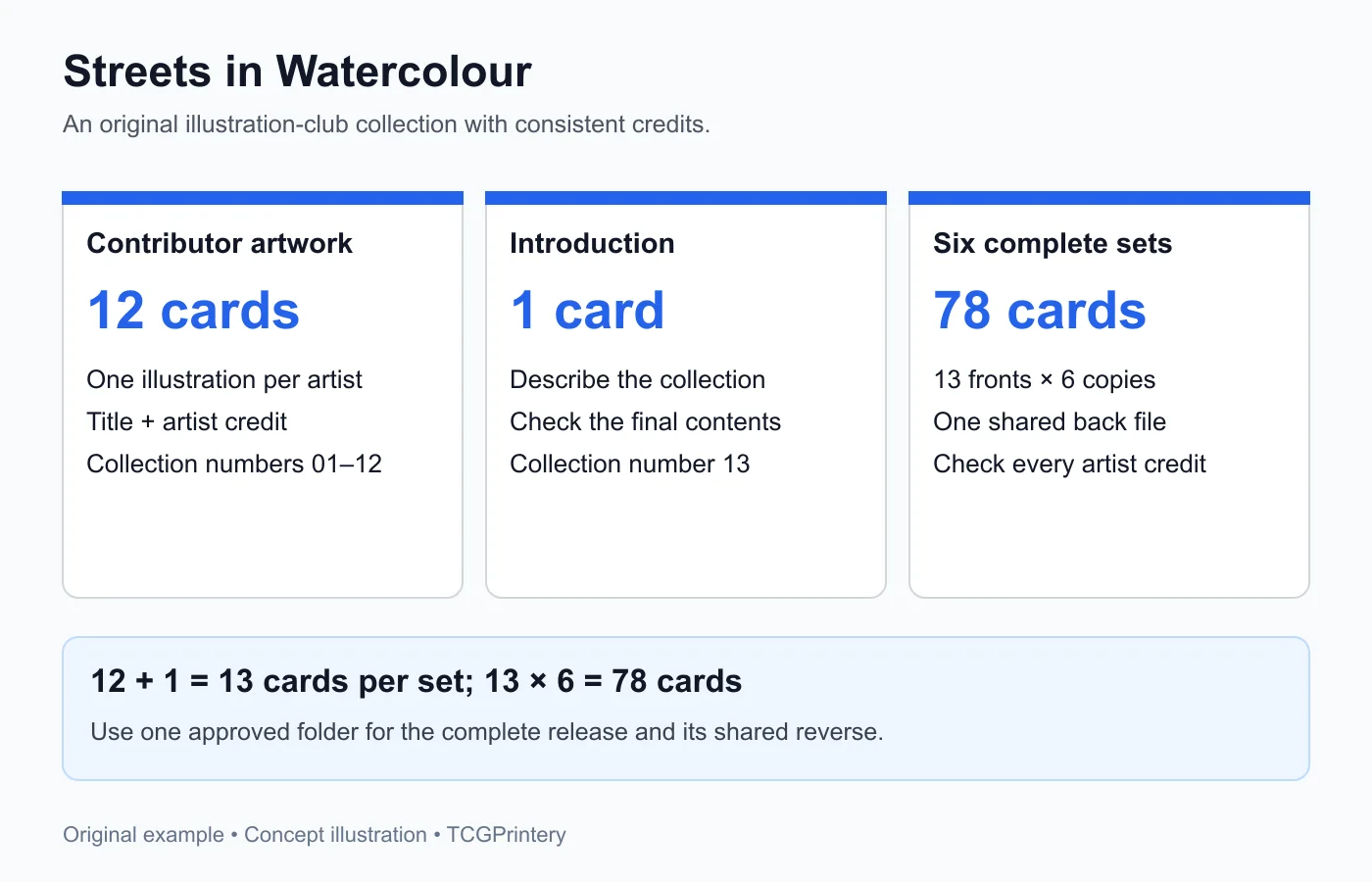
Twelve artwork cards plus one introduction make thirteen cards per complete set. Six sets therefore require seventy-eight printed cards. The shared reverse is a separate artwork asset; it does not add another physical card to each set.
Create a numbered list from 01 to 13 and record six copies of each front. That list is also useful when checking imported artwork and assembling the finished collection. If an artist changes a title after approval, update the relevant export and the contents list together.
Prepare a representative sample
Select the card with the finest drawing detail and the one with the longest caption. Use the print-ready file guide to prepare the image size, bleed and safe text area. Keep a clean source file so changes can be made without repeatedly compressing the artwork.
Compare stock and finish options on the quality page. White Core and Black Core are available alongside foil choices. For watercolour artwork, evaluate whether the chosen finish supports the subtle colour and line work you want. A sample helps you make that decision using the actual project files.
Plan delivery from Germany to Italy
The current shipping terms list €9.90 for countries outside Germany, with free shipping from €50 in card value. Applicable EU VAT is included in the displayed pricing. Check the destination and final total in the order before payment.
Allow for separate stages: production is listed as three to five business days after payment, followed by an estimated four to eight business days for EU delivery. Sample approval and any artwork revision add time before the final production order. For an event, leave room for those decisions instead of counting only the parcel's journey.
Approve the collection as a whole
Review every title, credit, number and reverse before ordering the complete run. Check that the introductory card describes the same collection that appears in the files. Keep the approved folder separate from working submissions so a late draft cannot replace a final illustration accidentally.
A well-organised collection makes different artistic voices feel part of one project. Start with a representative sample, then move to the complete set when its layout, material and contents have been agreed.