Blog
Custom Playing Cards Online: Your Checklist Before Ordering
Ordering custom playing cards online? Use this complete-deck checklist first: card count, artwork size, shared back, material, sample and delivery destination.
TCGPrintery4 min read
You can get custom playing cards printed online at TCGPrintery, from a single card to complete decks, but a useful comparison starts with your deck specification. A printer cannot infer whether fifty-two files include jokers, whether every card shares a back, or whether the artwork was designed for the offered dimensions. Put those answers in one short checklist before comparing materials, samples and the total delivered order.
Describe a complete deck, not a picture
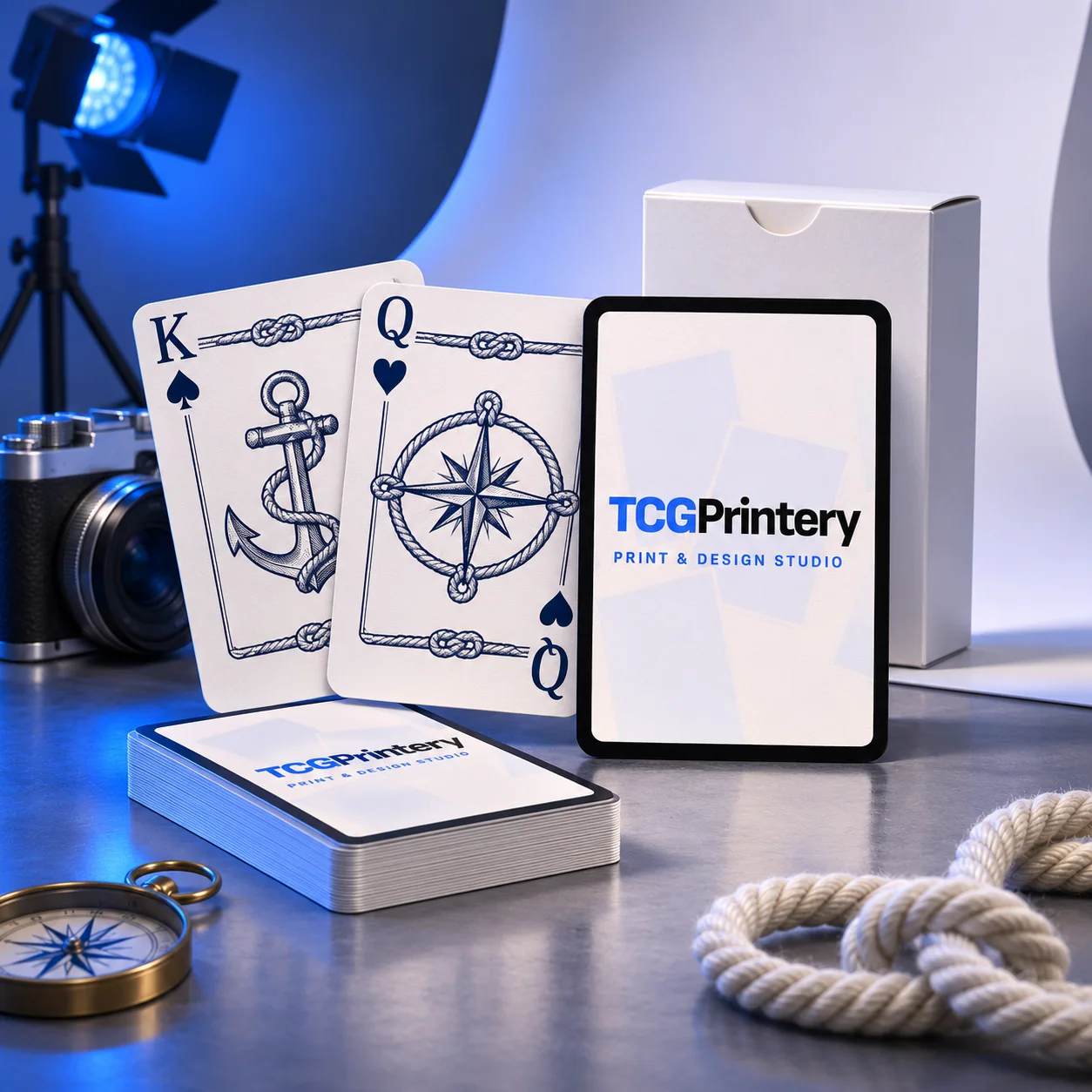
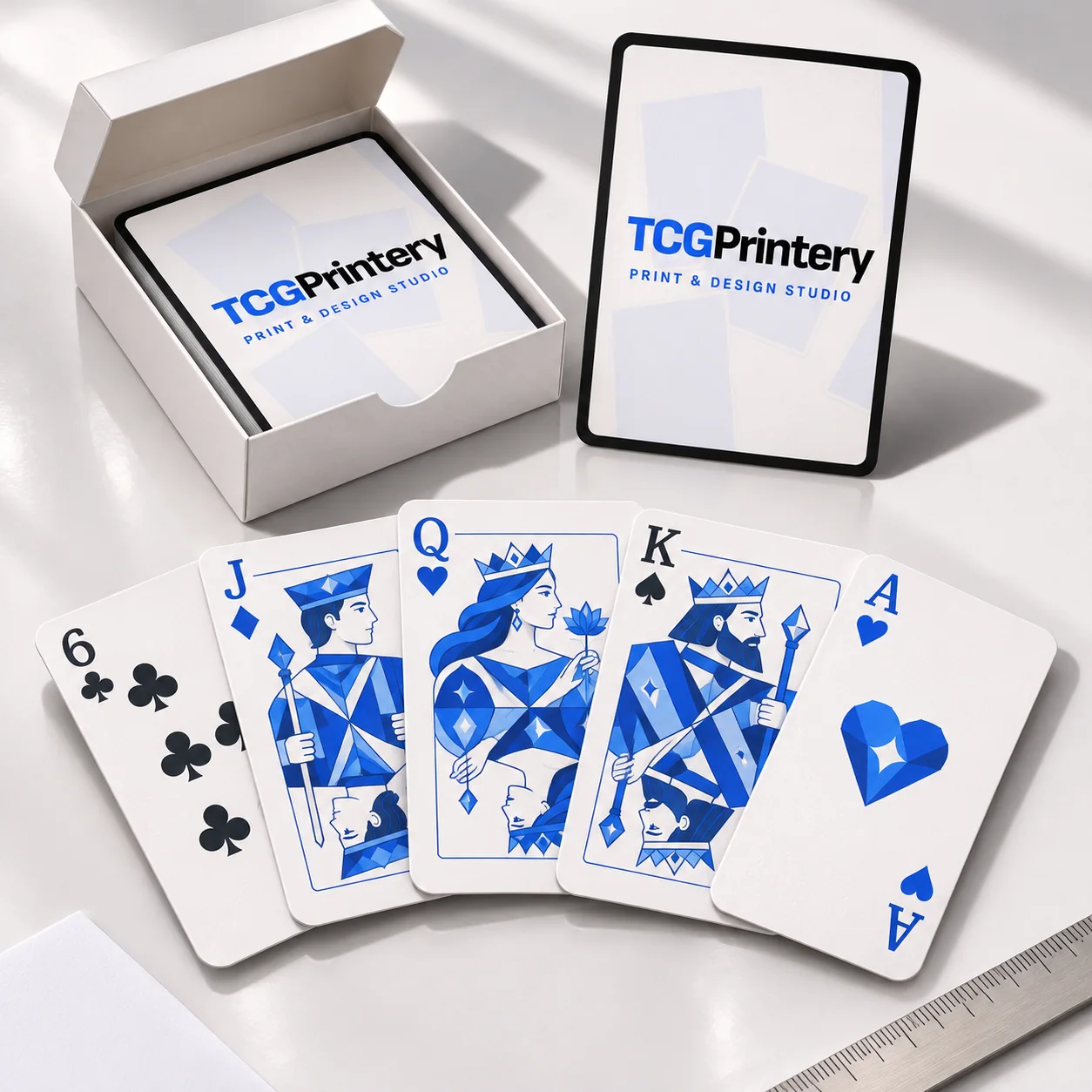
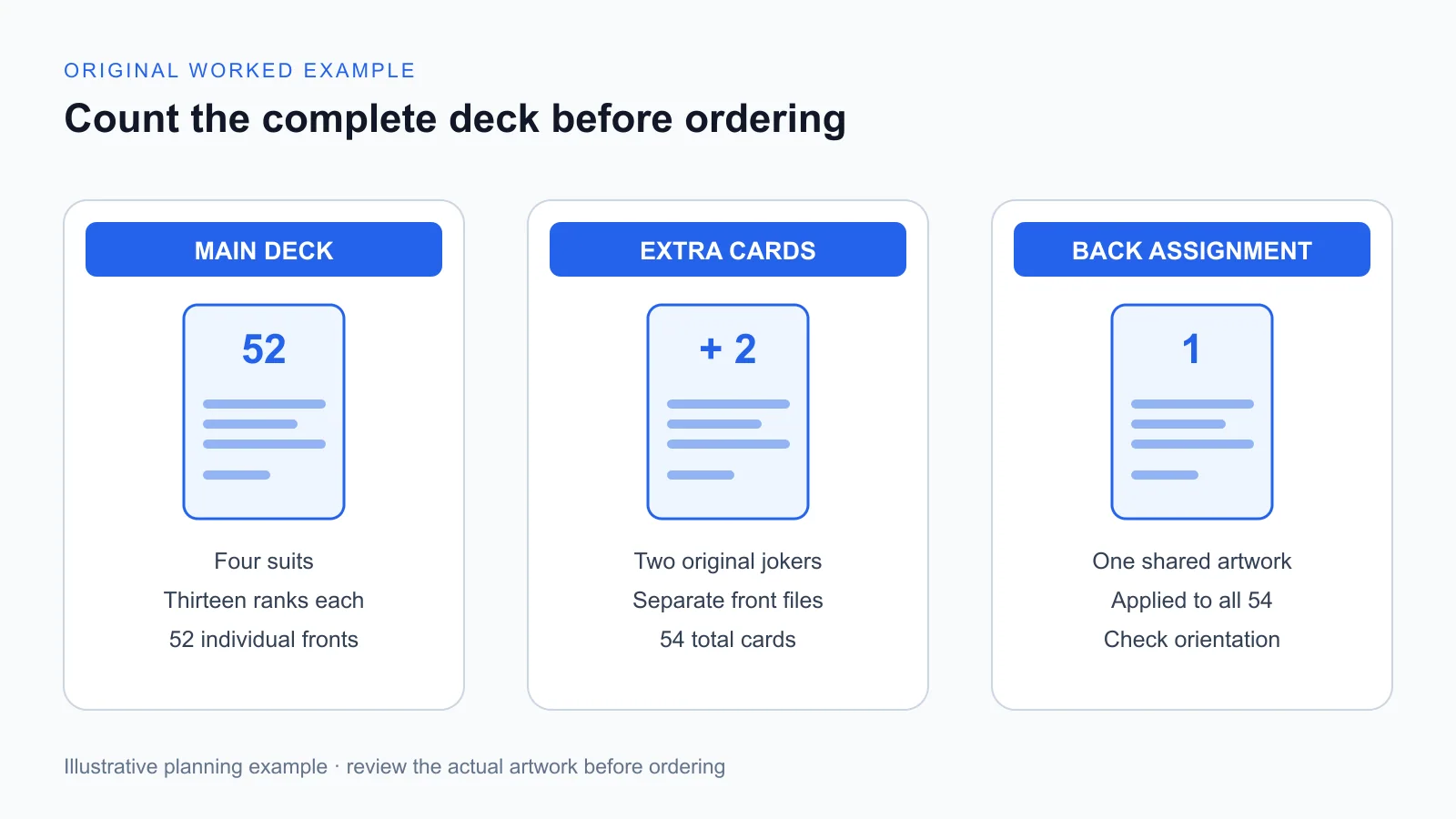
Use a fictional coastal playing-card deck as the example. It has four suits with thirteen ranks each, plus two jokers, for fifty-four physical cards per complete deck. The court illustrations are original geometric figures, while the corner indices remain easy to recognise. Write down that count before uploading anything. Three complete sample decks require one hundred and sixty-two cards. A folder with fifty-four images describes unique fronts, not necessarily the number of finished cards you intend to receive. Keep deck quantity and card quantity visibly separate.
Check the offered size against your artwork
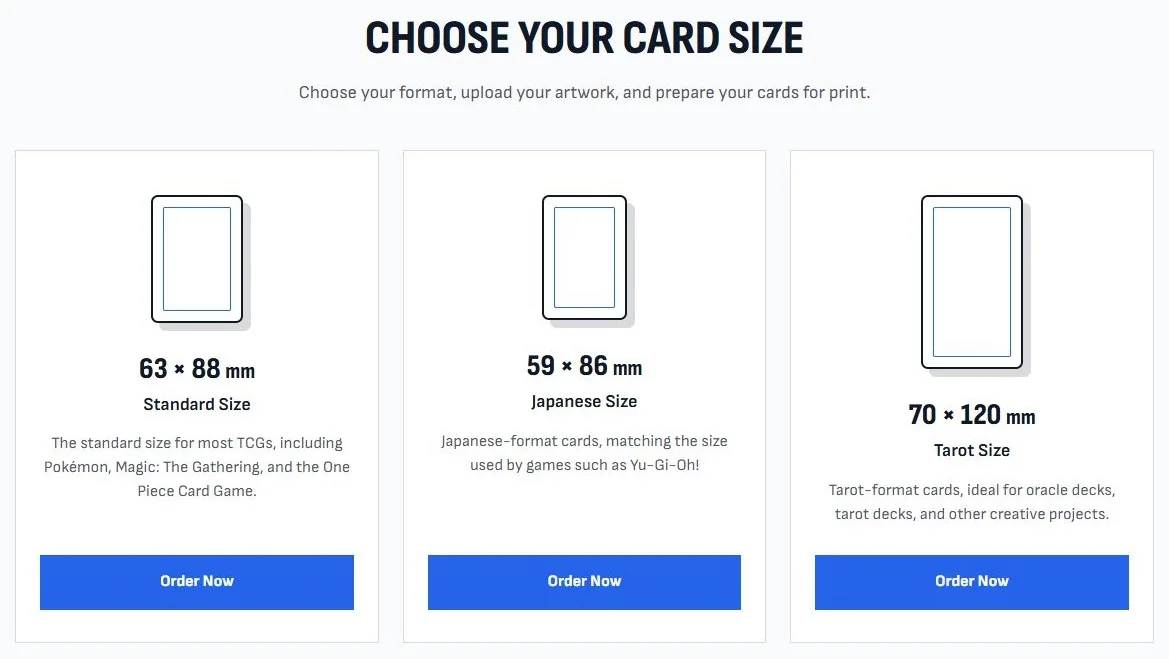
Online printers may offer different finished dimensions under similar everyday names. Choose a concrete size from the current format selection and compare it with your source canvas. Do not stretch an existing design merely to make its edges fit. A small aspect-ratio difference can distort a circular suit symbol or a carefully drawn face. Reposition the artwork within a correct canvas instead. For our coastal deck, test a number card, a court card and a joker first, because those layouts use the available space differently.
Treat the back as a separate deliverable
A complete deck needs a deliberate back assignment. Check that the accepted back is applied to every intended card and that its orientation supports the way the deck will be used. A two-way design can be helpful for games where cards turn in the hand, but that is a design choice rather than an automatic printing feature. Keep the back file named separately from the fronts. Review it at actual size, especially any narrow border or small logo. A lovely front does not compensate for inconsistent backs that make individual cards recognisable.
Compare samples with a practical checklist
When considering material options, decide what the deck needs to do. A display deck, a frequently shuffled game and a keepsake gift can have different priorities. Examine a sample for readable corner indices, consistent front-to-back orientation and comfortable handling. Shuffle and deal the full deck rather than inspecting one attractive card in isolation. Record the exact material and file version you reviewed. If you later change either, do not assume the original sample proves the revised combination. Photographs can illustrate appearance, but they cannot fully communicate feel.
Read the order and delivery details together
Compare the total order using the same card count, material and destination. The playing card cost guide shows how card counts and materials change the price. Include any packaging that you arrange separately; a box shown in an illustration is not a promise that custom packaging is included. Read shipping information alongside the product details and distinguish production from transit. Check the delivery address before payment. If the cards are for an event, allow time for a sample and a possible correction before placing the final run. A published estimate helps planning but does not guarantee a particular arrival day.
Make the final review repeatable
Lay out the front files in rank-and-suit order and compare them against your deck list. Confirm that no rank is missing, no joker has been counted twice and every file is the intended revision. Follow the file-preparation guide for resolution, safe placement and bleed. Save a copy of the reviewed list with the final files. When the specification is clear, start the order and check the uploaded cards against that record. For sizes, papers and backs in one place, see the custom playing cards guide. The best online workflow is one you can understand and repeat when another deck is needed.