Blog
Print Tarot-Size Cards on Demand
Design and print original Tarot-size cards at 70 × 120 mm, with readable prompts, a consistent back and a carefully reviewed first sample.
TCGPrintery4 min read
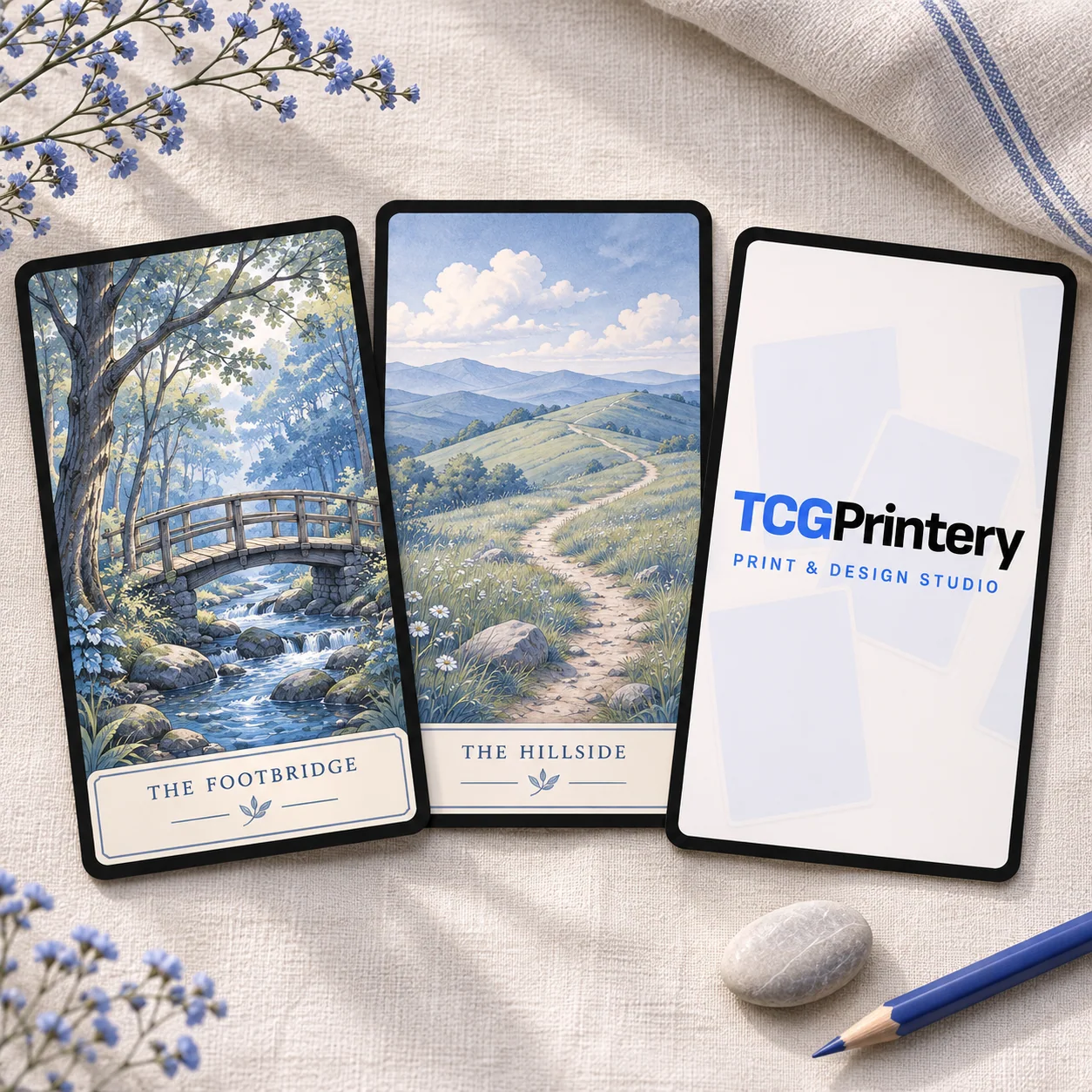
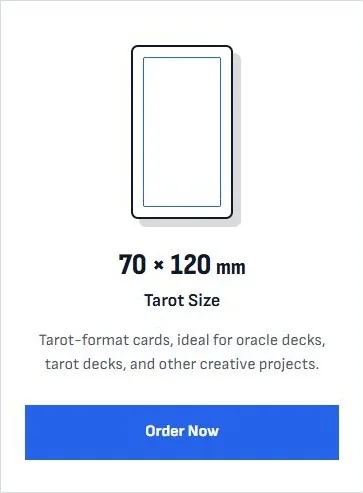
Tarot-size cards give an illustration a tall format and leave room for a title, symbol or short prompt. At TCGPrintery, the current Tarot option measures 70 × 120 mm. You can use that format for your own tarot artwork, an original oracle collection or another creative card project.
Our example, Quiet Landmarks, is an original twelve-card illustrated prompt set. Each card pairs a landscape with a simple observation prompt. It is a creative project, not a health product or a promise about wellbeing. The tall format supports a large image and a small, clearly separated text area.
Design for the actual tall canvas
Start a new layout using the Tarot dimensions rather than stretching a Standard card. The proportions differ, so the artwork window, title and text need deliberate placement. A stretched image can distort a portrait or change the shape of a landscape feature.
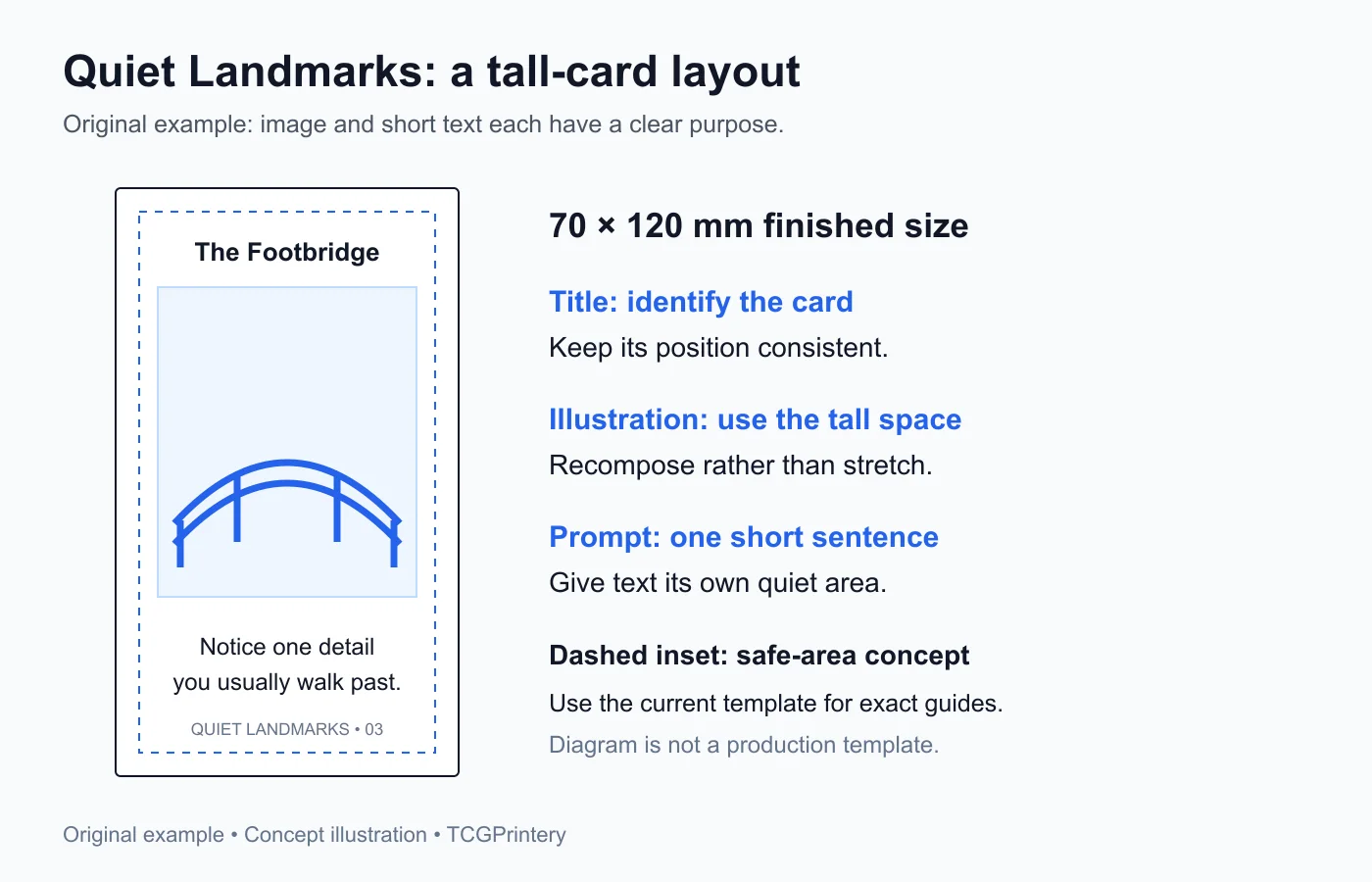
Quiet Landmarks places the title near the top, the illustration through the middle and a short prompt below it. Keep essential details inside the safe area. Use the matching template and current file guide for the export setup.
Give each text area a distinct job
The title identifies the card; the prompt invites an action or reflection; a small footer can carry the collection number. Avoid making all three equally prominent. Readers should be able to find the important line without searching through decorative details.
For the example card “The Footbridge”, the prompt is “Notice one detail you usually walk past.” That sentence fits a dedicated panel without crowding the illustration. If a card needs a full paragraph, consider whether some explanation belongs in a separately arranged guide rather than shrinking it until it becomes difficult to read.
Choose a back that supports the whole set
A shared back helps twelve different landscapes feel like one collection. Keep the same reverse file and orientation across the set. If the cards are intended to be used in either direction, check the reverse design's symmetry and decide how the front should behave when rotated.
Review the back at the final physical size. Fine lines and tiny lettering can look more prominent on a large monitor than they will in the hand. Give any meaningful central detail enough space from the trim edge and use the same export standard as the fronts.
Match the material to the illustration
The quality page presents White Core, Black Core, Holo Foil, Partial Foil, Surge Foil and Galaxy Foil. Compare the visual examples before choosing the effect you want to evaluate. A reflective treatment changes how the image reads as the light moves.
For Quiet Landmarks, a plain-stock sample is a useful first check of the line work and short text. A separate foil experiment could use the same illustration if the creator wants to explore that appearance. Keep those as distinct sample configurations rather than assuming one represents the other.
Count the collection and check every pair
Twelve unique fronts printed once make one twelve-card set. Four complete sets require forty-eight physical cards. The shared back is assigned to each front; it is not an additional thirteenth card. Record any introduction or reference card separately if you add one.
After upload, inspect the front order, copies and reverse assignment. Check all titles and numbers against a simple contents list. For a collection with individual backs, review every front-and-back pair so explanatory text stays attached to the correct illustration.
Use the first print to make a decision
Printing starts from one card, which allows a focused layout or material sample before a complete collection. Select the card with the longest text and most delicate art when choosing that sample. It should represent the challenge you need to resolve.
Once the layout is approved, apply the same rules consistently to the remaining cards. A successful tall-format set gives the artwork room, preserves readable text and keeps every front connected to the intended reverse.