Blog
Custom Oracle Cards: How to Design an Oracle Deck
Design custom oracle cards around one purpose, one illustration and one short prompt per card, then print the deck in a concrete size: Tarot at 70 × 120 mm.
TCGPrintery4 min read
Custom oracle cards work best when the deck has one purpose and every card follows the same reading rhythm: an image that invites attention, a title that anchors it and a prompt that leaves room for the reader. Oracle size describes a style of project more reliably than a universal measurement, so choose an actual offered size before you design. A thoughtful deck does not need crowded symbolism or long instructions on every face.
Give your oracle deck a specific purpose
Consider a fictional nine-card reflection deck for a creative journaling routine. Its purpose is to help someone choose a small action before beginning work. That is narrower and easier to design than a deck promising answers to every life decision. Group the cards into three themes: noticing, choosing and beginning. Each theme gets three cards, giving the set a clear structure without requiring a complicated guidebook. Treat the prompts as creative invitations. Avoid presenting the cards as diagnoses, predictions or a substitute for professional advice.
Prototype three different cards first
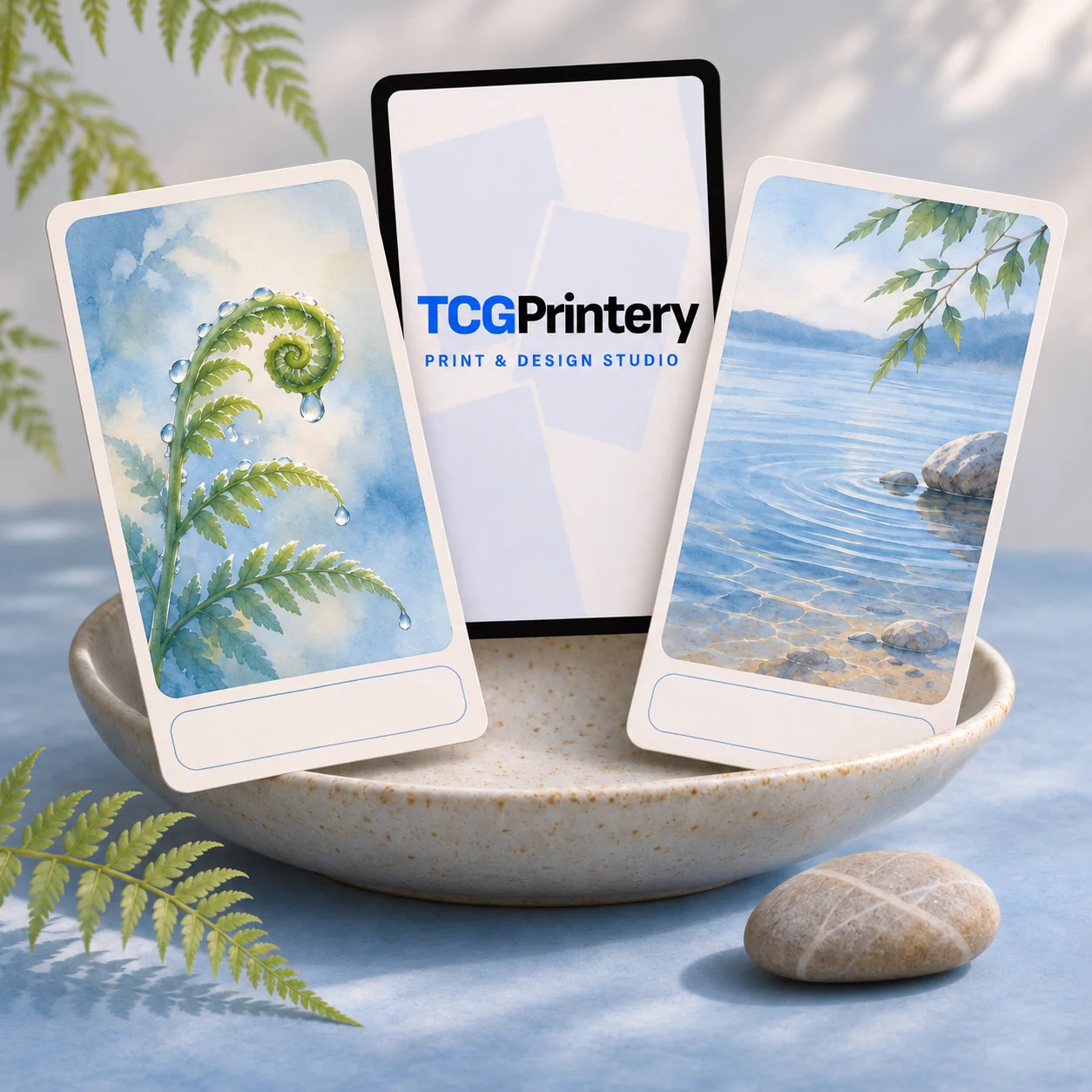
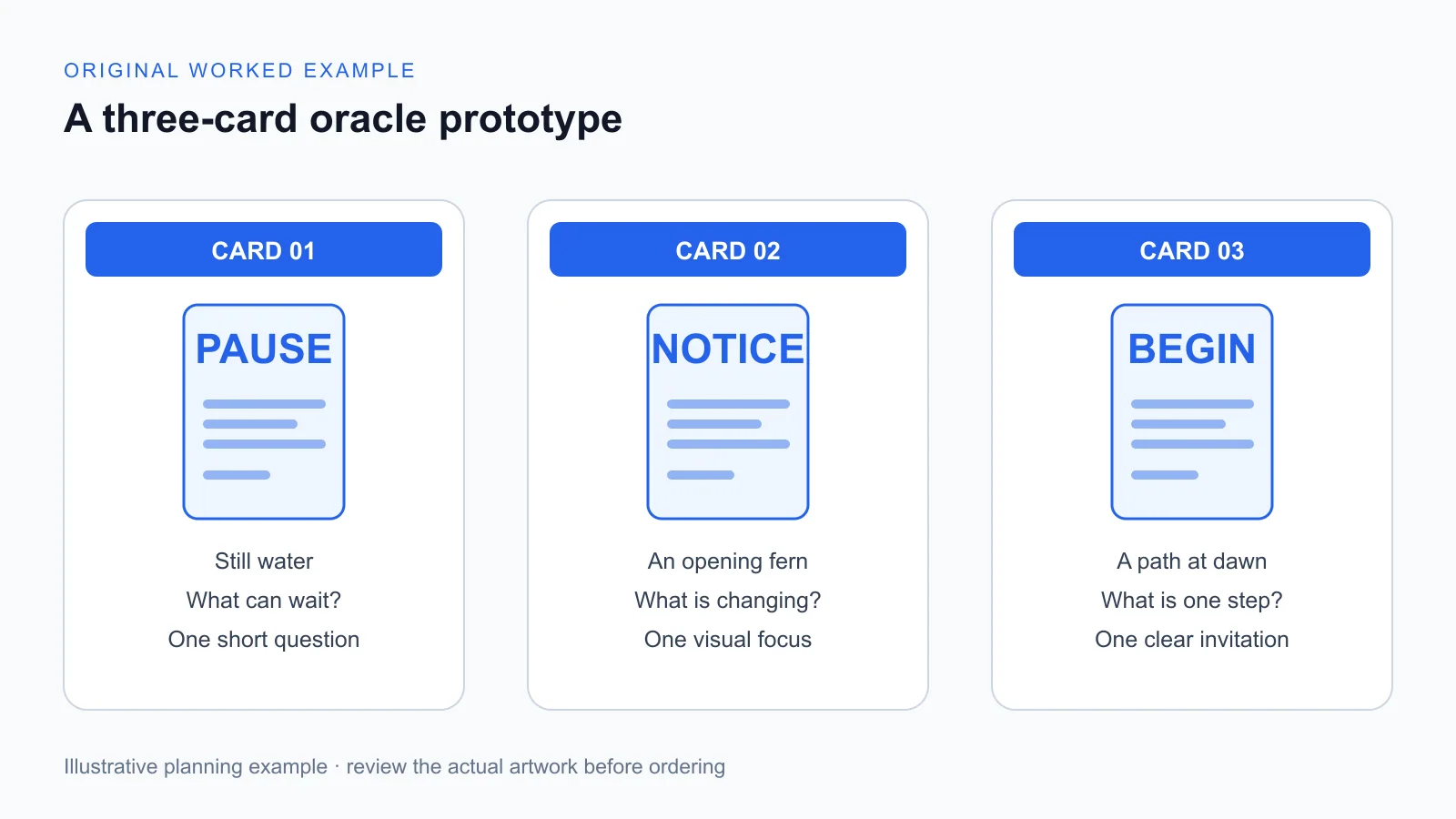
Start with Pause, Notice and Begin rather than illustrating all nine at once. Pause might show still water and ask, What can wait? Notice might show a fern unfolding and ask, What is changing? Begin might show a path at dawn and ask, What is one step? These original examples test three different compositions while keeping the same reading pattern. Write each question as one sentence. If a card needs a paragraph of explanation before it makes sense, revise the concept or move supporting discussion into a separate guide.
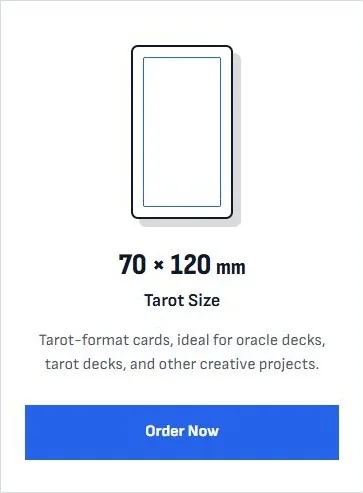
Choose a concrete offered size
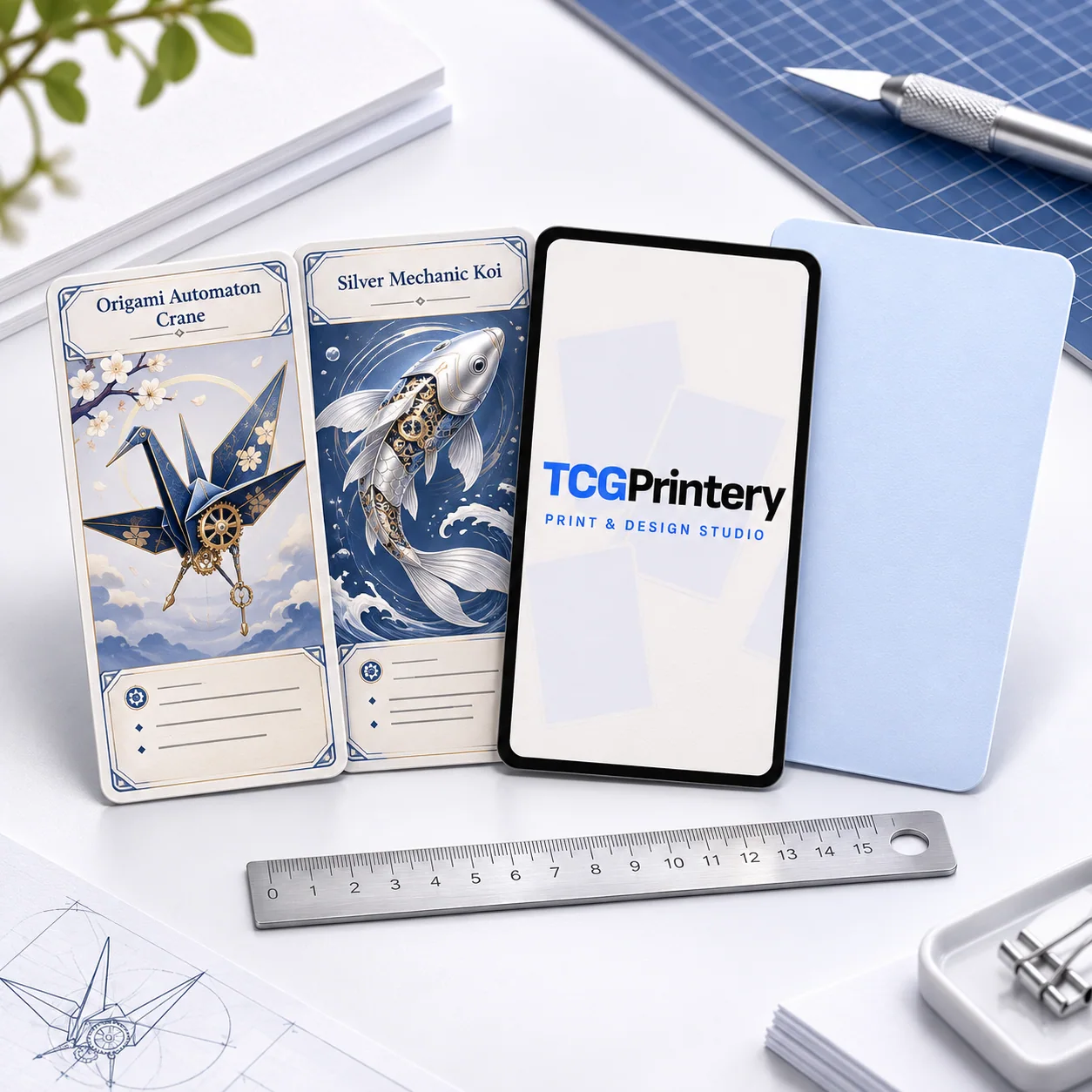
The current TCGPrintery selection includes Tarot at 70 × 120 mm. That is the specific option used for this example, not a claim that every oracle deck has that size. The oracle cards page shows that size with its papers and current prices. Draw a paper rectangle at the finished dimensions and hold it as you would use the deck. Check whether the title remains readable and whether the artwork feels balanced. A larger image area can help a quiet illustration breathe, but it also changes handling, storage and how many cards someone can comfortably spread on a small table.
Build a repeatable page structure
Reserve three zones: a generous image window, a stable title position and a modest prompt area. Keep the title and question away from the cut edge. Background artwork may extend outward, while important lettering belongs safely inside. TCGPrintery's file guide explains the distinction between bleed and the safe area. For our prototype, the same type size and alignment appear on all three cards. Resist moving the title around to rescue individual illustrations. Adjust the illustration crop within its window so the deck still feels like one designed object.
Make the back part of the experience
A shared back allows a reader to draw a card without recognising the face from behind. Check its orientation deliberately: if the deck supports reversed readings, decide whether an asymmetric back would reveal that orientation before the card is turned. Our creative journaling example uses upright prompts only, so it does not require a reversed-reading system. Keep the back version documented alongside the fronts. Review the sample for consistent contrast, comfortable handling and legibility under ordinary room lighting, not only under a bright screen or a carefully arranged photography setup.
Grow the deck from the approved prototype
Once the first three cards work, apply the same structure to the remaining six and read the whole set aloud. Look for repeated questions, unclear verbs and cards that ask essentially the same thing. Keep a list of each card's purpose so the set offers variety. If you plan ongoing sales, discuss quantities and order handoff through the tailored printing partnership; automation is agreed for the project. For a first physical version, start with the Tarot format and review the complete deck before ordering.