Blog
Print Cards in Pokémon Size on Demand
Use Pokémon-size as a format reference while designing an original creature card with readable names, clear values and a reliable text area.
TCGPrintery3 min read
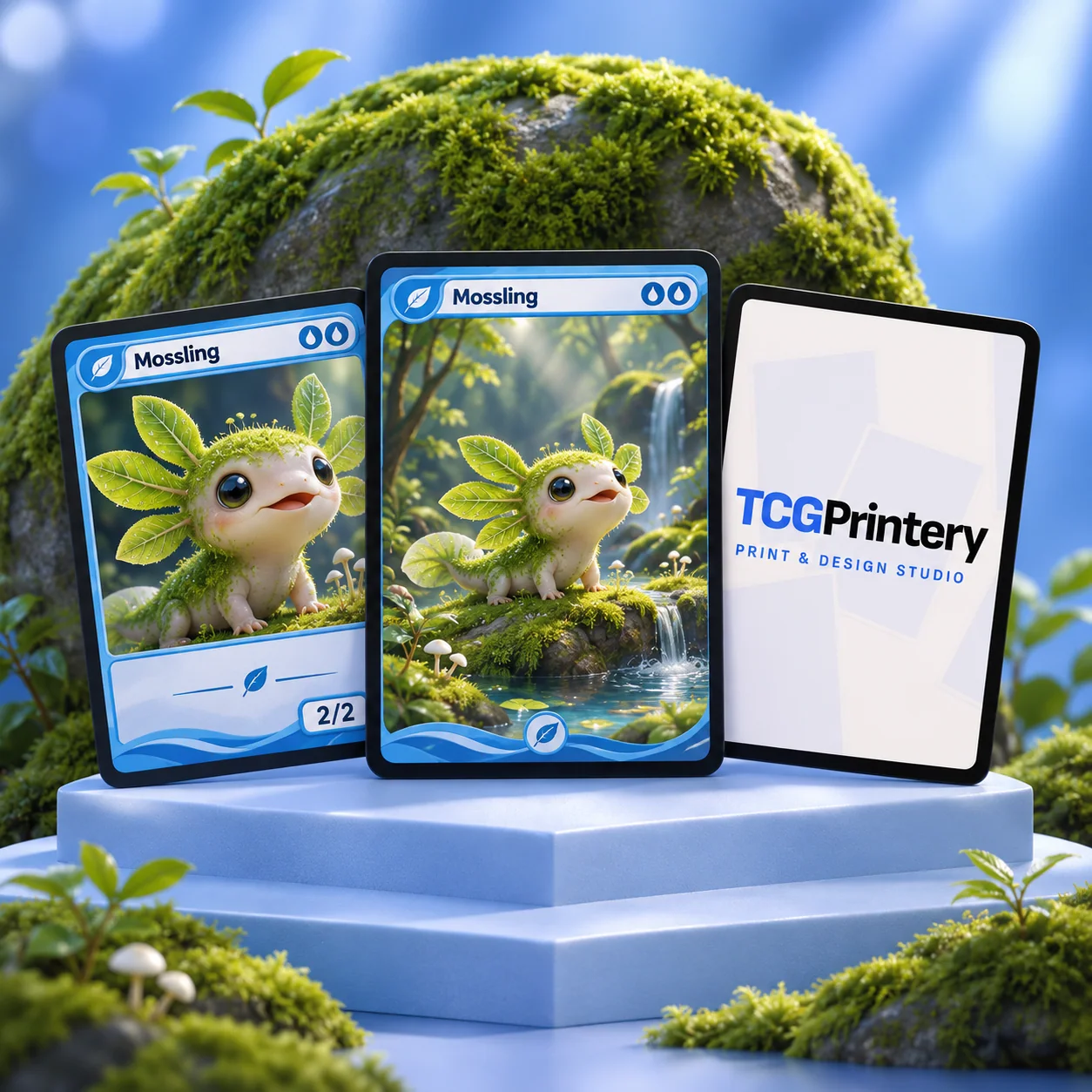
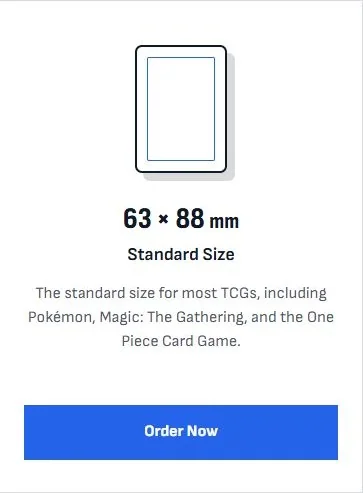
If you want cards in Pokémon size, begin with the physical format rather than a copied card design. TCGPrintery's Standard option is 63 × 88 mm. That can be a useful canvas for an original creature game, a personal character collection or a gift. The challenge is making every card readable, including the one with the longest name and the most demanding effect.
Create a creature that belongs to your project
Our worked example starts with Mossling, a fictional little woodland creature with leaf-shaped gills. Its card uses an original frame, original illustration and a simple two-value system. It does not use an official character, logo or card back. Decide what the reader needs to recognise first: the creature's name, its main value or the action it performs. That decision should shape the layout. A gift card may emphasise the portrait, while a playable card needs information that can be found quickly during a turn.
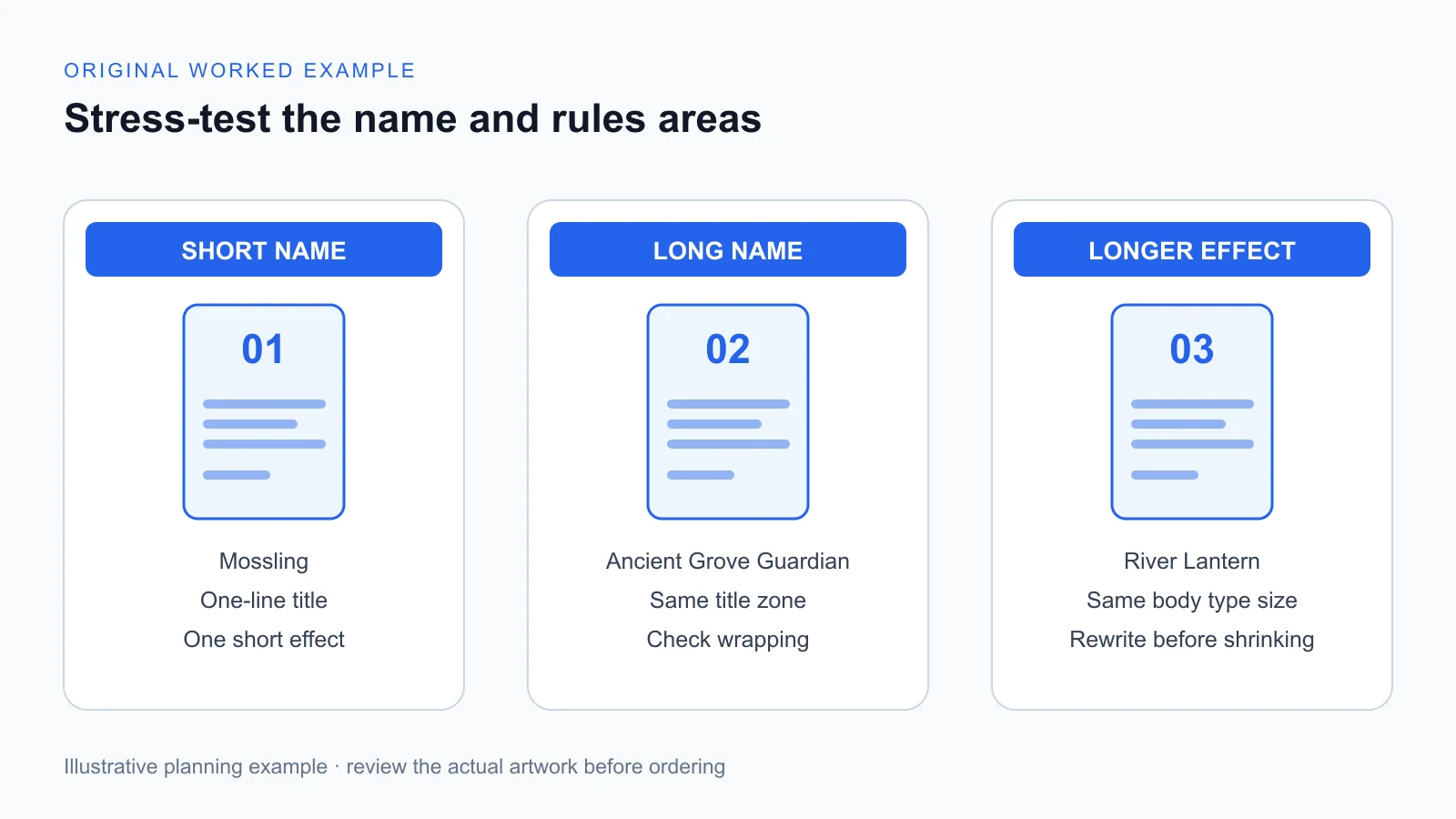
Design the longest name early
A layout that looks generous around Mossling can fail around Ancient Grove Guardian. Put both names into the master file before producing the rest of the set. Choose a rule for long titles: a controlled second line, a shorter display name or a wider title region. Avoid shrinking each name independently until the set has a different type size on every card. Keep any numeric value in a reserved position so a long title cannot collide with it. This small test prevents extensive rework after all the illustrations are finished.
Give each information level its own job
Treat the face as a sequence. The title identifies the card, the picture establishes character, and the rules area explains what happens. Use consistent spacing and contrast to distinguish those jobs. For Mossling, the action might be Draw one card after you rest. A second card, River Lantern, could use a longer conditional action. Compare them at the same type size. If the longer text becomes cramped, rewrite it before reducing the lettering. Clear wording often creates more useful space than removing margins or squeezing the illustration.
Check the actual canvas and crop
Use the print-ready file guidance to prepare the selected format. The finished canvas and the extra area used for cutting serve different purposes. Keep the name, values and important facial features safely inside the card, while background colour can continue outward. Inspect the longest name and the creature's silhouette at actual print size. A screen preview enlarged several times can hide tiny lettering. Also check the plainest card in the set, because empty-looking areas may reveal alignment differences that a detailed illustration disguises.
Use one back and one review routine
Choose a shared back deliberately and review its orientation together with the fronts. A personal creature collection can use its own identity without suggesting it is an official game release. Keep a record of the selected back file and revision so a later addition matches the original set. Review three representative cards: the simplest face, the longest title and the longest effect. Then inspect every remaining card for exceptions. A successful test of one attractive example does not prove that all text fits or that every image has sufficient detail.
Print a small, meaningful prototype
A useful first prototype answers questions you cannot settle from a screen: can a player find the action quickly, read the values in ordinary light and distinguish the creatures when the cards are held in a fan? Write those questions down before ordering. Keep any planned changes in a separate working revision so the sample still corresponds to a known file set. When the layout holds together, prepare the Standard-size cards and check the uploaded fronts, backs and copy counts. Use the physical review to improve your own design before extending the collection.