Blog
Custom Game Card Printing from Just 1 Card
Start custom game card printing with one card. Specify both sides, choose the format and use the first print to answer a practical design question.
TCGPrintery4 min read
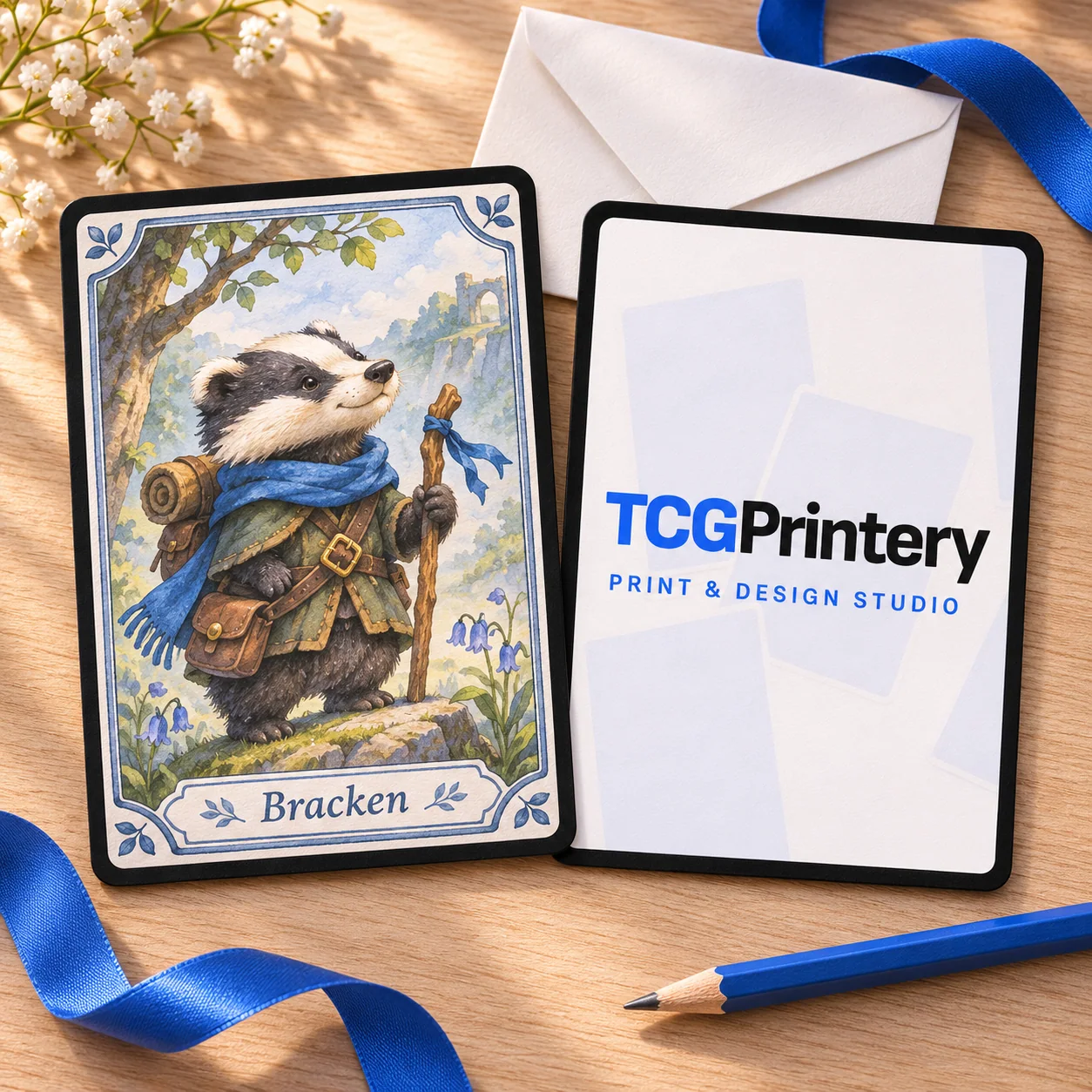
One card can answer a useful question. Does a new illustration work at its finished size? Is a personal dedication readable? Does a replacement card fit the original game you designed? TCGPrintery supports custom card printing from a single card, so a complete deck is not required to begin.
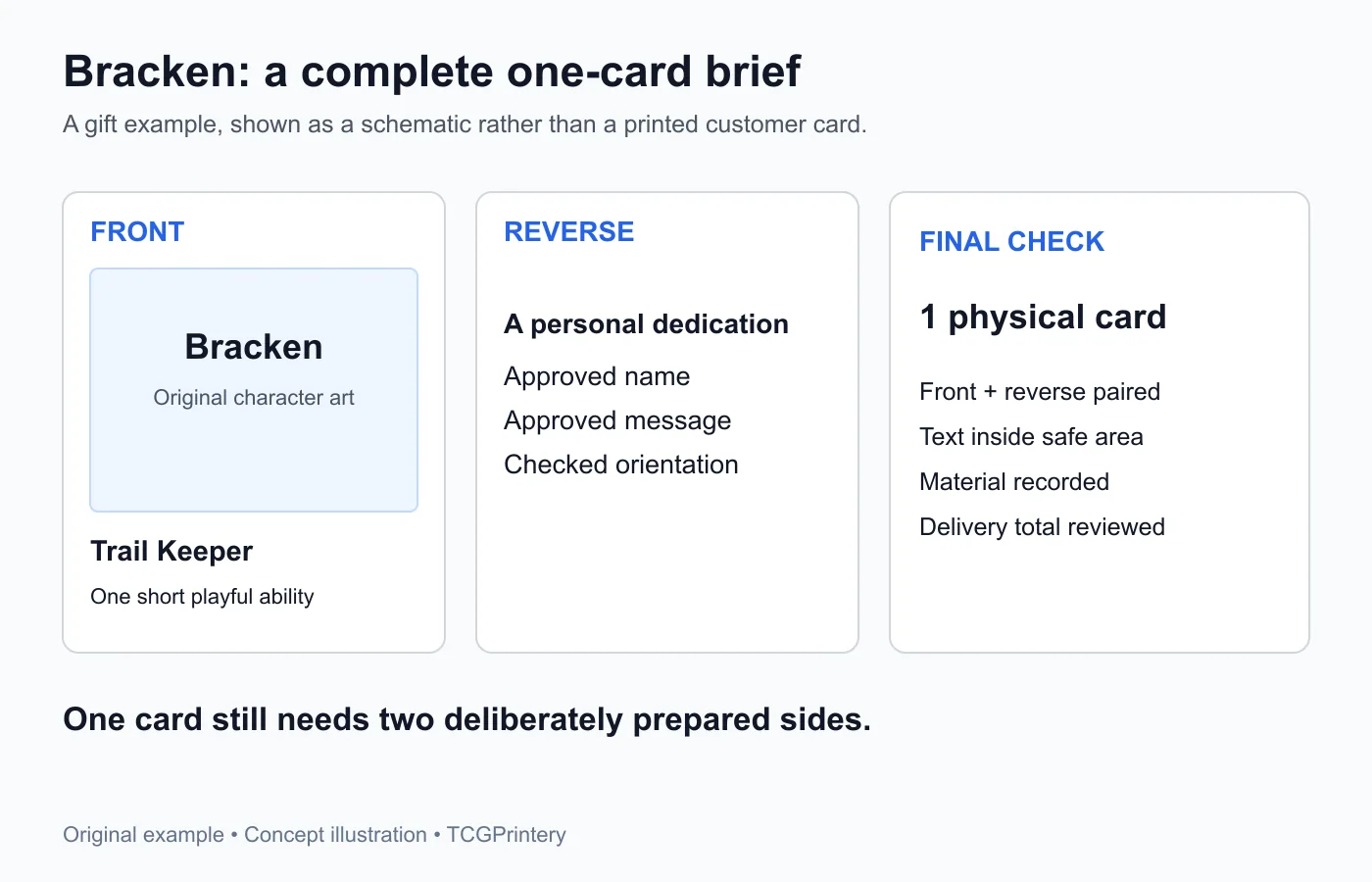
The most useful one-card order has a clear purpose. Our original example, Bracken the Trail Keeper, is a woodland character designed as a birthday gift. The front holds an illustration and a short playful ability; the reverse carries a personal message. The example below shows how to turn that small idea into a complete printing brief.
Decide what this one card needs to do
A gift, a design sample and a replacement for your own game have different priorities. A gift may centre on the portrait and dedication. A sample should include the hardest detail you need to evaluate. A replacement needs the correct version, dimensions and back for the original project.
Bracken is a gift first. The recipient's name and the illustration should be easy to notice, while the ability text can remain brief. Write the purpose at the top of your working notes. It helps you avoid filling the card with details that compete with the reason you are making it.
Specify both sides, even for a single print
Prepare the front and reverse as deliberately as you would for a full collection. For Bracken, the front says “Trail Keeper” and includes one sentence of original game-style text. The reverse contains a three-line dedication with generous space around it.
Check names and dates against the approved wording before export. Keep important text comfortably inside the safe area rather than touching the cut edge. If you are evaluating a shared game back, use that exact back file. A different reverse would leave part of the test unanswered.
Choose the size before preparing artwork
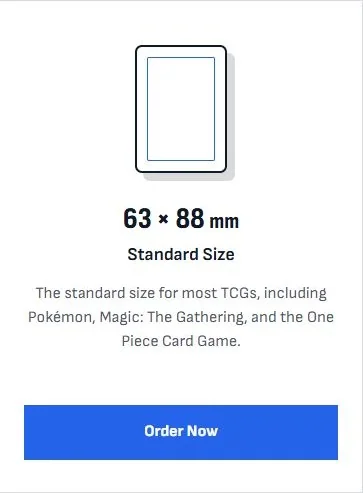
The public format selector offers Standard at 63 × 88 mm, Japanese at 59 × 86 mm and Tarot at 70 × 120 mm. Choose the finished size that suits the intended use. A larger file canvas does not make a different physical format appear automatically.
For a Standard card, the file preparation guide lists 744 × 1039 pixels at 300 DPI for the finished size. Use the matching template and current bleed instructions. Export from the source artwork rather than enlarging a small messaging-app image and expecting its detail to return.
Make the material choice answer a question
Compare White Core, Black Core and the foil options on the quality page. Choose the material you actually want to evaluate. A plain-stock sample can show layout and colour relationships, but it cannot demonstrate how the same art looks with a holographic effect.
If the gift uses foil, consider whether its small text remains clear beside reflective areas. If the card is a replacement for your own game, matching the earlier specification matters more than choosing a new effect. Record the chosen material with the artwork version.
Review quantity and the complete order total
After import, inspect the front, assigned reverse and quantity. Confirm that the order contains one physical card rather than one copy of several unintended designs. Check the calculated price and delivery details before payment.
Delivery can be a significant part of a small order. The current shipping terms list €4.90 within Germany below five cards and free German shipping from five cards. Other-country shipping is €9.90, with free shipping from €50 in card value. Check the applicable destination at checkout.
Keep the result useful for the next decision
For a gift, compare the delivered card with the intended message and presentation. For a design sample, note specific observations such as “small footer needs more space” rather than a broad judgement like “improve quality”. Save those notes beside the exact file and material used.
One card gives you a manageable first step. Start with a complete brief, inspect both sides and use the result to decide whether the design is ready or needs another focused revision.