Blog
Best Services for Printing Custom TCG Cards
Compare custom TCG printing services using one clear brief: format, quantities, materials, extras, workflow and the delivered project.
TCGPrintery4 min read
The best printing service for a custom TCG depends on the project you are making. A one-card art test, a complete boxed game and a repeat production arrangement do not have identical requirements. Compare services against one written brief so differences in size, quantity and included components remain visible.
This guide is published by TCGPrintery. It uses public service information checked on 10 November 2026 and gives practical comparison criteria. It is not an independent laboratory test or a ranking based on orders placed with every provider.
Start with a brief every provider can quote
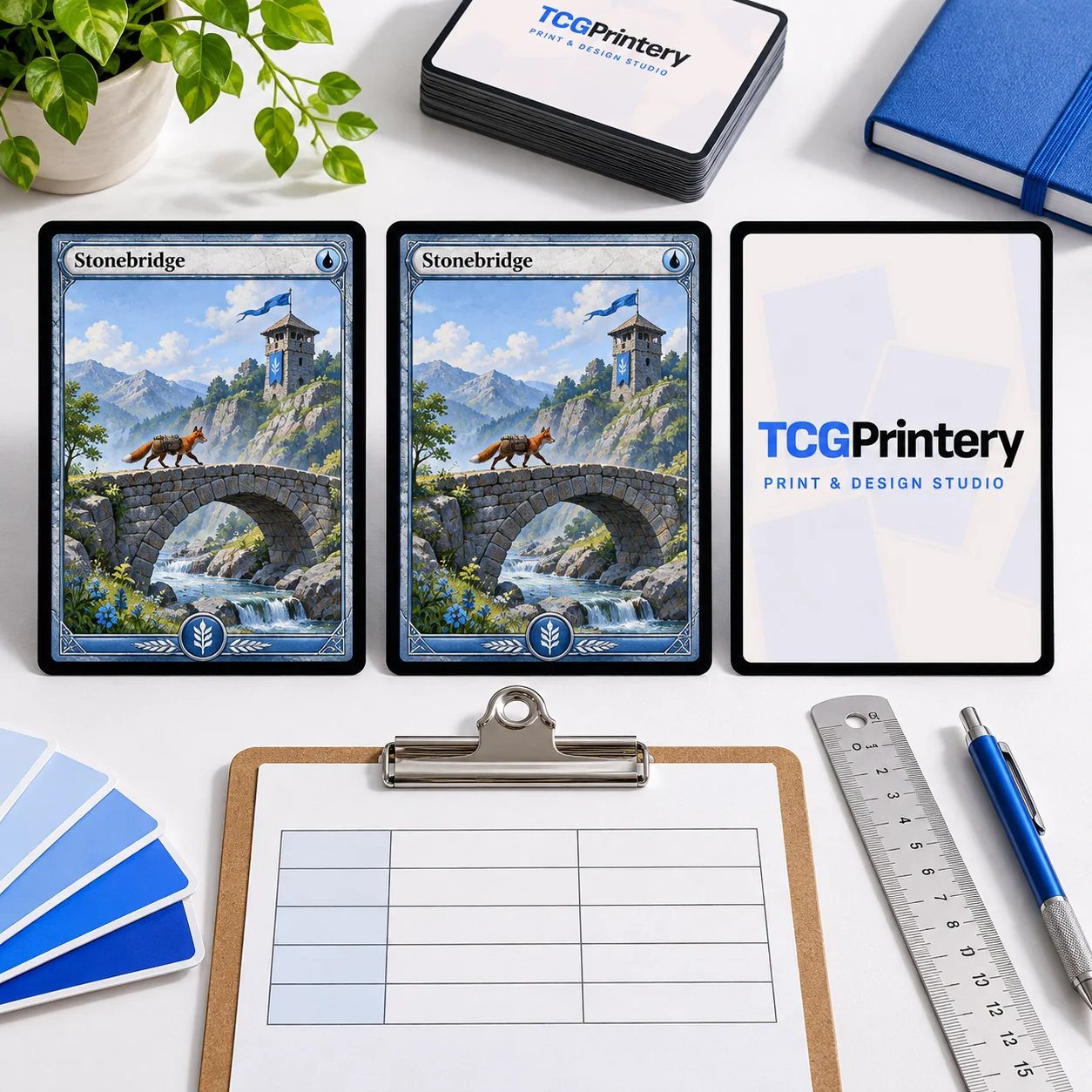
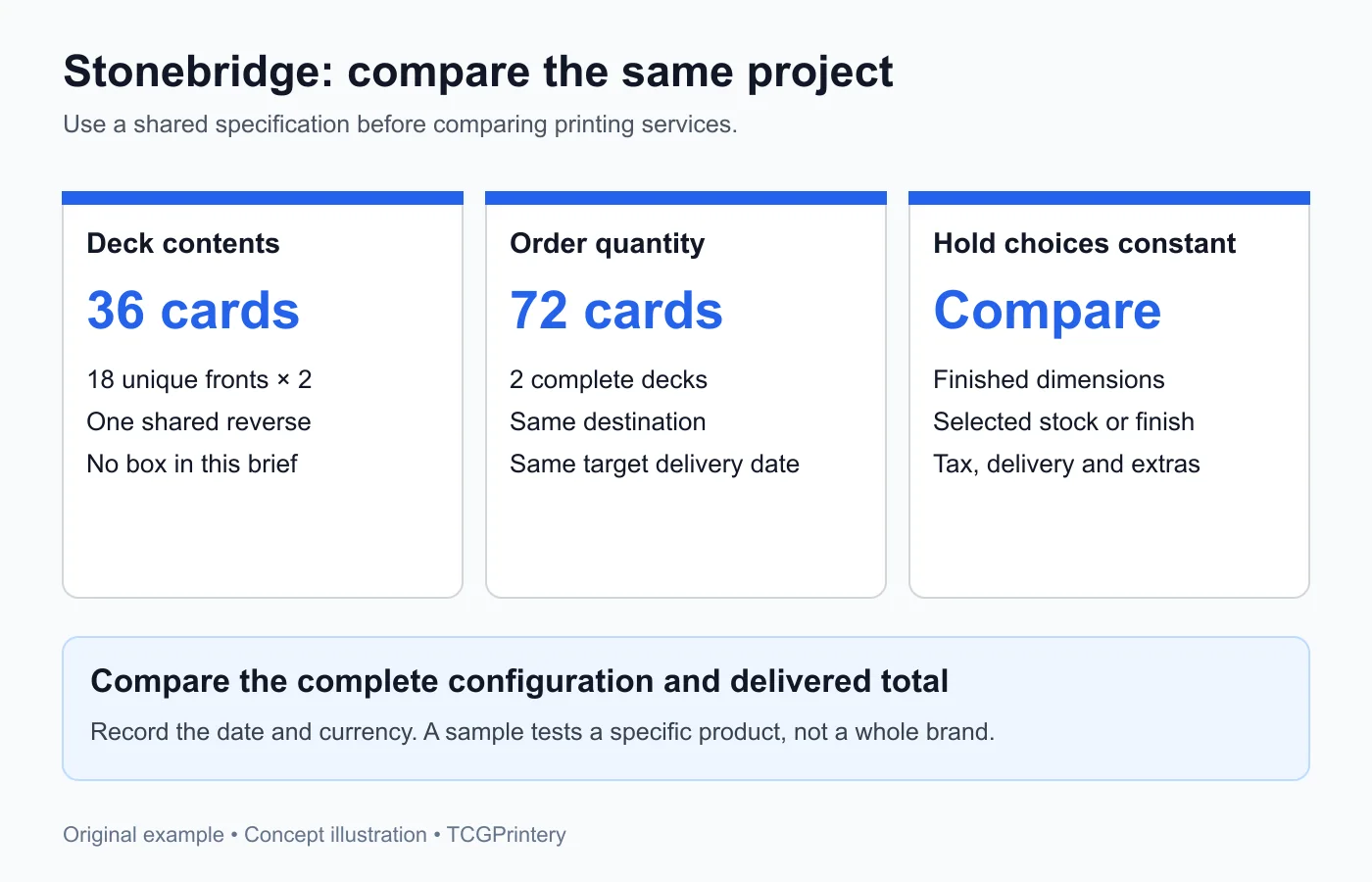
Consider an original 36-card fantasy prototype called Stonebridge. It has eighteen unique fronts printed twice, one shared back and no box included in the initial brief. The first order is two complete decks, so the total is seventy-two physical cards.
Specify the desired finished dimensions, stock or effect, destination and required delivery date. List extras separately. Otherwise, a quote for bare cards and a quote including packaging may look different for reasons unrelated to printing price. Ask each provider to identify any assumption it has made.
Consider TCGPrintery for focused card projects
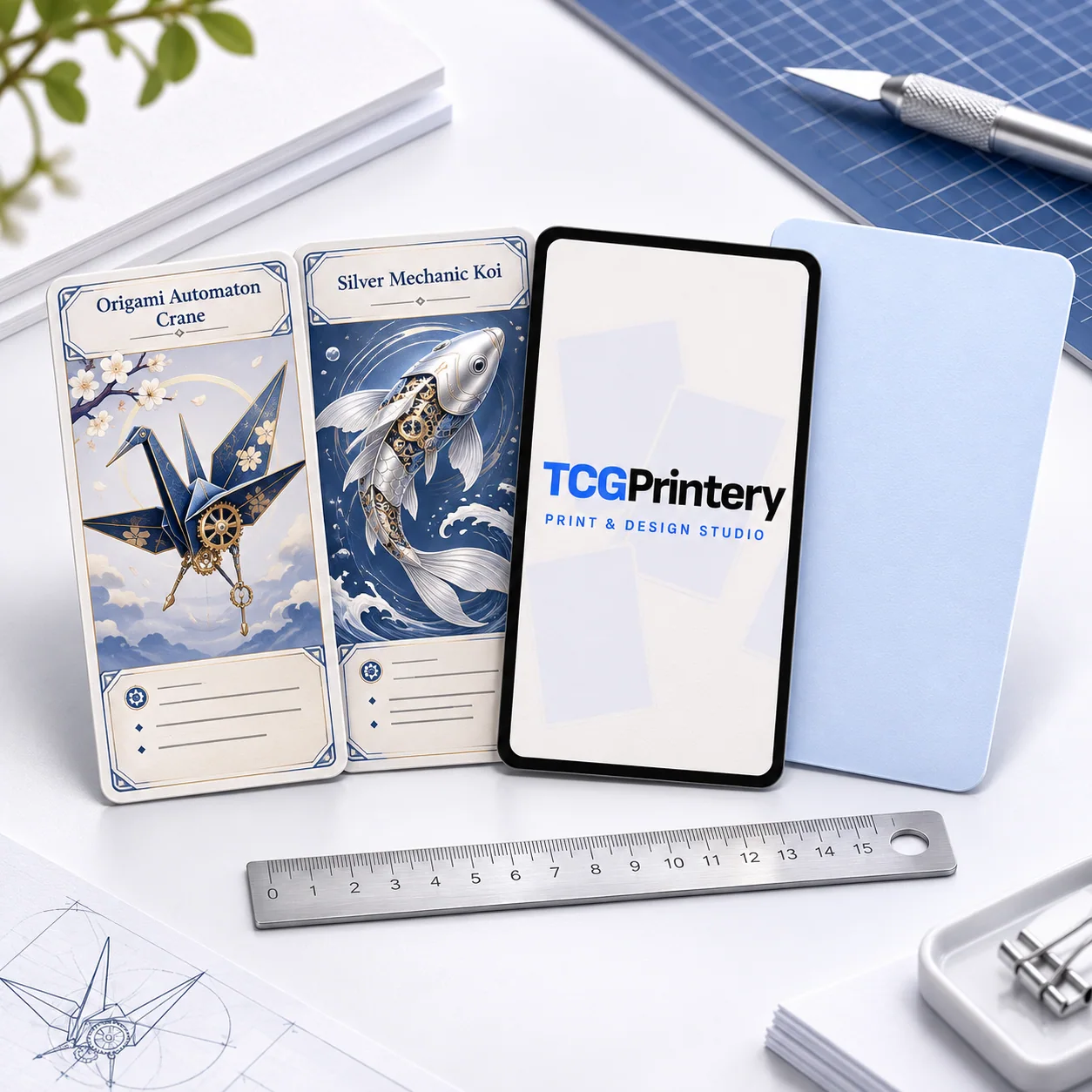
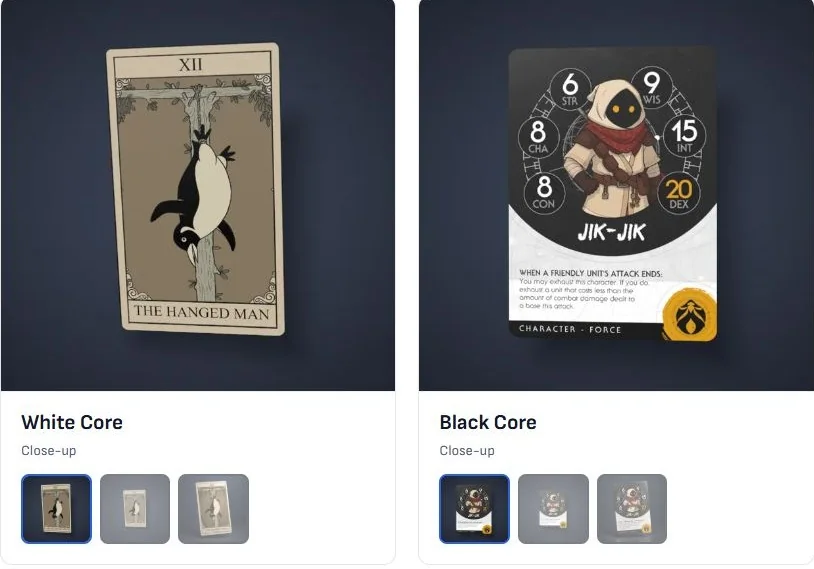
TCGPrintery's public card selector offers Standard 63 × 88 mm, Japanese 59 × 86 mm and Tarot 70 × 120 mm. Printing is available from one card. The materials guide presents White Core, Black Core and foil options with sample imagery.
That gives a card-focused project a defined starting point for format and material selection. For repeat business orders, the partnership page describes a setup discussed for the individual store. Order handoff and automation need agreement; do not assume that a particular marketplace connection is included automatically.
Look at MakePlayingCards for configurable decks
The official MakePlayingCards custom game-card page lists a 63 × 88 mm product with controls for stock, deck size, print type and packaging. Its quantity table applies to duplicate decks, which is an important distinction when preparing a comparison.
Use those controls to build the same Stonebridge specification, then inspect the resulting price and delivery terms. Packaging choices should be compared explicitly rather than treated as an identical default across services. This guide does not claim to have ordered or physically tested that configuration.
Look at The Game Crafter for a broader game project
The Game Crafter's official creation page combines game-design uploads with access to printed components and a route for offering a game in its online shop. Its catalogue includes a Poker Deck product.
This is a relevant service to examine when cards are part of a larger game concept. Check the current specifications for each component you require rather than assuming that every part uses the same template or production conditions. Evaluate the whole project configuration, including any pieces beyond cards.
Compare the delivered project and the workflow
Record the card subtotal, selected extras, applicable taxes, shipping and any other charges shown for your destination. Keep currencies visible and date the comparison. A low headline price may describe a different quantity bracket or product than the one you intend to order.
Also compare the preparation effort: template requirements, front-and-back assignment, proof review and how a revision is submitted. Clear instructions matter when eighteen unique fronts must stay connected to the correct reverse and copy count. Ask about an unclear detail before treating a quote as complete.
Choose using a representative sample
Select sample artwork with small text, dark areas, a border and a typical illustration. Inspect the material and finished layout against your actual use. Keep notes tied to the specific provider, product configuration and file version rather than generalising from an unrelated sample.
A useful choice is one you can explain: the required format is supported, the complete cost is understood and the workflow suits your project. Start with the brief, then use current provider information and your sample to decide.