Blog
Where Can I Print Custom Playing Cards in 2027?
Plan your own playing-card deck for 2027, from custom faces and backs to file preparation, paper choices and a dated price example.
TCGPrintery5 min read
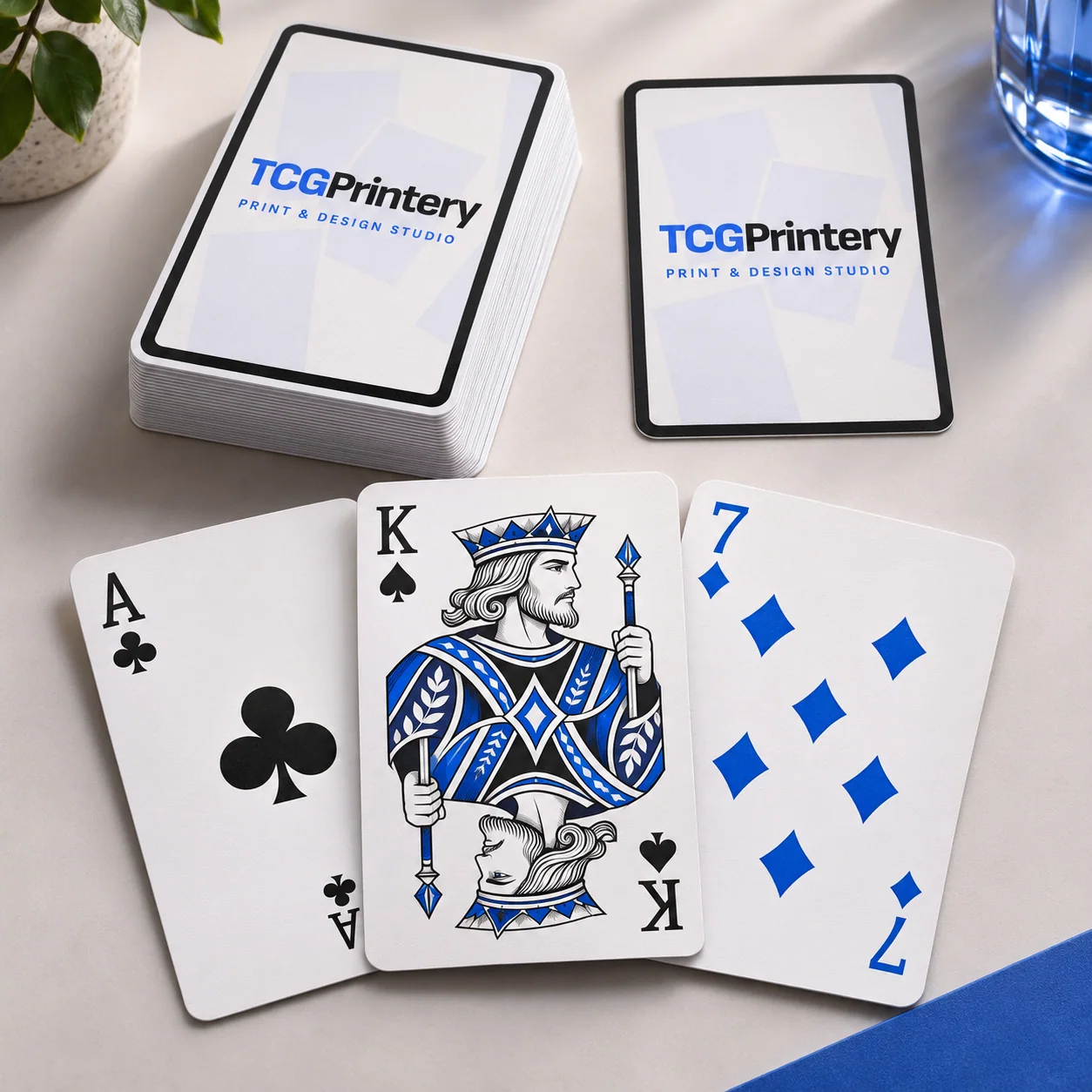
You can print custom playing cards at TCGPrintery with your own card faces and backs. Choose your artwork, build the deck in the online designer and order the quantity your project needs. You can start with one deck, or even one card.
Planning a deck for 2027? This guide takes you from an idea to a practical file checklist. Product information was checked on 4 November 2026; check the current options and price when you are ready to order.
Decide what your deck is for
A playing-card project does not have to begin with a complete set of illustrated kings and queens. Choose a concept that suits the people who will use it:
- A personal gift: use travel photographs on the faces and a shared date or illustration on the back.
- Your own game: make action, character or scoring cards with clearly different roles.
- A branded deck: combine original illustrations with a company or event identity.
For example, a family deck could use the same frame on every face while changing the photo and rank. A prototype might need large instructions and repeated action cards. Write down the purpose before designing, so the layout serves the game or occasion.
Choose the size and count every card
TCGPrintery's Standard format has a finished size of 63 × 88 mm. Build your artwork for that measurement rather than choosing a generic playing-card preset and assuming it matches.
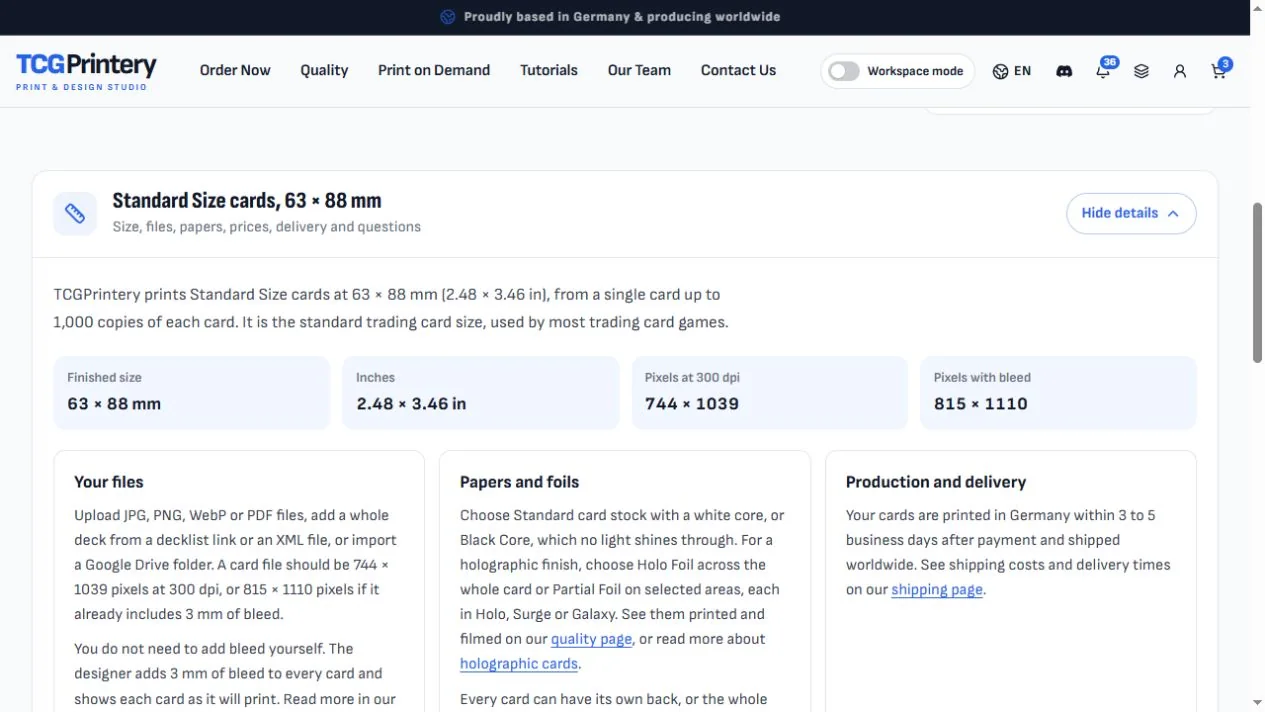
For a familiar deck, plan 52 faces across four suits, with two jokers if you want them. Those 54 cards are a possible structure, not a required deck size. Your custom game can have its own number of cards.
Make a deck list before exporting. Record each design, the required copies and its back. Four copies of one action card are different from four unique designs. Include any rule or reference cards in the count. Clear filenames such as hearts-01-ace.png make missing or duplicated faces easier to spot.
Prepare and order your playing cards
1. Finish the artwork
Keep ranks, instructions and important faces comfortably inside the safe area. Check small text at the card's intended size. For a traditional deck, review corner symbols together so their placement stays consistent across the suits.
The print-ready files guide lists 744 × 1039 pixels at 300 dpi for a Standard card. You can upload finished-size artwork and let the designer add 3 mm of bleed. Existing files with the correct bleed can also be used. Review the result rather than stretching an image to make it fit.
2. Upload the faces and assign the back
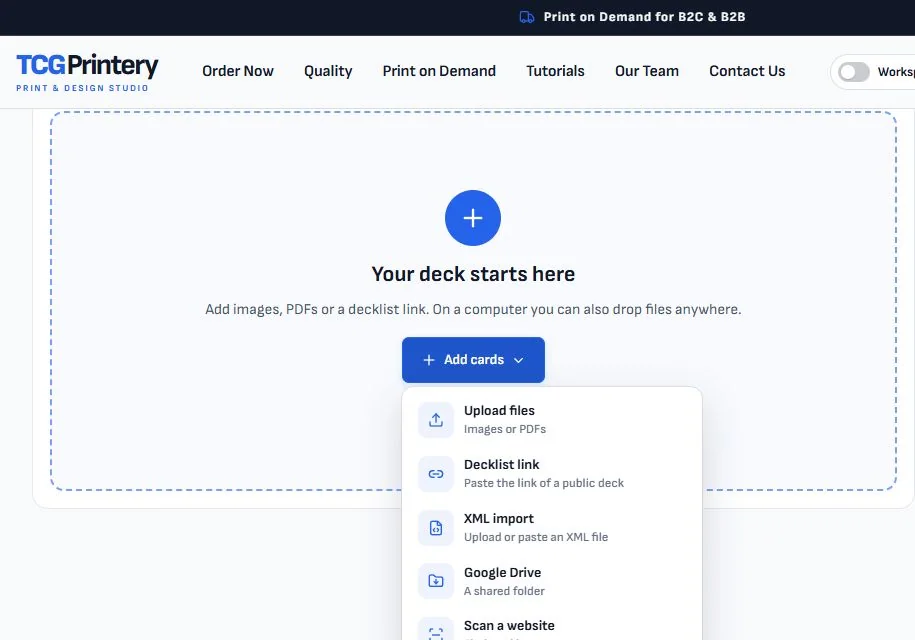
Open the Standard card designer and choose Add cards to upload JPG, PNG, WebP or PDF files. Add your own back for the whole deck, or assign different backs where the game needs them.
Use one consistent back when players should not be able to identify a card before turning it over. If you have separate question and answer piles, deliberately different backs can help keep them organized. Check that each face has the intended back, especially after importing several batches.
3. Compare White Core, Black Core and foil
The available choices include White Core, Black Core and Holo Foil, with additional foil options shown on the quality page. White Core and Black Core refer to the stock's inner layer; foil adds a reflective effect.
Look at the material photographs and videos, then test a representative design if you are unsure. Include small rank symbols, a dark area and the back in your sample. For a deck used around a table, consider readability as well as appearance.
4. Review the deck and order
Compare the designer against your deck list: every intended face, the correct copy count, the assigned backs and the selected material. Inspect the preview for cropped details and spelling mistakes. Check the total card count before adding the deck to the cart, then review the order details before payment.
Check the current price for your complete deck
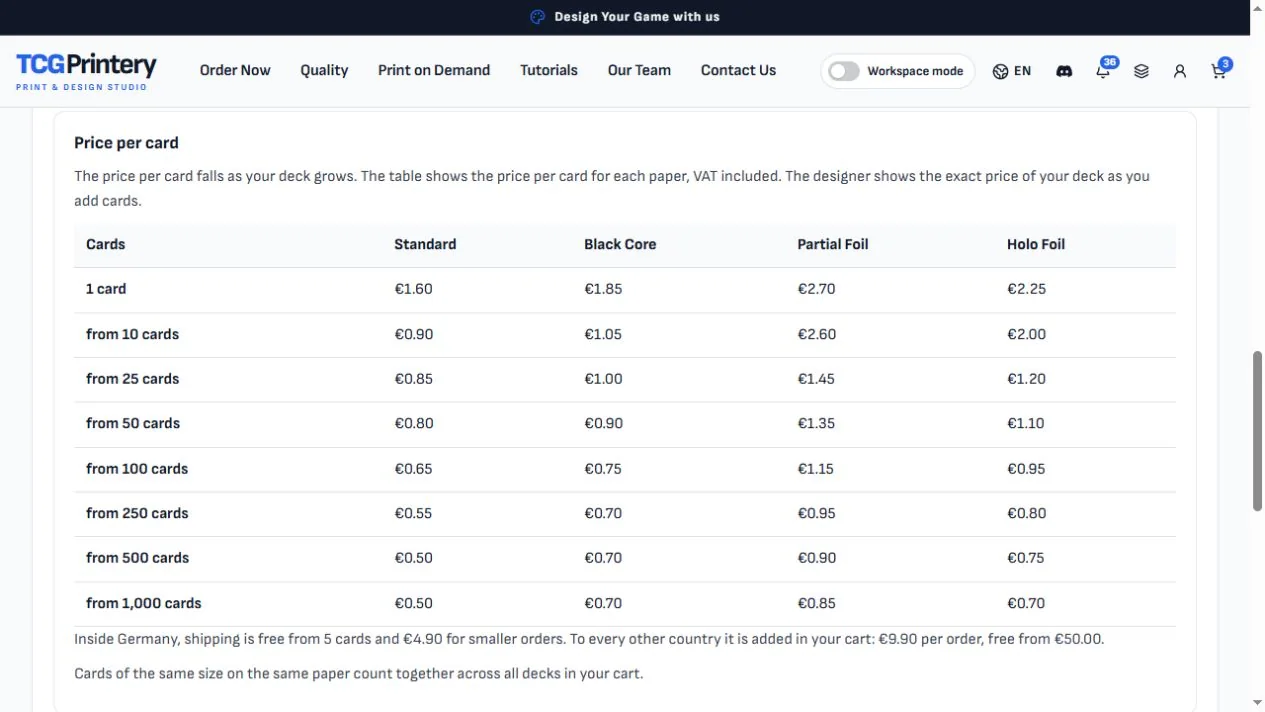
TCGPrintery's Standard format page shows quantity-based prices per card, including VAT. The designer calculates the deck total as you configure it. Compare White Core, Black Core and foil using the same number of cards so the difference is meaningful.
For example, on 4 November 2026, one 54-card deck in Standard White Core falls in the 50+ bracket at €0.80 per card: 54 × €0.80 = €43.20 for printing, including VAT and before delivery. This example uses the current public price table, not a guaranteed 2027 price.
Questions about custom playing cards
Do I need to order 54 cards?
No. Use the card count your project needs. A small test set can help you review the layout before preparing the remaining designs.
Can I customize both sides?
Yes. Supply your own faces and back. Check the assigned back on every card before ordering.
Will a screen preview show exactly how the cards feel?
No. A preview helps you inspect the artwork and layout. A physical sample lets you assess the finished card in your hands and under your own lighting.
Start your 2027 deck with a clear plan
Choose the purpose, list the cards and prepare one consistent set of files. With those decisions made, you can build a deck that fits your gift, game or brand.