Blog
Custom Playing Card Printing and Game Design Company
Plan a card project with a clear brief, readable layouts and practical playtests. Explore printing and design collaboration with TCGPrintery.
TCGPrintery4 min read
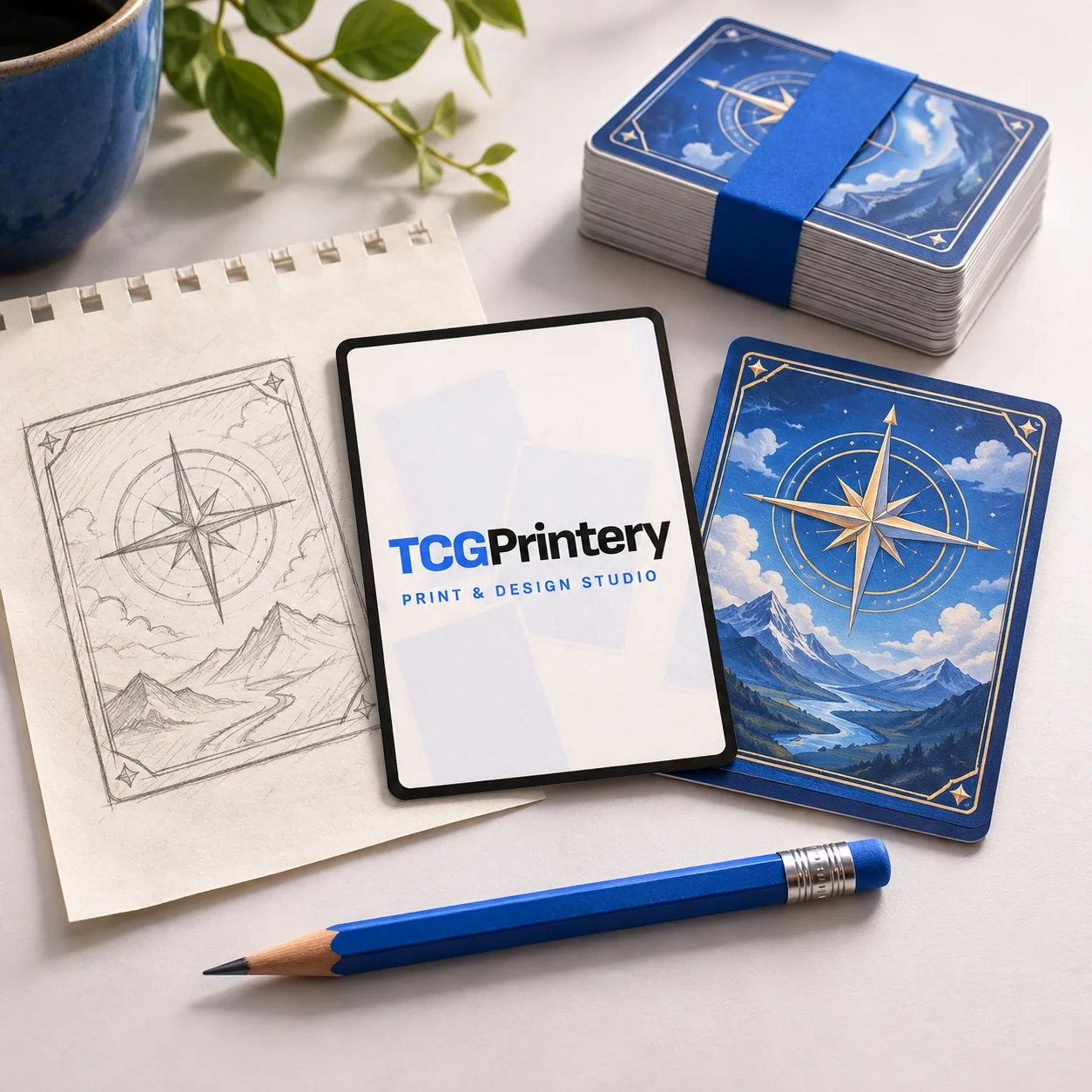
A custom playing-card project may begin with finished illustrations, a playable prototype or a few ideas on paper. The useful first question is what you need help completing. TCGPrintery offers printing from your own files, while its Print & Design Studio works with creators on card games.
Choosing a printing and game design company starts with a clear brief. Explain what already exists, what needs development and how you will decide that the result is ready. That gives everyone a practical basis for discussing the work, price and schedule.
Define the work your project needs
Separate the project into tasks before requesting a proposal. You might need a consistent frame for finished artwork, help turning a game concept into a set, or a physical test of files you have already prepared.
List the deliverables you want to discuss:
- Game development: the rules, card types, interactions and questions that still need testing.
- Visual design: the card layout, typography, illustrations and shared visual style.
- Print preparation: the final card files, backs, quantities, material and proof review.
Agree who provides each item, how revisions are handled and what is included in the quote. A clear division of responsibilities keeps an unfinished rule or missing illustration from appearing at the final printing stage.
Bring a brief that explains the game
Describe the intended players, the number of people at the table and the experience you want. Include a short rules summary, a few example cards and an initial card list. Mark the decisions that are still open, such as the number of copies of a resource card or the wording of a special action.
Visual references help explain a direction, but add a sentence about what you like in each one: clear icons, spacious rules text or a particular illustration mood. Supply your own artwork and identify any assets that still need to be created.
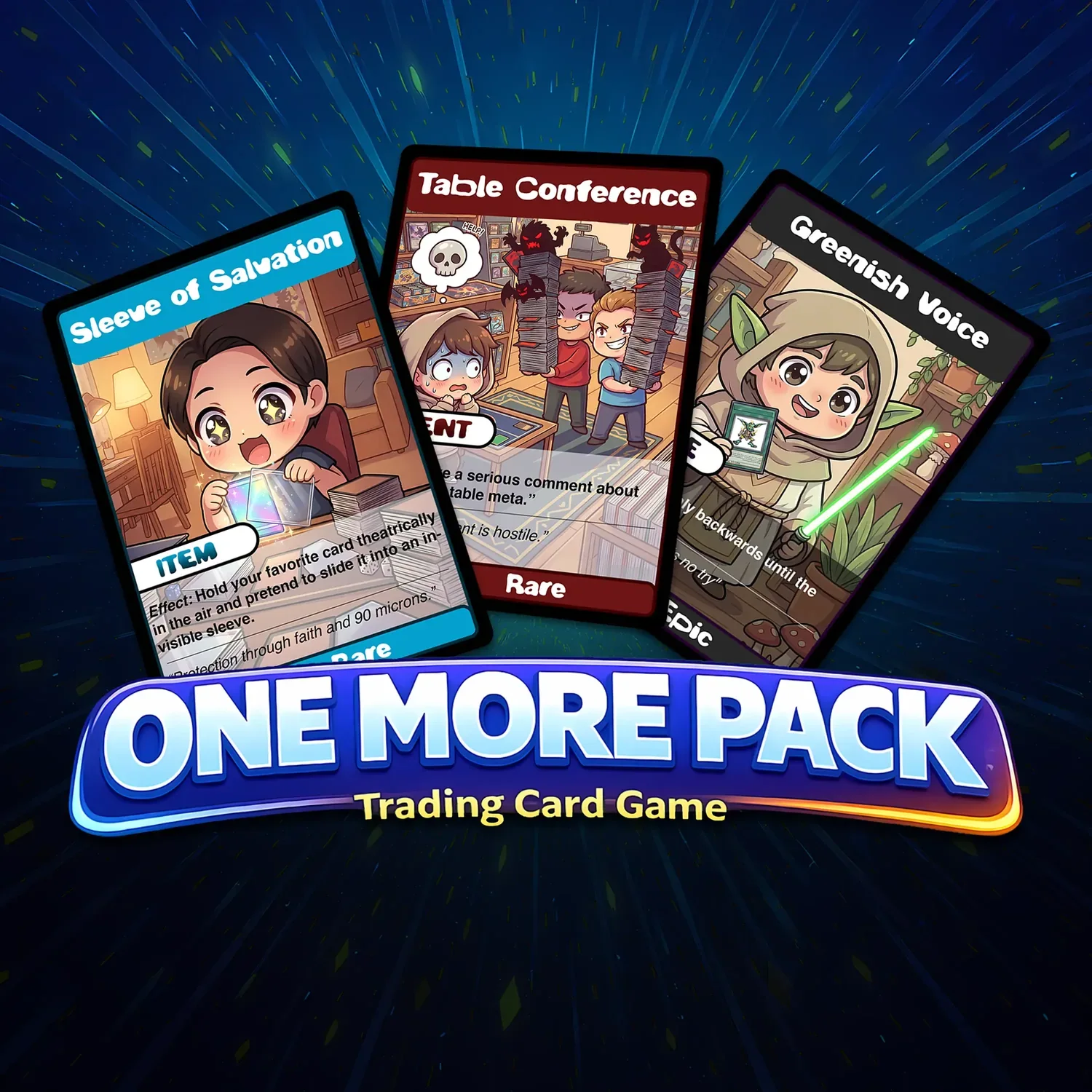
TCGPrintery's One More Pack project is an example of working with a team to develop its idea into a card project. Use existing projects to discuss the kind of collaboration you need, then agree a scope and schedule for your own brief.
Make the card easy to use during play
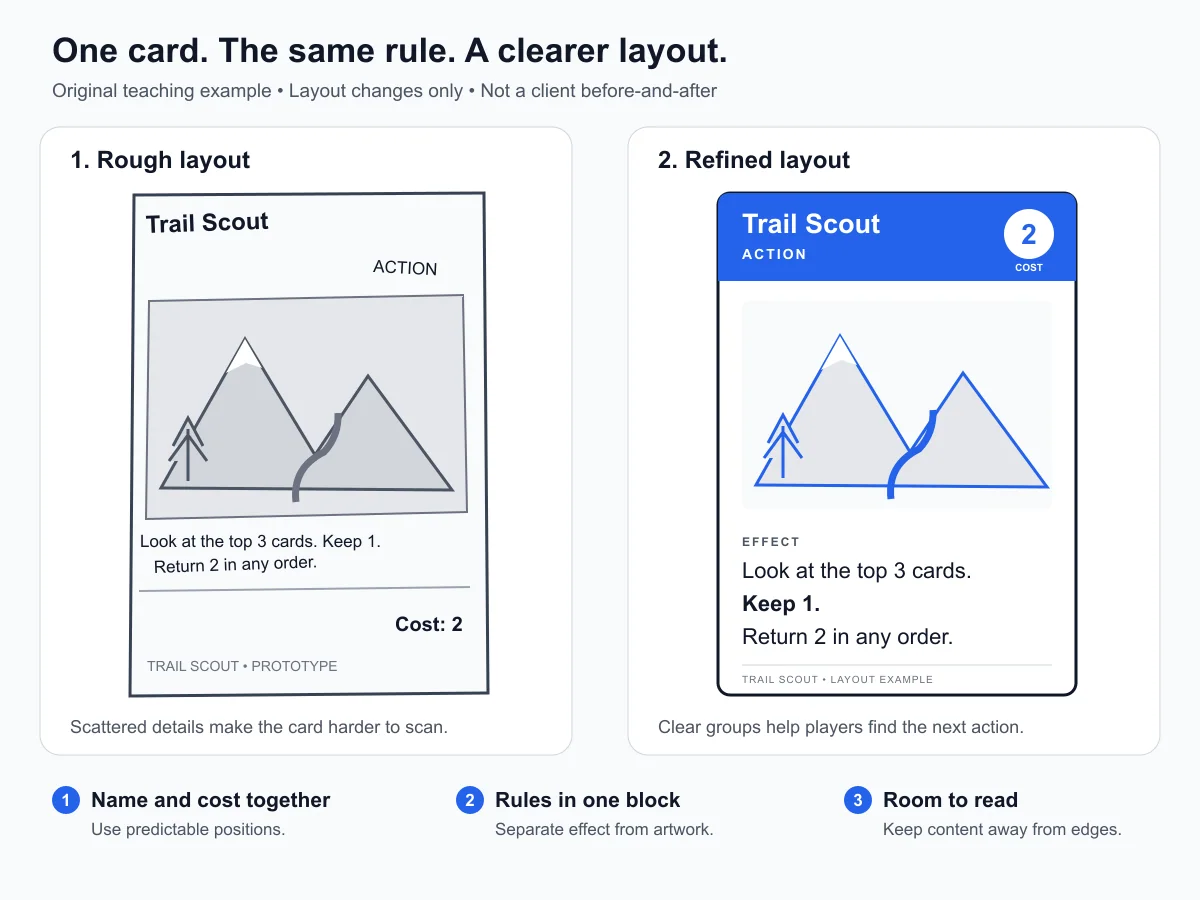
A card layout should help players find information quickly. Give the name, cost and effect predictable positions across the set. Keep the rules visually separate from decorative artwork and decide which details need to be readable while cards overlap in a hand.
The original example below uses the same invented Trail Scout card in both layouts. Its cost and effect stay unchanged. The revised layout groups the rules, makes the cost easy to find and gives the content more space. These are decisions you can test before commissioning a complete set of illustrations.
Test rules and layout together
Play a small prototype before treating the artwork as final. Watch where players stop to ask a question, reread an effect or look for a value. Record the exact situation so you can tell whether the problem comes from the rule, its wording or its placement.
Change one issue at a time and keep versioned files. Once the prototype works, a physical sample helps you inspect text size, handling and front/back orientation. Agree the sample and approval stages with the studio before planning the main print run.
Prepare a clear handoff to printing
The current print formats are Standard at 63 × 88 mm, Japanese at 59 × 86 mm and Tarot at 70 × 120 mm. Choose the dimensions early enough to design for the available space. Use the file preparation guide for resolution, safe areas and bleed.
Before approval, match the final card list to the files, check every back and confirm the material and quantities. Name the approved version clearly. If you need ongoing production, discuss the printing partnership separately, including how orders reach production and which steps can be automated for your setup.
Tell us what you want to create
Bring your brief, current files and the questions you want to solve. A focused first conversation can establish the next useful step, whether that is refining the layout, testing the game or preparing a print sample.